About
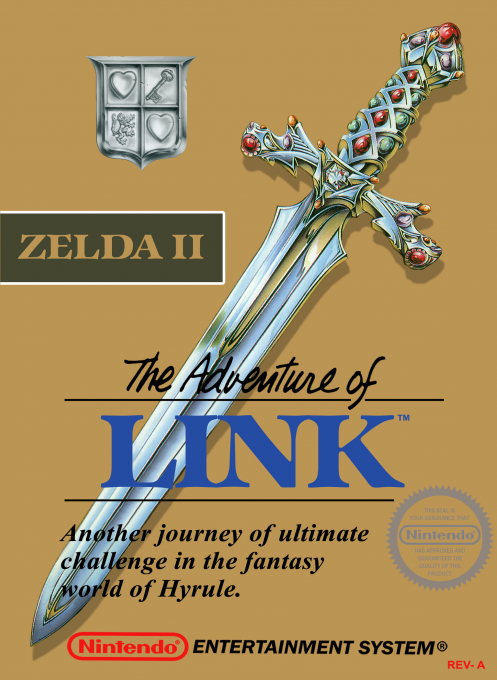
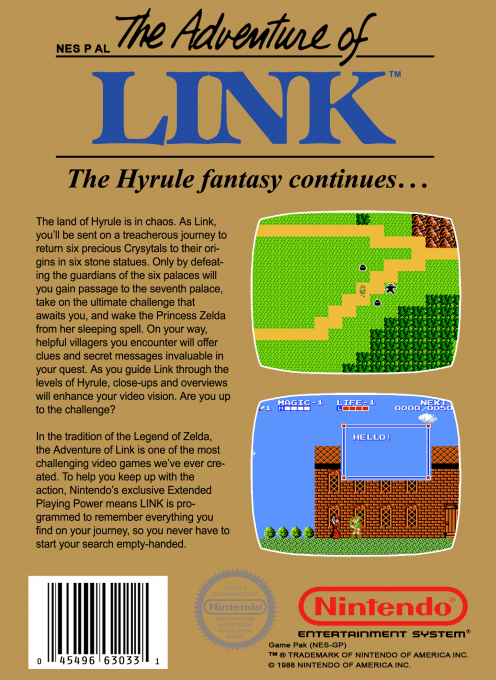
Zelda II: The Adventure of Link is Nintendo’s boldly different second Legend of Zelda quest, released for the NES in 1988 after the adventure first appeared in Japan on the Famicom Disk System in January 1987. Link returns to Hyrule with a more personal trial ahead of him: Princess Zelda has fallen under an ancient sleeping spell, and Ganon’s followers are seeking the hero’s blood to restore their master. To awaken her, Link must recover the Triforce of Courage from the Great Palace. The road there runs through six palaces, each guarded by a formidable boss and sealed with one of six crystals.
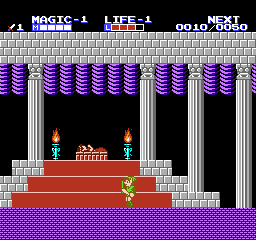
Rather than keep the first game’s overhead viewpoint for every encounter, Zelda II uses a broad field map for travel and switches to side-scrolling action when Link enters towns, caves, temples, palaces, or meets a roaming enemy. That two-part structure gives the journey a distinct rhythm. The map makes Hyrule feel like a connected expedition of roads, forests, deserts, and dangerous crossings, while each action screen turns movement, jumping, and swordplay into immediate concerns. Towns offer characters to speak with and useful leads, and newly acquired tools open routes that were previously out of reach.
Combat asks for attention to height, spacing, and defense. Link can stand or crouch behind his shield, strike with his sword, jump over danger, and eventually learn upward and downward thrusts from swordsmen. The action is precise without losing the sense of adventure: a shield-bearing foe can force a change in stance, a flying enemy can demand a well-timed jump, and palace rooms regularly combine enemies with tricky terrain. The result is a Zelda game whose exploration is inseparable from its platforming and close-range duels.
Role-playing progression is central to the NES version. Defeated enemies award experience, and reaching a threshold lets Link improve Attack, Magic, or Life. Raising Attack increases the damage he deals; Magic reduces the magic points required for spells; and Life reduces the damage he takes. Heart Containers expand his maximum life, while Magic Containers extend the resource used for spells. Game over returns Link to the North Castle and clears unspent experience, but saved special items and ability levels remain, giving each successful excursion lasting value.
Magic makes Link’s toolkit broader than sword and shield alone. Villagers teach spells as the adventure progresses, often after Link has helped with a local problem. Life restores health, Jump temporarily increases his reach, and Shield reduces incoming damage; other spells create their own tactical or exploratory opportunities. Items work alongside that magic: the Candle lights dark spaces, the Hammer breaks rocks and cuts trees on the field map, the Raft carries Link from a dock, the Flute awakens ancient powers, and Keys open palace doors. Progress comes from learning how those abilities reshape the world.
The palace quest provides the game’s long-form challenge. Each crystal placed in a palace statue brings Link closer to the Valley of Death and the Great Palace, where the Triforce of Courage awaits. Along the way, the game balances travel, conversation, combat, magic management, and permanent character growth. It is a direct sequel that treats its familiar fantasy setting as a framework for a more action-driven adventure, while still making discovery and preparation matter.
This NES release is the cartridge-based Western form of an adventure that originated on the Famicom Disk System, so it carries the same core journey while standing as its own regional version of Zelda II. Nintendo later made the game available through services and collections including Wii Virtual Console, Nintendo 3DS Virtual Console, Wii U Virtual Console, and the NES Classic Edition; Nintendo’s Wii U listing specifically identifies that release as the US version. It also appears on the Game & Watch: The Legend of Zelda system alongside the original game and Link’s Awakening.
For players curious about the series’ most unusual classic chapter, Zelda II remains a focused adventure of overworld navigation, side-view battles, experience levels, spells, and palaces. Its goal is clear from the opening: build Link into the hero capable of crossing Hyrule, overcoming six palace guardians, claiming courage itself, and waking Zelda at last. The unusual structure is not a detour from the series’ spirit; it is an early, demanding expression of exploration, growth, and hard-won progress.
Gallery
Details
- Developer
- Nintendo
- Publisher
- Nintendo
- Genre
- JRPG
- Players
- 1
- Release Date
- December 1, 1988
- System
- NES