About
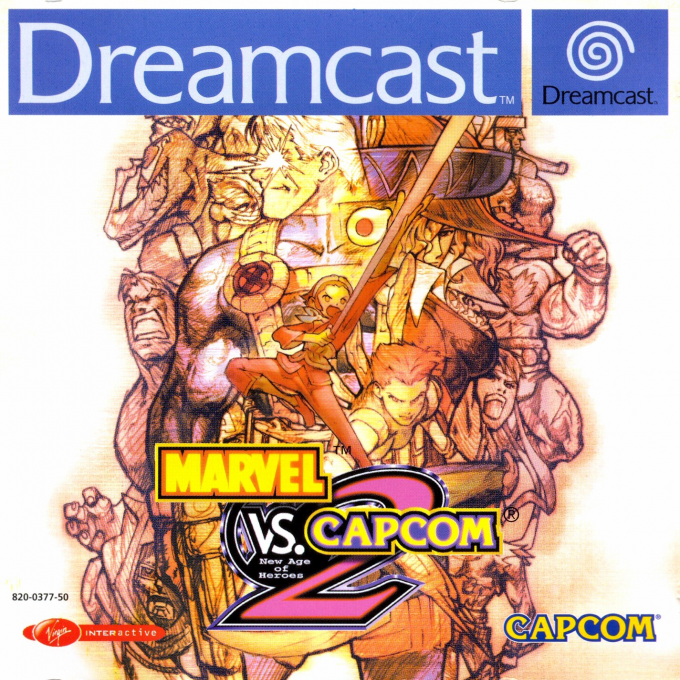
Marvel vs. Capcom 2: New Age of Heroes is Capcom’s crossover fighting game, first built for Sega’s NAOMI arcade hardware in 2000 and brought to Dreamcast later that year. Its July Dreamcast release was published regionally by Virgin Interactive in Europe. The game continues the company’s Marvel-versus-Capcom series, bringing comic-book heroes and villains together with characters from Street Fighter, Darkstalkers, Mega Man, Resident Evil, Strider, and other Capcom properties.
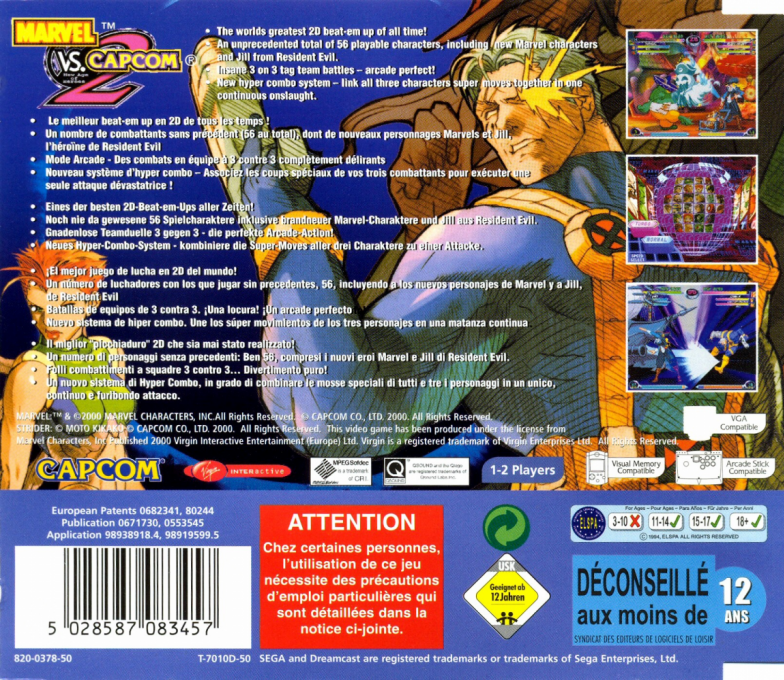
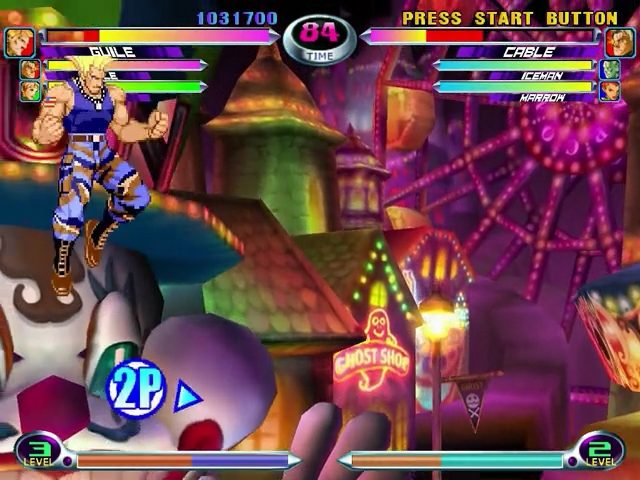
The central change from the preceding Marvel vs. Capcom is its three-on-three team format. Each side selects three fighters from a roster of 56 and fights one character at a time; a round ends only when every member of the opposing team has been defeated. Familiar headliners such as Ryu, Chun-Li, Spider-Man, Wolverine, and Captain America share the screen with less expected picks including Servbot, SonSon, Ruby Heart, Amingo, and Jill Valentine.
Its Variable System lets players tag to a resting teammate during a match, creating a way to preserve a damaged character while their off-screen partners slowly regain red health. The four-button control layout reserves two buttons for Variable Assists, short attacks called in by teammates who remain outside the active fight. Every fighter offers three assist types, labeled alpha, beta, and gamma, so the chosen team can be shaped around projectiles, anti-air coverage, healing, or other tactical support; assists can also be struck and take extra damage.
The Hyper Combo Gauge builds as combatants attack, defend, and take damage. Meter can be spent on a character’s screen-filling Hyper Combo, while Delayed Hyper Combos hand the action to the next teammate in a chained super attack. With enough meter, Variable Combos bring the whole team into the arena at once, allowing all three characters to attack together and turning a successful opening into the game’s famously extravagant multi-hit sequences.
Dreamcast players can work through Arcade, Versus, Training, Survival, and Score Attack play, as well as the four-player Cross Fever mode. The home release makes progression part of the package: playing earns points that are spent in the Secret Factor shop to unlock additional fighters, alternate costumes, stages, and gallery material. This gives the large cast a gradual reveal rather than presenting every selection immediately.
Because NAOMI hardware and Dreamcast were closely related, the conversion preserves the arcade game’s combination of hand-drawn 2D character sprites with moving 3D arenas and its rapid, effects-heavy combat with little visual compromise. The Japanese Dreamcast version also used the Visual Memory Unit in connection with compatible arcade cabinets, letting players carry certain unlock data between home and arcade versions. That unusual feature underscored how closely the Dreamcast edition was tied to the original coin-operated release.
Gallery
Details
- Developer
- Capcom
- Publisher
- Virgin
- Genre
- Fighting
- Players
- 1-2
- Release Date
- July 16, 2000
- System
- Dreamcast