About
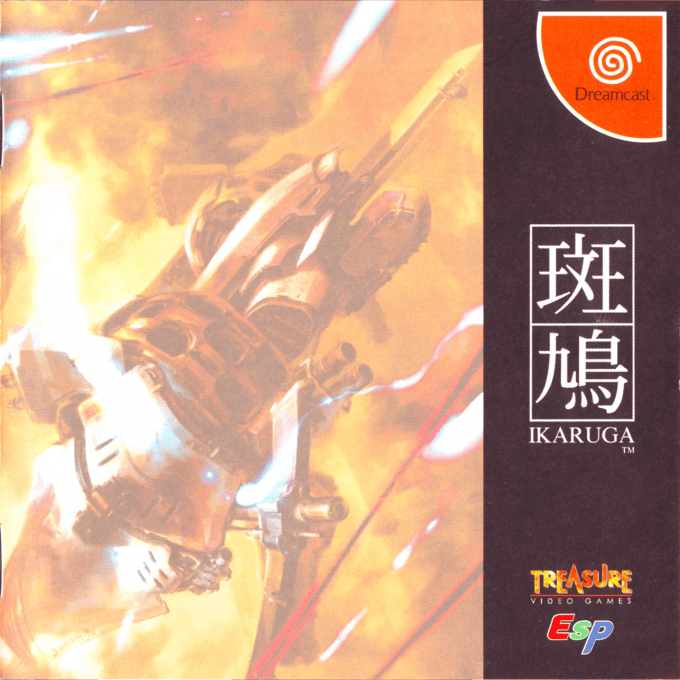
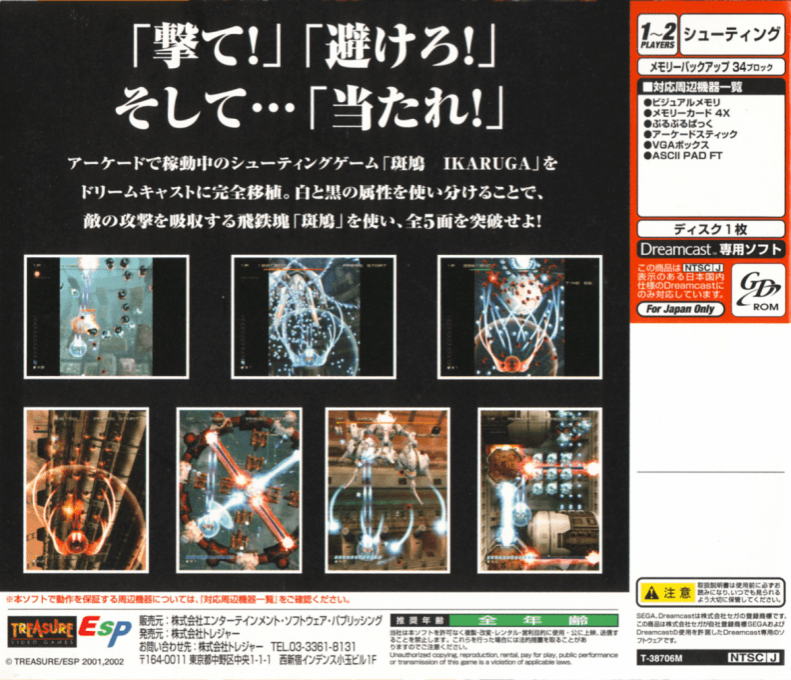
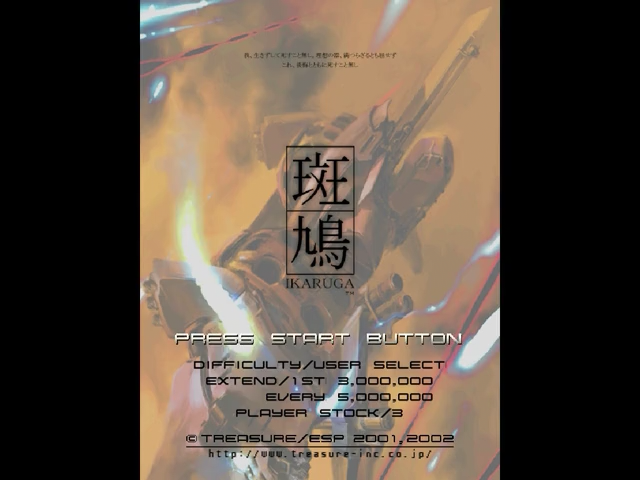
Ikaruga for Dreamcast is Treasure’s vertically scrolling shoot ’em up, released in Japan on September 5, 2002 by Treasure and Entertainment Software Publishing (ESP). It is a home conversion of Treasure’s 2001 Sega NAOMI arcade game, built around a striking black-and-white polarity system rather than conventional weapon upgrades. The Dreamcast edition was a Japanese release, but it became an essential import for shoot ’em up players before later versions brought the game to other platforms. Its focused five-stage campaign supports one player or two-player cooperative play.
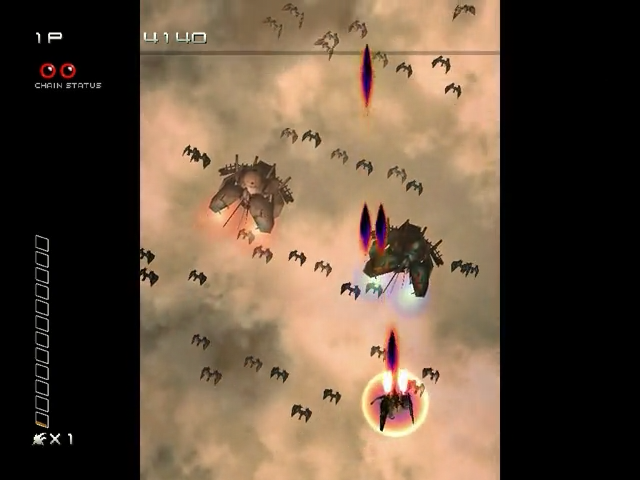
Players pilot the Ikaruga fighter through hostile formations, dense bullet patterns, obstacles, and large mechanical bosses. A dedicated control switches the craft instantly between black and white polarity. While set to one color, the ship absorbs enemy bullets of that same color, turning hazards into a resource; contact with the opposite color remains fatal. This makes each encounter an exercise in reading the screen, deciding when to hold a position and absorb fire, and knowing when a quick switch is safer than trying to dodge.
Polarity also changes offensive tactics. Shots are more effective against enemies of the opposing color, so survival and attack are deliberately intertwined. Absorbing matching fire charges the Ikaruga’s homing laser supply, giving careful play a powerful answer to dangerous targets. There are no roaming item pickups to reshape the ship’s basic arsenal. Instead, the challenge comes from mastering the available tools, anticipating formations, and managing color changes through patterns that initially look overwhelming.
Scoring adds another layer to the Dreamcast game’s design. Defeating three enemies of the same color in succession creates a chain, and continuing those chains produces increasingly valuable bonuses. A run can therefore be approached simply as a fight to reach the end, or as a tightly planned attempt to preserve a scoring route while keeping the ship alive. That tension is central to Ikaruga: the safest immediate choice and the best scoring choice do not always coincide, giving repeat plays a reason to study stage layouts and enemy order.
The game’s setting combines science-fiction machinery with imagery influenced by Japanese aesthetics. Its story follows Shinra, a surviving rebel pilot fighting the powerful nation of Horai in the specially built Ikaruga. In cooperative play, a second player can join as Kagari in the Ginkei, another craft able to use the same polarity-changing principle. The campaign’s named chapters and dramatic boss encounters frame the action without interrupting its arcade momentum, while the sharply defined monochrome enemy colors keep important gameplay information readable amid the visual spectacle.
Ikaruga is closely connected in spirit to Treasure’s earlier Radiant Silvergun, sharing the developer’s interest in carefully structured shooting and elaborate score play while establishing a distinct system of its own. The Dreamcast version preserves the arcade game’s vertical format and adds home-oriented options including practice for unlocked stages. Released late in the Dreamcast’s commercial life, it stands as a compact, demanding example of the system’s Japanese shoot ’em up library: a game where memorization, precision, cooperation, and the ability to treat enemy fire as both danger and opportunity all matter.
Gallery
Details
- Developer
- Treasure
- Publisher
- Treasure
- Genre
- Shoot 'em Up
- Players
- 1-2
- Release Date
- September 5, 2002
- System
- Dreamcast