About
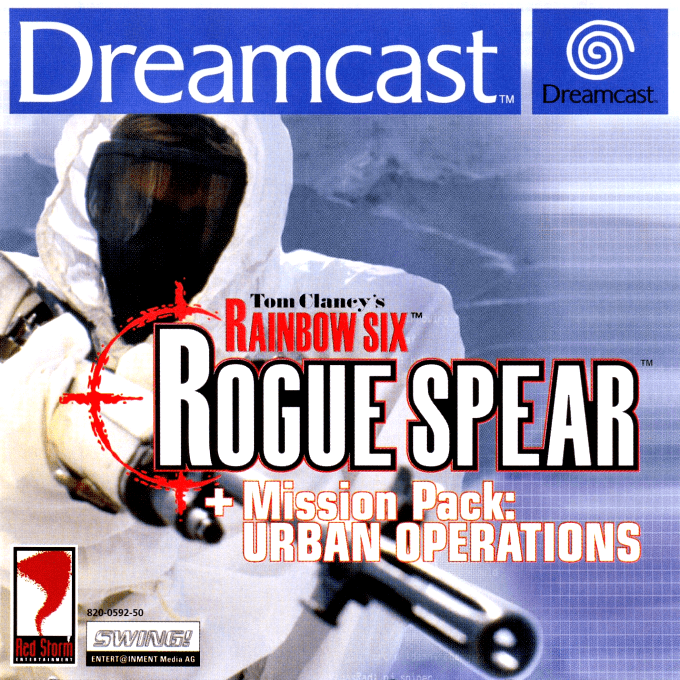
Tom Clancy's Rainbow Six: Rogue Spear + Mission Pack Urban Operations for Sega Dreamcast brings Red Storm Entertainment's tactical counterterrorism series to Sega's console in a 2000 release. This version adapts the 1999 PC sequel to Tom Clancy's Rainbow Six and packages its main campaign with the single-player missions from the Urban Operations expansion. It is a first-person tactical shooter built around the fictional multinational Rainbow unit, where careful preparation and teamwork matter more than reflexive run-and-gun play. The Dreamcast edition was released in North America by Majesco, while Swing! Entertainment handled a European release.
The campaign places Rainbow against a series of international terrorist threats tied to a wider nuclear plot. Operations take the team through locations around the world, with assignments such as hostage rescues, bomb disposal, intelligence gathering, and assaults on hostile positions. Briefings establish each situation before the action begins, while the game’s story follows the organization’s effort to uncover and stop the forces behind the attacks. The premise continues the military-thriller approach established by the first Rainbow Six game, with John Clark leading the elite unit.
Rogue Spear’s defining feature is its two-part mission structure. Before entering an operation, players choose operatives, divide them into color-coded squads, select equipment, and use a blueprint to lay out routes and orders. Teams can be given instructions for movement, waiting, opening doors, and other actions at planned waypoints. Default plans offer a starting point, but designing a route that lets several squads move safely through a building is central to the experience. Up to eight team members can be fielded from a larger roster, and the Dreamcast version expands the available initial selection compared with the PC release.
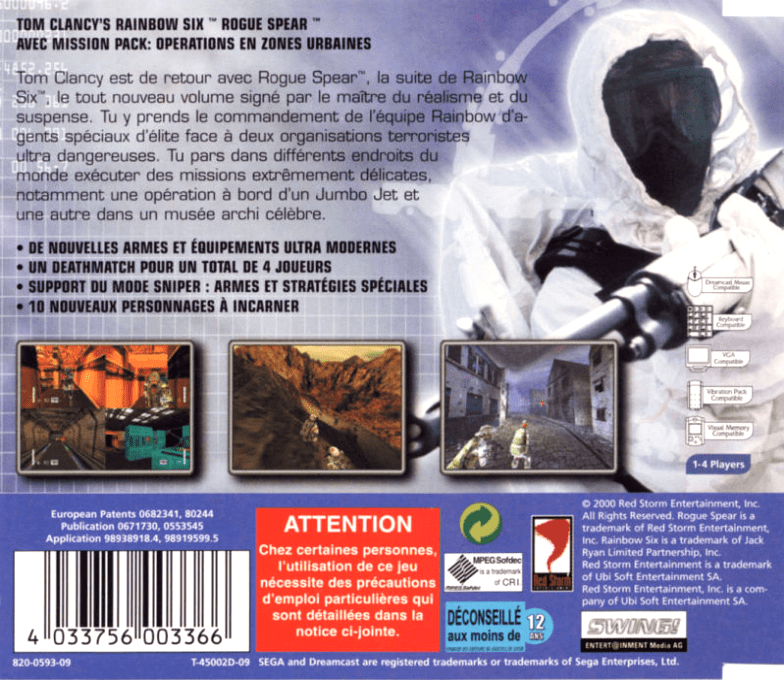
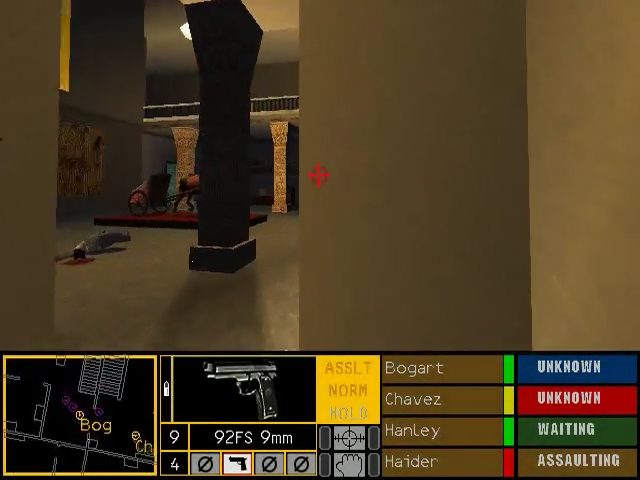
Once the operation begins, the plan unfolds in first-person 3D. Players take direct control of a team leader and may switch viewpoints among surviving squad members, while other operatives follow their assigned orders. The pace is deliberately tense: a single well-placed shot can be fatal, so checking corners, coordinating entries, using cover, and avoiding friendly fire are essential. Rather than treating every encounter as a shooting gallery, the game asks the player to complete objectives with minimal risk. Dreamcast controls map a large set of commands to the controller, and the console version also supports a keyboard and mouse for players who prefer more traditional first-person input.
Urban Operations broadens the package with its additional single-player scenarios, helping make this a substantial Dreamcast campaign. The original PC expansion introduced new maps, returning locations from the first Rainbow Six, weapons, and multiplayer additions; the Dreamcast compilation does not reproduce the entire multiplayer side of that release. In particular, its Urban Operations content is limited to the expansion’s solo missions rather than every competitive enhancement from the computer version. That distinction makes the title a compilation tailored to the console rather than a one-for-one transfer of the PC game and add-on.
Dreamcast multiplayer supports up to four players in split-screen deathmatch. It offers a straightforward competitive option, but it is notably narrower than the PC edition’s online and cooperative offerings. The console version’s focus therefore remains its carefully planned single-player operations: selecting the right people and tools, coordinating multiple teams, and surviving the consequences when a plan goes wrong. This contrast also captures what made the early Rainbow Six games distinctive within the first-person shooter field—mission preparation is not a menu to rush through, but a major part of the challenge.
As the second main Rainbow Six game, Rogue Spear refined the template introduced by its predecessor with improved presentation, enemy behavior, leaning, and a broader set of missions. Its Dreamcast release arrived during a period when tactical shooters were still most closely associated with computers, making the game’s detailed planning interface and deliberate combat unusual on a home console. For players exploring the series’ early history, Tom Clancy's Rainbow Six: Rogue Spear + Mission Pack Urban Operations preserves a console-specific version of Red Storm’s methodical, squad-based formula, combining a global counterterrorism campaign with selected Urban Operations material.
Gallery
Details
- Developer
- Red Storm Entertainment
- Publisher
- Swing! Entertainment
- Genre
- First-Person Shooter, Other Strategy
- Players
- 1
- Release Date
- November 20, 2000
- System
- Dreamcast