About
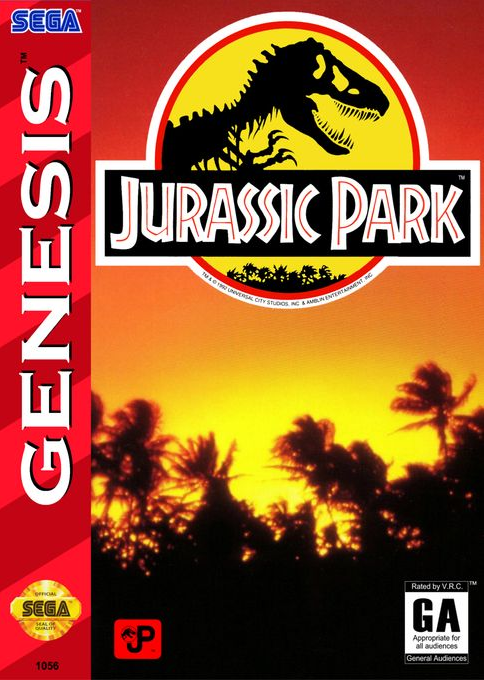
Jurassic Park for Sega Genesis and Mega Drive is a 1993 single-player action-platform game developed by BlueSky Software and published by Sega. Released alongside the first Jurassic Park film, it is one of several very different games created for the license that year, rather than a conversion of the Nintendo, Super NES, or computer versions. Set on Isla Nublar after the park’s dinosaurs escape, this 16-bit adventure turns the movie’s danger-filled setting into a side-scrolling trek through jungle, industrial areas, and the Visitor Center.
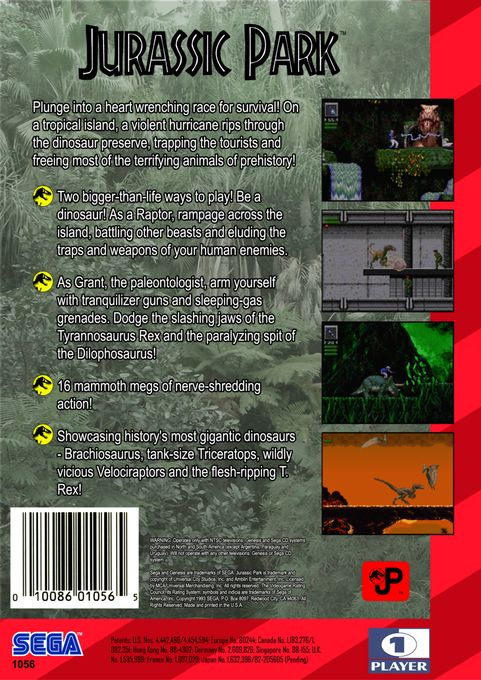
Its defining feature is the choice of two separate campaigns. Players can guide paleontologist Dr. Alan Grant in an attempt to cross the island and reach the Visitor Center for a helicopter escape, or take control of a Velociraptor on a competing route that ends with Grant as its target. The two choices are more than alternate character sprites: they use different stages, enemies, movement options, and approaches to survival. That split gives Jurassic Park a distinctive place among Genesis movie tie-ins, letting players experience the crisis from both a human and dinosaur perspective.
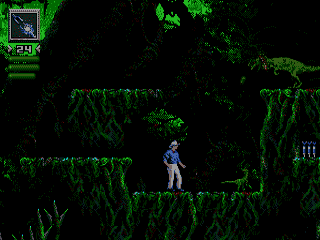
Grant’s campaign is the more equipment-driven of the two. He runs, jumps, climbs, and works through hazardous terrain while confronting loose dinosaurs and armed park personnel. His supplies include tranquilizer and stun weapons as well as grenades and a rocket launcher, with ammunition and first-aid kits placed around the levels. Many tools are intended to create an opening rather than simply remove a threat, so choosing when to stop an enemy and when to keep moving is part of the challenge. Grant also faces environmental obstacles and a river section that changes the pace from ordinary platforming.
The raptor campaign is built around speed and close-range attacks. The dinosaur can cover ground quickly and make much larger jumps than Grant, using teeth and claws instead of his assortment of gear. It can overpower guards but must still deal with their escalating weapons and with other dinosaurs on the island; eating small Compsognathus can restore health. This route has fewer levels and a more direct, aggressive rhythm, while its alternate layouts are designed around the raptor’s mobility. Both campaigns use password screens between areas, an important practical feature for a cartridge game with no save system.
Although it draws on familiar Jurassic Park locations and the basic premise of the 1993 film, the Genesis game does not attempt to retell every scene. It introduces its own level progression and even uses a finale related to an unused film ending: at the Visitor Center, the conflict is resolved through the Tyrannosaurus rex skeleton rather than a conventional last encounter alone. The game also includes creatures and attractions associated with the wider Jurassic Park fiction, while environments such as the canyon and volcano take the action beyond the film’s exact locations.
BlueSky’s presentation aims to sell the scale and menace of the license through large dinosaur sprites, dense scenery, and animation. The design team used filmed and digitized reference material for character and dinosaur animation, including film-production dinosaur models, while the game’s enemy behavior was promoted as Artificial Dinosaur Intelligence. The result is a brisk, sometimes demanding action game whose two campaigns are its lasting hook. Jurassic Park was followed on Genesis/Mega Drive by Jurassic Park: Rampage Edition in 1994, another BlueSky-developed sequel that continues its own version of the island escape.
Gallery
Details
- Developer
- Tectoy
- Publisher
- BlueSky Software
- Genre
- Other Adventure
- Players
- 1
- Release Date
- January 1, 1993
- System
- Genesis/Megadrive