About
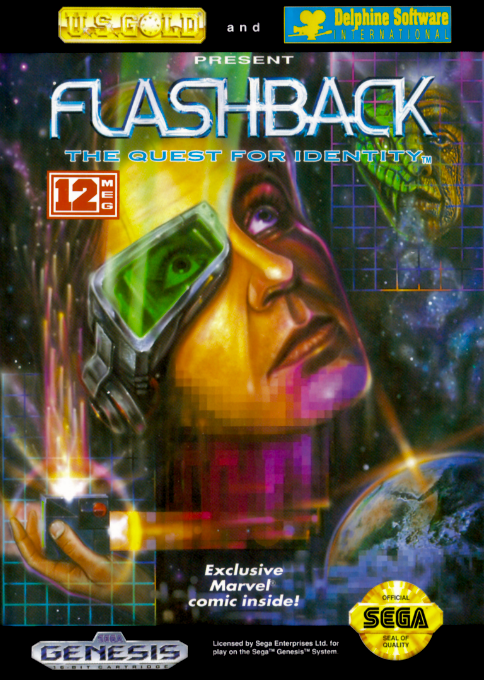
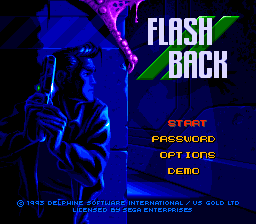
Flashback: The Quest for Identity for Sega Genesis, known as Flashback in many other regions, is a single-player science-fiction cinematic platform game from Delphine Software International. U.S. Gold published this Genesis/Mega Drive version in 1993, following the original 1992 Amiga release. It puts the player in control of Conrad B. Hart, an agent stranded in the artificial jungle of Titan with his memory erased. A recording he left for himself points him toward New Washington and a friend named Ian, beginning a chase through a future shaped by a hidden alien threat.
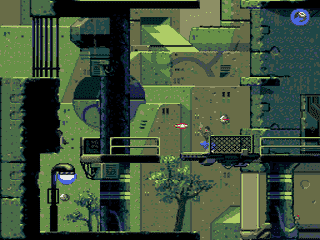
The Genesis game unfolds across a sequence of large, screen-by-screen environments rather than a continuously scrolling world. Conrad has to negotiate ledges, elevators, drops, doors and traps with deliberate, animation-led movement. Running jumps, smaller jumps, hanging from edges, climbing, crouching and rolling are all important, and a careless fall from too high can be fatal. The controller scheme ties many actions to context: the action command can make Conrad run, jump, talk, fire, collect an object or grab a ledge, while the directional pad determines the precise move.
Combat is only one part of the route through each area. Conrad can draw his pistol, aim while moving, and protect himself with rechargeable shields, but progress frequently depends on observing the layout and using the right item in the right place. The inventory holds tools such as keys, ID cards, magnetic cartridges and holocubes. Energy generators recharge equipment; switches, pressure pads, cameras and locks change the paths ahead. A portable force field can stop hostile fire, while mechanical devices can trigger hazards or reach places Conrad cannot safely approach himself.
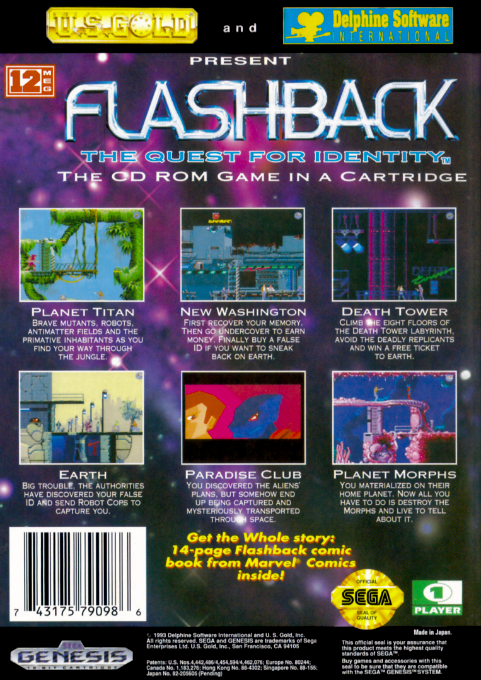
The story moves from Titan to the city of New Washington, where Conrad reunites with Ian and recovers the reason his past was taken from him. He needs credits and forged identification to travel back to Earth, then must earn a ticket through the dangerous Cyber Tower contest. The later stages take him to Earth and the Paradise Club, where the conspiracy becomes clearer, before carrying the mission to the Morphs’ home world. The game’s locales turn its mystery into a series of practical objectives: find information, gain access, arrange transport, survive hostile complexes and keep moving toward the source of the invasion.
Flashback’s identity rests on its hand-drawn backdrops and character animation, built to make each climb, landing and gunfight feel like part of a continuous adventure. Its measured pacing rewards learning Conrad’s movement rules and reading the visual cues in a room before committing to a jump or a fight. Passwords allow a return at the beginning of a reached level, and the game also includes selectable difficulty settings and controller configurations. The Genesis cartridge presents the same core journey that appeared on several early-1990s computer and console formats, with its own regional North American title, Flashback: The Quest for Identity.
This installment is the foundation of the Flashback series and leads into the later sequel Fade to Black. Its mixture of platforming, action, item-based obstacles and a suspenseful future setting places it alongside the era’s cinematic adventure games, but its progression is distinctly Conrad’s: each new area asks the player to combine careful movement with the information and objects collected along the way. For Genesis players, Flashback: The Quest for Identity remains a substantial, story-driven 16-bit quest built around exploration as much as reflexes.
Gallery
Details
- Developer
- Delphine Software International
- Publisher
- U.S. Gold
- Genre
- Platformer
- Players
- 1
- Release Date
- February 20, 1993
- System
- Genesis/Megadrive