About
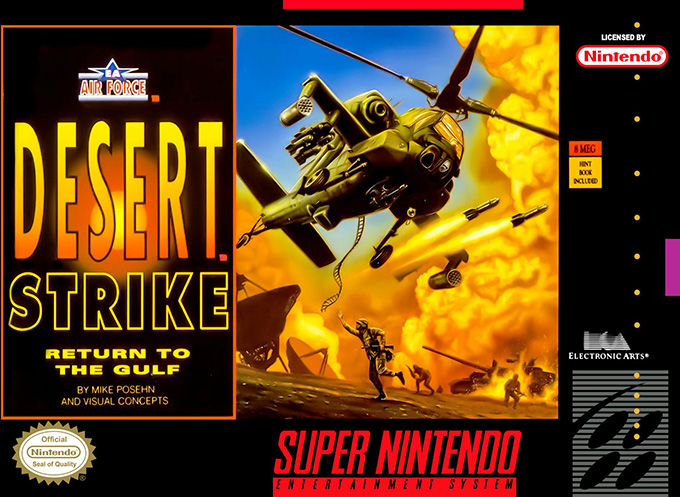
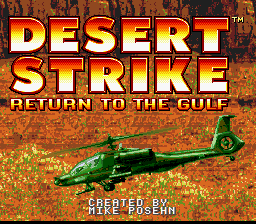
Desert Strike: Return to the Gulf for Super Nintendo is a 1992 isometric action game developed by Visual Concepts and published by Electronic Arts. A Super NES version of EA's military-themed Strike debut, it puts the player in command of a fictionalized AH-64 Apache-style attack helicopter during a crisis in a Persian Gulf-inspired setting. Its story casts the lone pilot and copilot against General Kilbaba, a dictator assembling weapons and defenses after seizing a wealthy emirate.
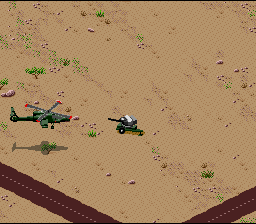
Rather than moving through a straight sequence of enemy waves, each operation unfolds across a broad, freely scrollable battlefield viewed from above at an angle. Before setting out, the player receives a mission briefing and then chooses a route through hostile territory, balancing urgent objectives against the practical need to survive. Airfields, missile sites, factories, prisoners, and enemy officers all become targets or priorities at different points in the campaign.
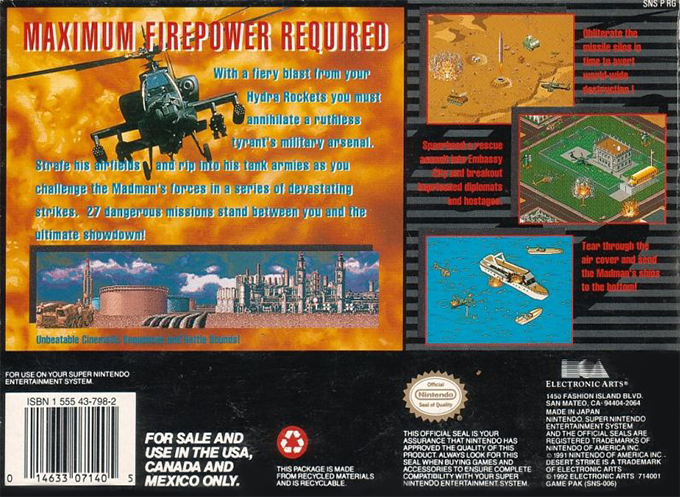
The helicopter carries a rapid-fire gun along with limited stocks of Hydra rockets and Hellfire missiles. These weapons serve different purposes, so successful sorties depend on matching firepower to the threat rather than firing indiscriminately. Ground troops, armored vehicles, anti-aircraft defenses, and other installations fight back, while the helicopter's armor, fuel, and ammunition steadily demand attention. Fuel barrels and ammunition crates replenish supplies in the field, and returning rescued people or captured personnel to a landing zone can restore protection.
Desert Strike combines combat with transport and rescue work. The helicopter can land, pick up people, and carry them to safety, turning positioning and route planning into as much of the challenge as aiming. Running out of fuel or taking too much damage costs a helicopter, while wasted ordnance can leave crucial targets defended. The result is a deliberate style of action in which players scout the map, decide which goals to tackle first, and preserve resources for the next encounter.
The Super Nintendo campaign is built around four escalating missions: Air Superiority, Scud Buster, Embassy City, and Nuclear Storm. Across them, the pilot disrupts enemy air power, searches for and destroys missile and weapons infrastructure, evacuates non-combatants and prisoners, and pursues Kilbaba as the threat grows. Briefings and mission objectives give the operations a connected narrative, while optional or supporting tasks add pressure to the larger goals.
Although Desert Strike first appeared on Sega Genesis, the Super NES release is its own console version, with Visual Concepts credited for its development and Electronic Arts for publishing. It arrived in North America as Desert Strike: Return to the Gulf; Japanese catalogues use the title Desert Strike: Wangan Sakusen. The game established the basic mix of isometric helicopter action, mission planning, rescue work, and resource management that Electronic Arts later revisited in the Strike series, including Jungle Strike and Urban Strike.
Gallery
Details
- Developer
- Visual Concepts
- Publisher
- Electronic Arts
- Genre
- Shoot 'em Up
- Players
- 1
- Release Date
- October 1, 1992
- System
- SNES