About
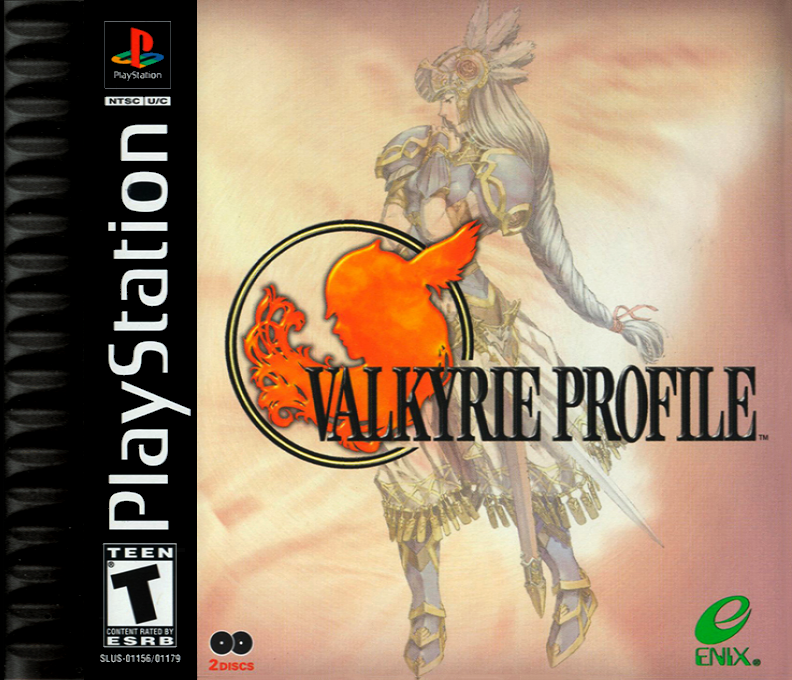
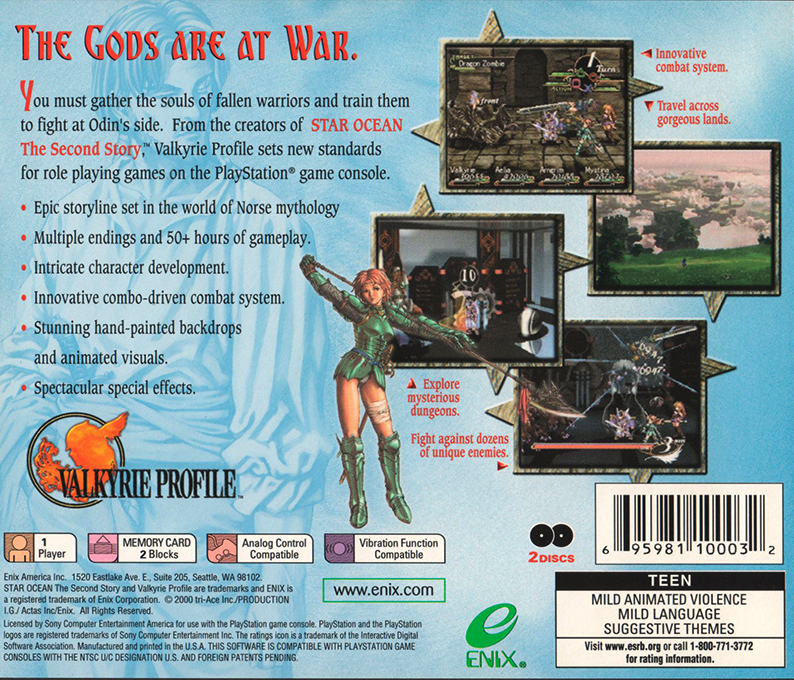
Valkyrie Profile for PlayStation is a single-player role-playing game developed by tri-Ace and published by Enix. It debuted in Japan in December 1999 before reaching North America in August 2000. Drawing on Norse mythology, the game casts the player as Lenneth, a valkyrie sent from Asgard to Midgard as Ragnarok approaches. Her assignment is to find worthy souls among the dead, recruit them as einherjar, and prepare them for service in the gods’ coming war.
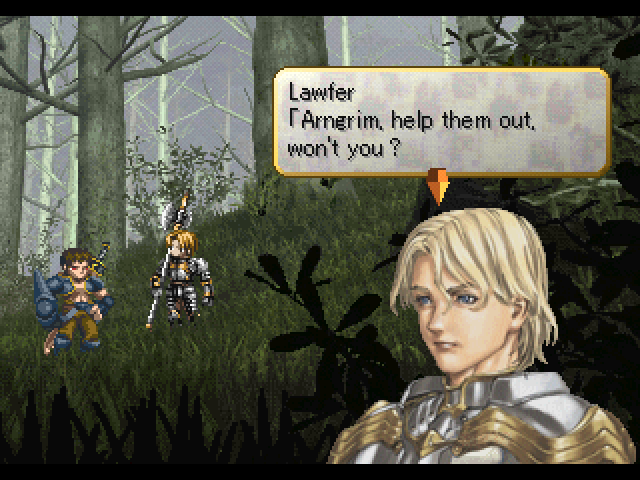
Its story is built around Lenneth’s encounters with people at decisive, often tragic moments in their lives. The warriors she recruits retain their own histories and personalities, and their scenes give the journey a succession of self-contained human dramas alongside the larger conflict between divine powers. Lenneth’s role as a servant of Odin and Freya also frames a central tension: she gathers heroes for Valhalla while gradually confronting questions about her own past and place in the world.
Valkyrie Profile PS1 combines several styles of play. Lenneth travels across a three-dimensional world map and uses Spiritual Concentration to locate towns, dungeons, and potential recruits. Towns are presented from a side view, while dungeon exploration gives her platforming tools unusual for a console RPG: she can jump, slide through tight spaces, swing a sword, and fire ice crystals. The crystals can freeze foes and form temporary footholds, so navigation and puzzle solving are closely tied to her abilities.
Contact with an enemy begins turn-based party combat. Each active character is assigned to a face button, and pressing that button triggers that fighter’s individual attack during the party’s turn. Timing and sequencing attacks to build a combo is essential, since sustained hits can fill a gauge and unlock a character’s powerful finishing move. The system makes party composition, weapon choices, and the order of attacks meaningful; Lenneth can use swords or bows, while her allies occupy more specialized combat roles.
The game’s chapter structure adds a strategic layer to its adventure. Visits, dungeons, and recruitment consume a limited number of periods before Lenneth returns to Asgard for a Sacred Phase. At that point, the player must decide which trained einherjar to send to Valhalla, taking into account the requested qualities and skills for the chapter. Keeping allies for the current party can be tempting, but meeting the gods’ needs affects rewards and the broader campaign. Difficulty settings also alter the available content and challenge, with different dungeons and recruitable characters across the modes.
This PlayStation release established the series’ distinctive blend of side-scrolling exploration, character-focused storytelling, and button-driven combat. Its English edition arrived with changes from the Japanese release, including added cinematics and interface-related adjustments such as broader armor management. The game later returned as Valkyrie Profile: Lenneth for PSP, an adaptation that preserved the original adventure while adding full-motion story scenes; later versions of Lenneth brought the title to mobile devices and modern PlayStation systems.
As the first Valkyrie Profile game, it introduced Lenneth and the mythological setting that later entries would revisit from other perspectives. The original remains notable for making the recruitment of fallen heroes more than a collection system: every decision to train, retain, or send an einherjar connects dungeon progress, party building, and the story’s approaching Ragnarok. For players looking for a PlayStation RPG with a deliberately structured campaign and a combat system that rewards coordinated attacks, Valkyrie Profile offers a singular take on fantasy role-playing.
Gallery

Details
- Developer
- Tri-Ace
- Publisher
- Enix
- Genre
- JRPG
- Players
- 1
- Release Date
- August 29, 2000
- System
- PS1