About
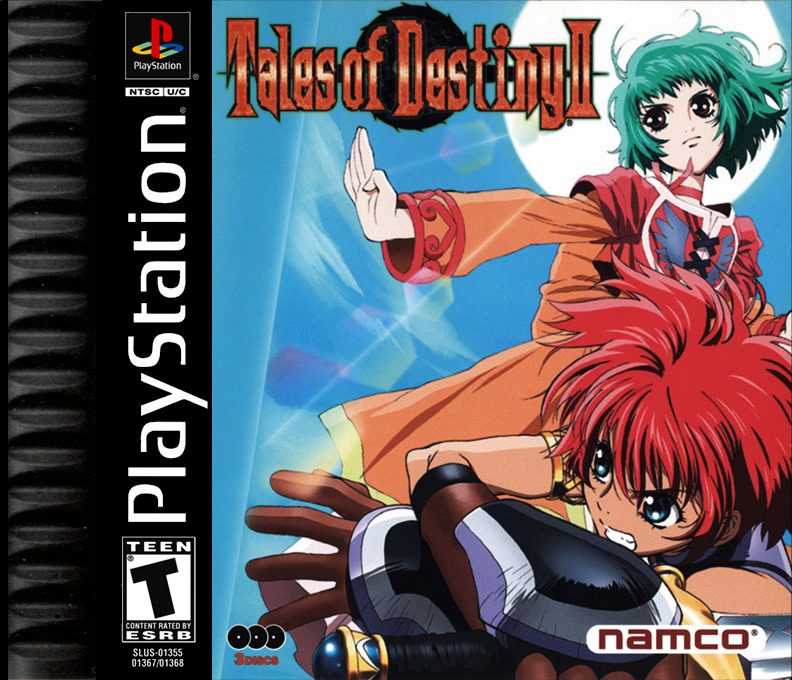
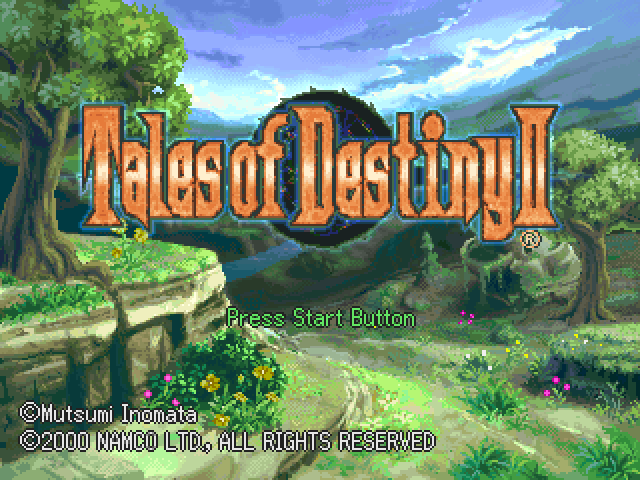
Tales of Destiny II for PlayStation is the North American title of Namco's Tales of Eternia, a 2001 action role-playing game originally released in Japan in 2000. It is the third mainline Tales game, but it is not the PlayStation 2 title Tales of Destiny 2, which is a separate, later sequel to Tales of Destiny. Developed by Wolf Team and published by Namco, this PlayStation adventure combines a large fantasy journey with the series' character-focused storytelling and real-time combat.
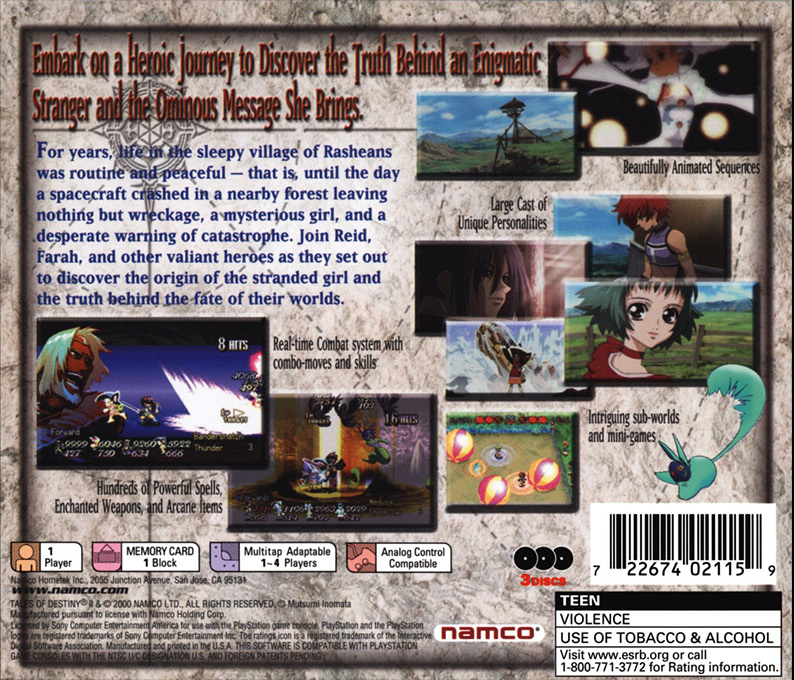
The story begins in the world of Inferia, where the easygoing hunter Reid Hershel and his lifelong friends Farah Oersted and Keele Zeibel encounter Meredy, a girl who has fallen from the sky and speaks an unfamiliar language. Her arrival points toward a disaster called the Grand Fall: a threat to Inferia and the world of Celestia. The party's search for answers carries it beyond familiar towns and fields, through the history and tensions that separate the two worlds, while its members gradually learn why the impending collision is happening.
Exploration follows the broad JRPG tradition. Players travel across a world map, enter settlements to talk with residents and buy equipment, investigate dungeons, and advance the story through events. Money, items, weapons, armor, and character statistics are managed from the menu, while recipes let the party prepare food outside battle for useful recovery or status effects. Save access is notably flexible for a PlayStation-era role-playing game, allowing progress to be recorded from the menu rather than only at fixed save points.
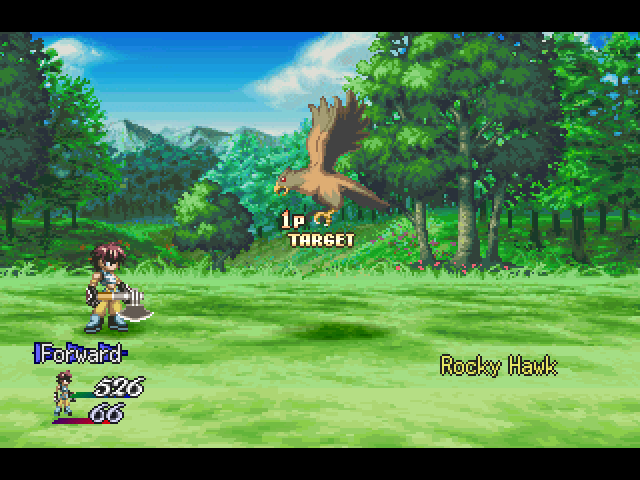
Combat uses the Tales series' Linear Motion Battle System. Encounters shift to side-view arenas where attacks, movement, guarding, and techniques happen in real time instead of through turns. The player controls one party member directly, chaining close-range attacks and special moves while computer-controlled allies follow assigned strategies. Allies can be given broad instructions and specific commands, and the controlled character can be changed during a fight. That combination makes positioning, timing, item use, and the balance between melee fighters and spellcasters central to each encounter.
Reid's party gives Tales of Destiny II its distinct range of fighting styles. Farah relies on quick hand-to-hand combinations, Keele specializes in magic, and Meredy brings her own spellcasting knowledge from Celestia; later companions expand the available tactics further. The game also features character designs by Mutsumi Inomata and animated sequences from Production I.G., helping connect its expressive cast to the series' anime-influenced presentation. Music by Motoi Sakuraba and Shinji Tamura continues a collaboration associated with earlier Tales entries.
Its regional naming is an important part of the game's history. Japan released it as Tales of Eternia, while Namco called the North American PlayStation edition Tales of Destiny II to create a recognizable link for players familiar with Tales of Destiny. The two games do not share a direct narrative connection, and the name later became especially confusing once the separate PlayStation 2 game Tales of Destiny 2 appeared in Japan. A PlayStation Portable port subsequently used the Tales of Eternia name in Japan and Europe, but the original PlayStation release remains the version known in North America as Tales of Destiny II.
Gallery
Details
- Developer
- Namco
- Publisher
- Namco
- Genre
- JRPG
- Players
- 1
- Release Date
- September 10, 2001
- System
- PS1