About
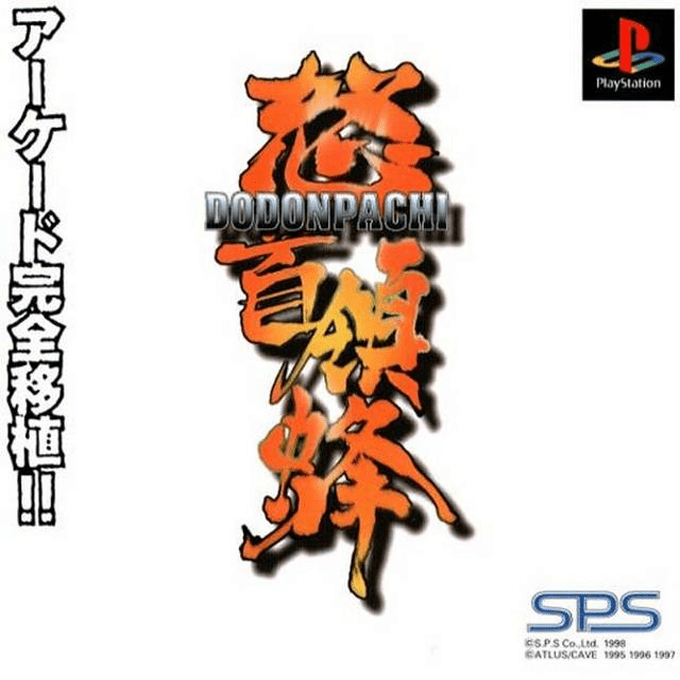
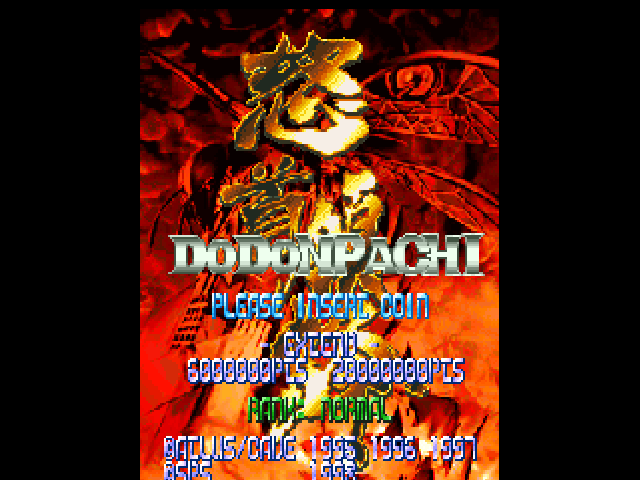
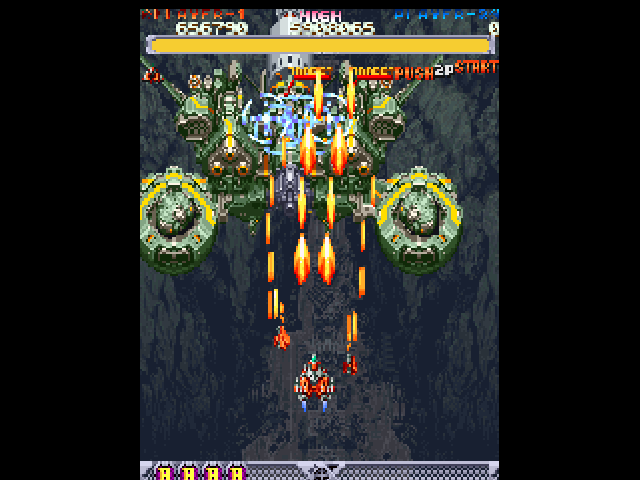
DoDonPachi for PlayStation is the 1998 Japanese home version of Cave’s vertical scrolling shoot ’em up, released by SPS on September 10, 1998. It follows the 1997 arcade original and is the second entry in the DonPachi series, bringing Cave’s intense 2D action to Sony’s PS1. The player pilots a combat craft in a war against an apparently mechanized enemy force, but the simple mission briefing gradually gives way to a more ominous story. Built around dense enemy formations, large bosses, and carefully placed scoring opportunities, DoDonPachi PlayStation is a single-screen-upward shooter whose challenge comes from surviving elaborate projectile patterns while making each route as profitable as possible.
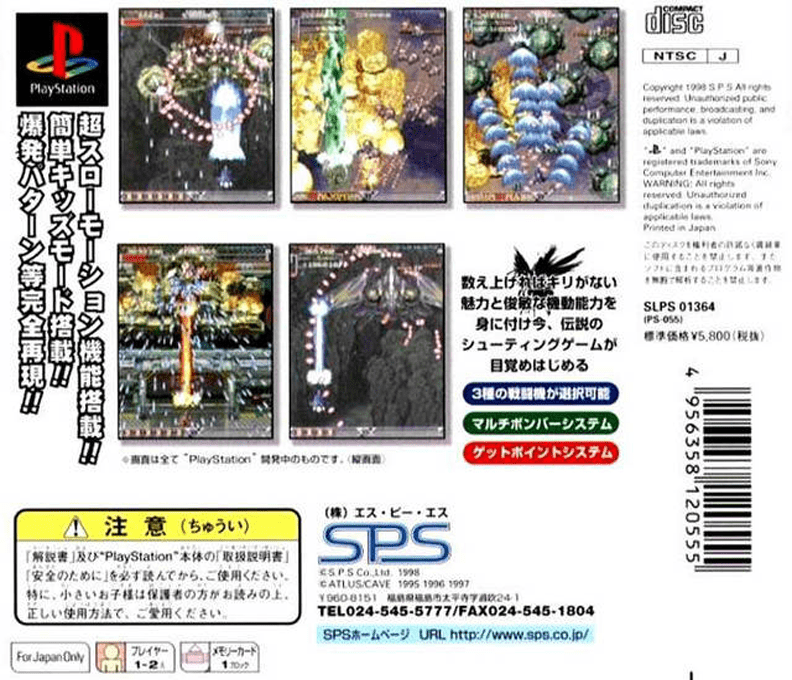
At the start, players choose one of three aircraft types: a focused red fighter, a helicopter with directional side weapons, or a blue craft built around a broader spread. Each selection can be configured for a Shot- or Laser-oriented emphasis. Tapping the fire controls launches the ship’s normal weapon, while holding fire brings its support options together for a concentrated laser; the latter supplies heavy damage and slows the craft, so positioning becomes a constant trade-off. Power-up items strengthen both attack forms, and a limited bomb stock provides a vital escape when the screen becomes dangerous. Bomb behavior changes with the current firing style, producing either a wide emergency blast or a shorter-ranged beam attack.
The game expands the chaining ideas of DonPachi through its Get Point System. Destroying enemies in rapid succession builds a hit count, while keeping a laser trained on sturdier targets can sustain a chain between waves. The gauge drains quickly, turning route knowledge and target priority into central skills rather than optional extras. Stages also hide golden bees that reward attentive laser use, and collecting bombs while already at capacity activates MAXIMUM mode for additional score gains. These systems give the straightforward task of clearing a stage several layers of risk and reward: a player can focus on safe survival, chase secrets, or try to maintain a difficult chain through an entire section.
DoDonPachi’s main campaign moves through six areas before its more demanding second loop becomes available. Access is tied to a one-credit clear and performance conditions such as limited losses, strong chains, score, or bee collection. The second pass reuses the basic journey with much denser fire, leading capable players toward the series’ giant bee-themed confrontations and the fuller ending. Every area ends with a boss encounter, and destroyed bullets can become collectible stars, making aggressive play after a boss’s defeat useful as well as spectacular. The PlayStation edition supports one or two players and retains the arcade game’s core ship choices, scoring systems, items, and escalating boss battles.
SPS’s PS1 release is distinct from the earlier Japanese Sega Saturn conversion, which had its own Saturn Mode and additional content. The PlayStation version offers both horizontal and vertical display settings, allowing the presentation to be adjusted for a conventional television or a rotated setup. It also includes a manual slow feature and a wait-control option that lets players manage in-game slowdown, tools that suit a shooter famous for crowded patterns and precision movement. DoDonPachi later continued through several successors, but this PlayStation release preserves the entry that established many of the series’ most recognizable ideas: selectable ship styles, laser-driven scoring, hidden bees, demanding second-loop conditions, and an uncompromising climb from a simple alien-war premise to a much darker final revelation.
Gallery
Details
- Developer
- Cave
- Publisher
- SPS
- Genre
- Shoot 'em Up
- Players
- 1-2
- Release Date
- September 10, 1998
- System
- PS1