About
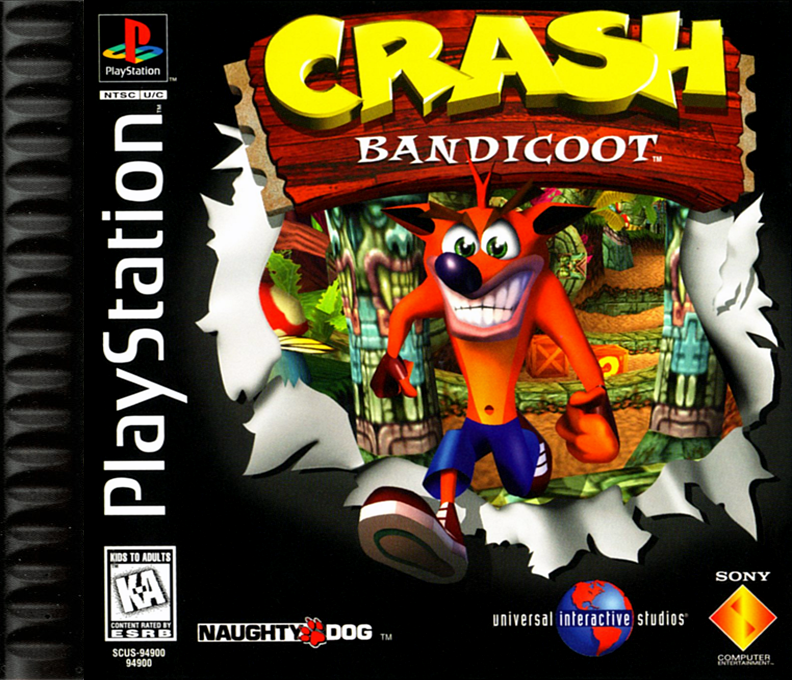
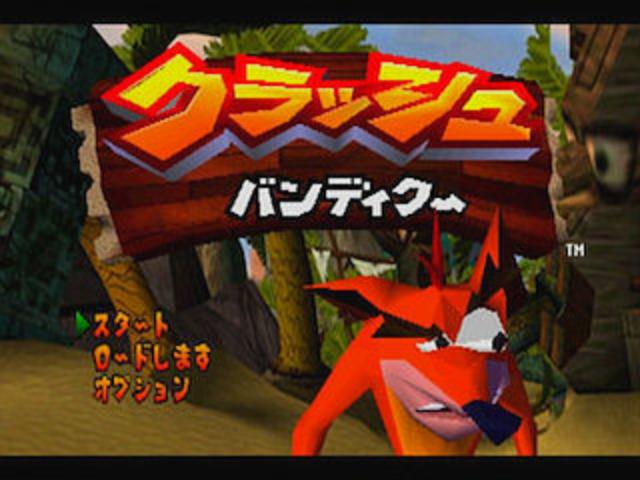
Crash Bandicoot for the original PlayStation is the bright, tightly focused 3D platform adventure that introduced Naughty Dog's orange marsupial hero in 1996. Crash begins his escape from Doctor Neo Cortex's island operation with one urgent goal: reach Cortex, stop his scheme to turn animals into an army, and rescue Tawna. It is an immediately legible premise, but the game sells it through expressive animation, brisk transitions between stages, and a cartoon world whose danger is never far beneath the colour. For players searching for the first Crash Bandicoot experience on PS1, this is the compact, demanding starting point for the series.
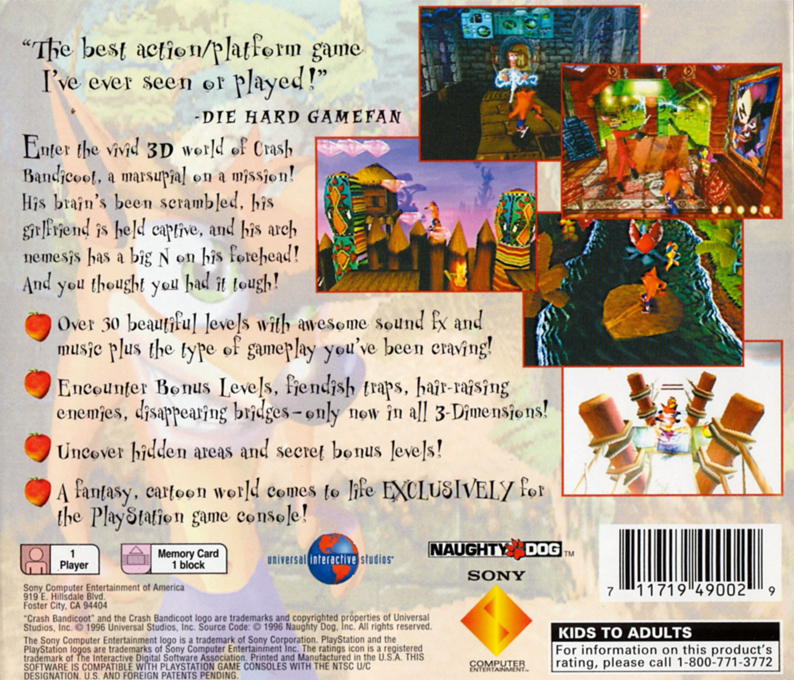
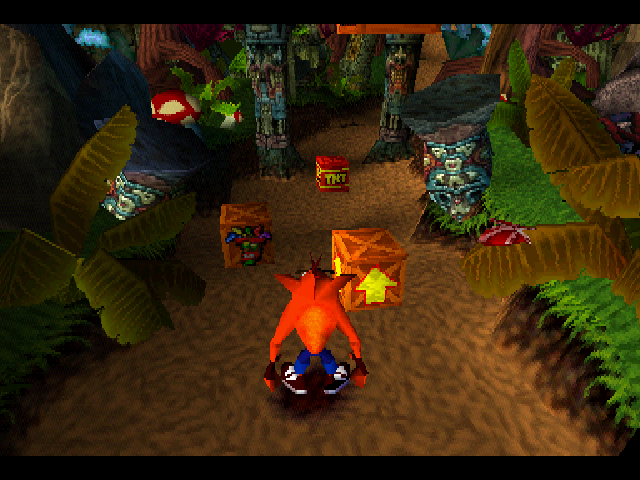
The journey crosses a chain of islands divided between tropical paths, tribal villages, ruined temples, caves, rivers, industrial machinery, and Cortex's fortress. Rather than offering a broad free-roaming map, the game makes each stage a defined obstacle course. Most levels place the camera behind Crash as he runs into the scenery, an approach that gave its platforming a distinctly different rhythm from side-scrolling contemporaries. Other stages turn the action sideways, send him racing toward the screen away from a rolling boulder, or put him on the back of a wild boar. Those changes of viewpoint keep the same small move set feeling fresh while asking for a new read of distance and timing.
Crash has two main ways to deal with trouble: a jump for clearing hazards or landing on certain enemies, and a spinning attack that knocks foes away. The apparent simplicity is deliberate. Platforms, pits, moving obstacles, hostile creatures, and precise landings become more demanding as the route advances, so success depends on committing to a jump at the right moment and learning how much space Crash needs. Aku Aku masks provide protection from a hit, while collecting several in succession briefly gives Crash a powerful invulnerable state. The result is a platformer with controls that are easy to understand but stages that reward patience, rhythm, and repeated attempts.
Crates are the central punctuation mark of every level. They hold Wumpa Fruit, extra lives, checkpoints, protective masks, and other useful items, but they can also hold trouble. TNT crates demand a quick retreat after being activated, while crates marked with an exclamation point can alter the surrounding level. Breaking them is satisfying on its own, yet the boxes also make exploration meaningful: a player who simply reaches the exit may miss fruit, hidden routes, or the chance to clear a stage completely. That tension between a safe run and a meticulous one is a large part of what gives the original Crash Bandicoot its replay value.
Collecting character tokens opens bonus areas connected to Tawna, Cortex, and Doctor Nitrus Brio. These short detours are built around additional crate-breaking and more exact platforming, with different levels of risk and reward. Tawna's bonuses also tie into the game's save system, an important detail in an era when progress could not be assumed after every stage. For players aiming beyond the ending, the bigger challenge is to finish qualifying levels without losing a life while breaking all eligible crates, earning gems that mark a thorough clear. Some colored gems unlock previously unreachable areas, encouraging a return to older stages with new possibilities in mind.
Cortex's experiments furnish the adventure with memorable opposition. Crash confronts the village chief Papu Papu, the wildly erratic Ripper Roo, the muscular Koala Kong, and the gun-toting Pinstripe Potoroo before getting closer to the scientists themselves. These boss encounters punctuate the island trek without abandoning the game's emphasis on observation: each opponent has a pattern to spot and an opening to use. The supporting cast, from the protective Aku Aku to Cortex's assistant Nitrus Brio, gives the largely wordless hero a lively cartoon context and helps the stages feel like a connected expedition rather than a loose collection of courses.
Naughty Dog built Crash Bandicoot around the original PlayStation's strengths, filling narrow routes with dense scenery, animated hazards, bold character silhouettes, and a lively score. Its camera and strict jumps can be demanding, especially when a difficult stage asks for precise depth judgment, but that pressure is inseparable from the game's identity. The game is at its best when a route that first felt intimidating becomes a practiced sequence of spins, hops, crate breaks, and close escapes. As the first chapter of the franchise, it remains a defining PS1 platform game: playful on the surface, exacting in motion, and packed with reasons to take one more run at a level.
Gallery
Details
- Developer
- Naughty Dog
- Publisher
- Sony Computer Entertainment
- Genre
- Platformer
- Players
- 1
- Release Date
- August 31, 1996
- System
- PS1