About
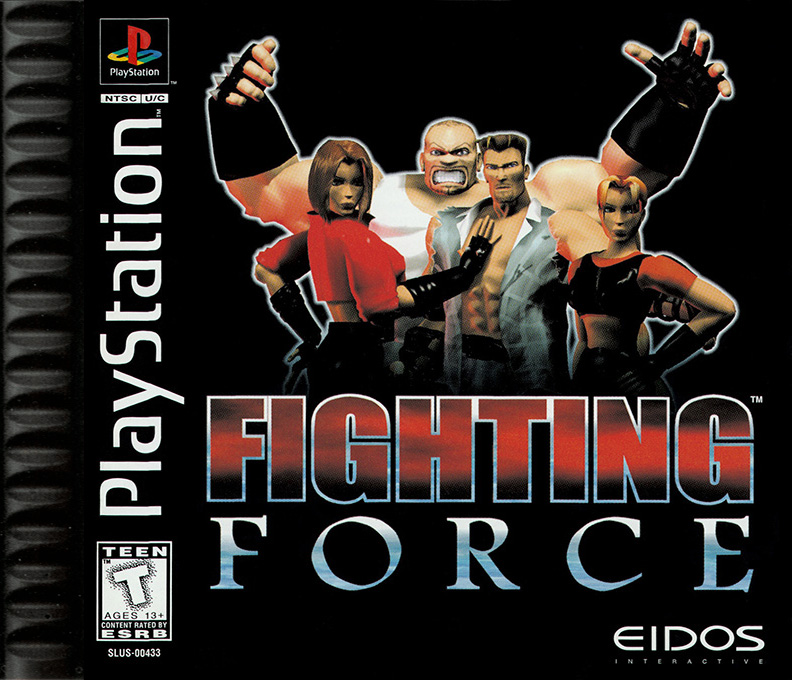
Fighting Force for PlayStation is a 3D beat ’em up developed by Core Design and published by Eidos Interactive in 1997. Set on the eve of the year 2000, it follows four unlikely allies who confront the armed forces of Dr. Dex Zeng, a criminal mastermind determined to bring about the destruction he believes fate promised. The PS1 game carries the forward-moving, enemy-filled structure of an arcade brawler into polygonal city streets and interiors, with a route that ultimately leads to Zeng’s island stronghold.
At the start, players select Hawk Manson, Mace Daniels, Alana McKendricks, or Ben “Smasher” Jackson. The choices are more than cosmetic: the fighters balance speed, strength, reach, and resilience differently, so the same encounters can feel distinct depending on the character. Hawk and Mace are comparatively rounded combatants, Alana is the quicker option, and Ben trades mobility for brute force. Each also has a special attack whose use costs part of the character’s health, adding a practical decision to close-range battles.
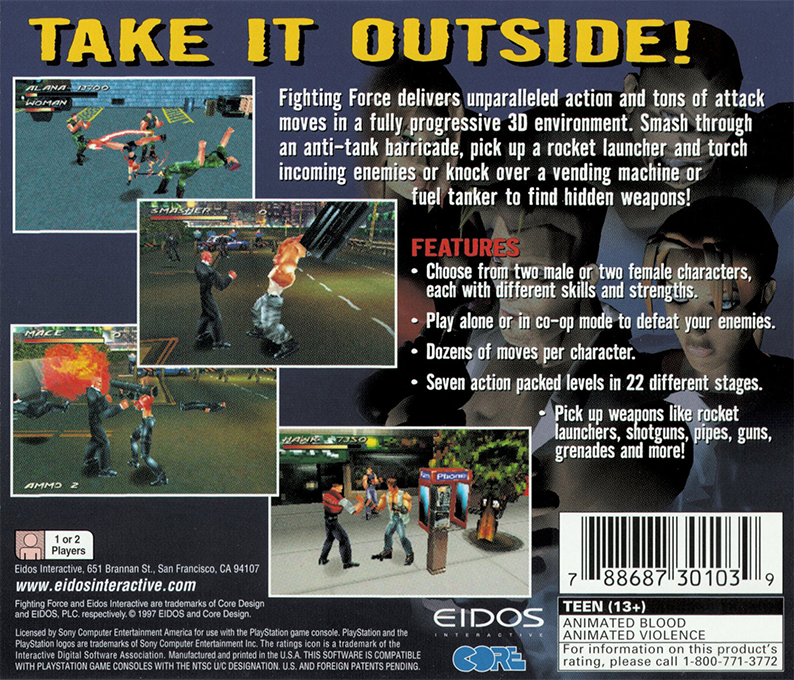
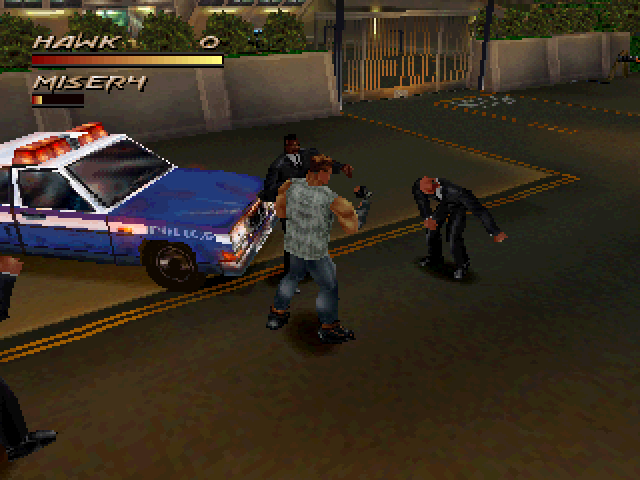
The central loop in Fighting Force PS1 is direct and physical. Players advance through an area, deal with groups of enemies, look for a way onward, and repeat through a changing sequence of locations. Basic hand-to-hand attacks are supplemented by weapons and loose objects found in the scenery. A knife, firearm, or other pickup can change the immediate rhythm of a fight, while throwable objects and destructible details help the environments feel like more than a flat backdrop. The game’s fixed camera and enclosed combat spaces keep attention on positioning, nearby threats, and the supplies available in the current section.
The campaign moves beyond the opening city confrontation into places such as a shopping mall, subway, Coast Guard facility, and Zeng’s headquarters. That variety gives the adventure a lightly cinematic progression without turning it into a free-roaming game: each setting is a series of combat-focused sections with enemies, hazards, and occasional branching choices about where to proceed. The plot joins the four protagonists’ separate motives around the same emergency, while their contrasting builds make replaying stages with another character a natural part of the design.
Fighting Force supports one or two players on the original PlayStation, allowing a second participant to join the brawl locally. Cooperative play makes crowd control and weapon pickups a shared concern, and the character roster lets partners combine different strengths. The game was part of the late-1990s push to reinterpret side-scrolling brawlers in three dimensions, arriving from the same Core Design team known for Tomb Raider. Its street-fighting premise, usable scenery, co-op option, and four-person cast give it a recognizable identity among PS1 action games.
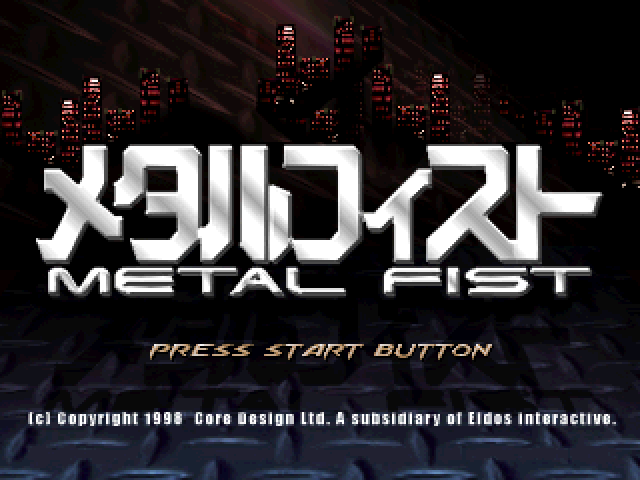
The PlayStation release is the original version of Fighting Force, while later releases took different forms. A Windows edition followed, and the 1999 Nintendo 64 conversion was issued as Fighting Force 64; the PlayStation game should therefore not be confused with that later port or with the 1999 sequel Fighting Force 2. In Japan, the PS1 release was published by Electronic Arts Victor under the title Metal Fist. For players seeking a 1997 PlayStation beat ’em up built around selectable heroes, improvised weapons, and local multiplayer, Fighting Force remains a distinctly early-3D take on the genre.
Gallery
Details
- Developer
- Core Design
- Publisher
- Eidos Interactive
- Genre
- Beat 'em Up
- Players
- 1-2
- Release Date
- October 31, 1997
- System
- PS1