About
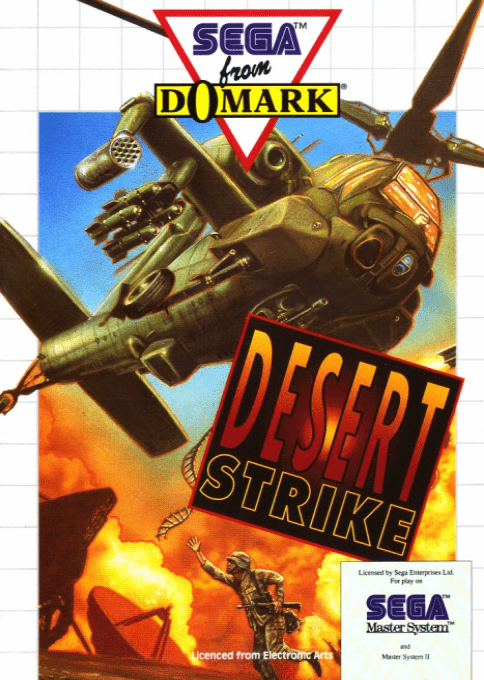
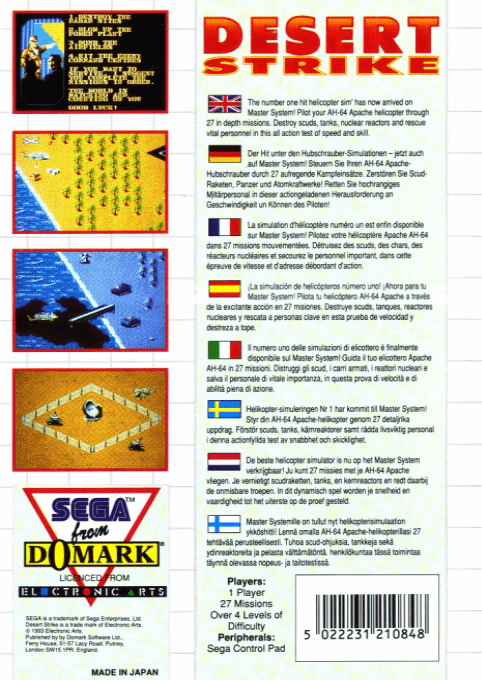
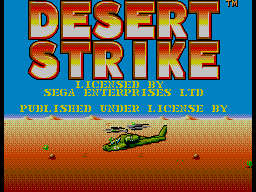
Desert Strike for Sega Master System is an isometric helicopter action game released in Europe in 1992. This 8-bit conversion of Electronic Arts' Desert Strike: Return to the Gulf was developed by The Kremlin and published by Domark. It places the player in the cockpit of an AH-64 Apache on a fictional Gulf conflict, combining immediate gunship combat with the careful route planning that defines the first entry in the Strike series.
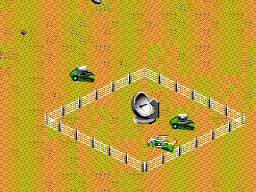
The campaign begins after the self-styled General Kilbaba seizes a wealthy emirate and turns its resources toward a growing military threat. From a three-quarter overhead view, the Apache crosses desert roads, compounds, airfields and hostile installations in an effort to halt his forces. Briefings set out the work ahead, while story sequences provide the frame for a succession of military operations rather than a single linear shooting course.
Each of the four campaigns contains several objectives spread across a broad battlefield. Tasks include knocking out radar and communications, attacking airfields and weapons sites, collecting intelligence, and extracting prisoners, hostages or specialists. The order in which the player approaches targets matters: certain jobs unlock progress, and failed key objectives can jeopardize a campaign. The result is an action game in which reconnaissance and choosing a sensible flight path are as important as aiming.
The Master System Apache carries a rapid-fire gun, Hydra rockets and more powerful Hellfire missiles. Its winch is used to pick up people and supplies, bringing a practical rescue element to the combat. Armor, fuel and ammunition are limited, so the pause screen's map and status information are essential tools. Fuel drums and ammunition crates must be located in the field, and returned passengers can help restore the helicopter's condition. Choosing the appropriate weapon and leaving useful supplies within reach can make a difficult objective manageable.
Control options let players select a handling style for the helicopter, while the two-button Master System pad handles movement and attacks. Enemy soldiers, armored vehicles, guns and missile defenses turn direct assaults into a risk, particularly when the Apache is low on armor or fuel. Between campaigns, the password system records the state of a completed operation, allowing play to resume from a later set of missions rather than requiring a complete restart.
As a Master System version, Desert Strike scales the presentation down from its better-known 16-bit counterparts but preserves the central mission layouts, briefings and much of the original structure. It remains a distinctive example of early-1990s console design: a shooter that asks players to balance firepower, rescue work and scarce resources across open mission areas. Its mixture of helicopter action and tactical objectives established the foundation for later Strike games, including Jungle Strike and Urban Strike.
Gallery
Details
- Developer
- The Kremlin
- Publisher
- Domark
- Genre
- Other Shooter
- Players
- 1
- Release Date
- January 1, 1992
- System
- Master System