About
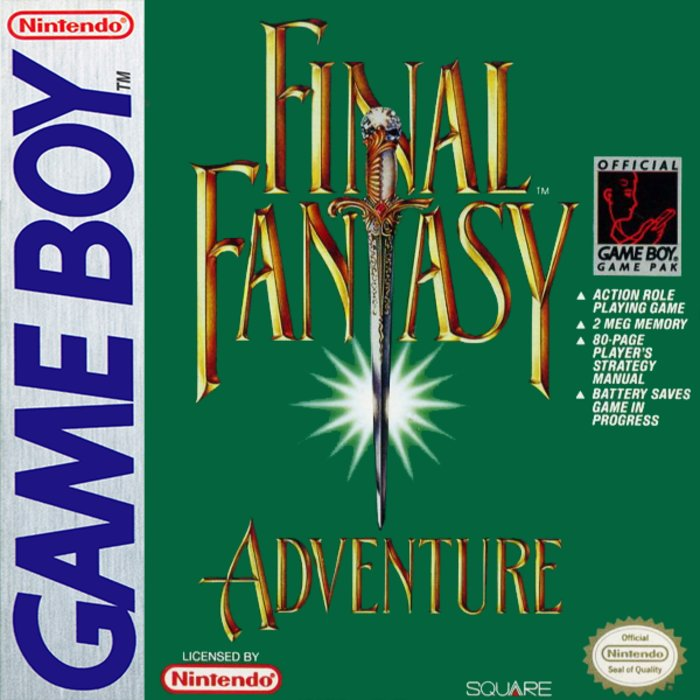
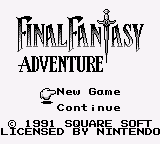
Final Fantasy Adventure Game Boy is Square’s 1991 action role-playing game, released in Japan as Seiken Densetsu: Final Fantasy Gaiden and later called Mystic Quest in Europe. Although the North American title uses the Final Fantasy name, this monochrome handheld quest is the first entry in the Mana series rather than a numbered Final Fantasy episode. It combines real-time, overhead exploration with character growth and a fantasy story centered on the life-giving Mana Tree.
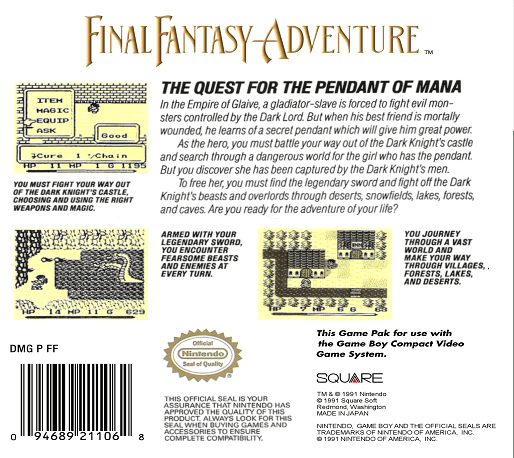
The adventure begins with a nameless young gladiator imprisoned by the Glaive Empire. After a fellow captive urges him to escape and seek the knight Bogard, he breaks free from the Dark Lord’s arena and heads into a kingdom threatened by the empire’s search for the Mana Tree. His route soon joins with Fuji, a young woman carrying a pendant tied to the tree’s guardians. Their effort to keep that power from the Dark Lord and his magician Julius takes them through towns, wilderness, caves, and the empire’s strongholds.
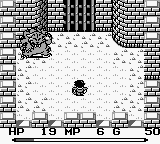
Viewed from above, the Game Boy world is explored one screen at a time. The hero walks in four directions, speaks with residents, visits shops, and searches for the next route or dungeon entrance. Enemies are fought directly with the equipped weapon rather than through a separate turn-based battle screen. Defeated monsters can provide experience, money, and useful items, while towns offer equipment and supplies. The game supports a single player and uses battery-backed saves, letting the journey continue from its save files.
Weapons do more than change combat range and damage. Swords, axes, flails, spears, and other tools help open the way by dealing with obstacles such as trees, rocks, or thorny growths, so acquiring equipment is part of progression as well as battle preparation. Magic is obtained during the story and consumes magic points for healing or offensive effects. A charge gauge also rewards patience: as it fills, an attack can become more powerful, and a fully charged strike can unleash a weapon-specific special move.
Role-playing systems sit underneath the action. Gaining experience raises the hero’s level, and level-up choices affect attributes such as power, stamina, wisdom, and will. Those values influence survivability, magic, and the rate at which the attack gauge refills. Dungeon routes mix combat with keys, switches, blocked passages, and navigation puzzles, while conversations with non-player characters supply directions and story context. At several points a companion accompanies the hero, giving the trip a changing cast without turning the game into a multiplayer adventure.
Final Fantasy Adventure retains some Final Fantasy-era touches, including chocobos, while establishing ideas that became closely associated with Mana: a world sustained by mana, a sacred tree, a legendary sword, and a journey shaped by allies and loss. Its Japanese title was shortened to Seiken Densetsu, while the European Mystic Quest name should not be confused with the separate Super NES game Final Fantasy Mystic Quest. The original was later reworked as Sword of Mana for Game Boy Advance and Adventures of Mana for modern platforms; those versions revise presentation and story details, so this Game Boy release remains the compact starting point for the series.
Designed by Square under director Koichi Ishii, Final Fantasy Adventure arrived on a system better known for short-form portable play yet delivers a connected quest across varied regions. Its blend of exploration, equipment-gated discovery, real-time combat, and stat development made it a distinct companion to Square’s turn-based Final Fantasy games. For players tracing the roots of Mana, the Game Boy original provides the foundational conflict over the Mana Tree and the early form of a weapon-focused action-RPG approach that Square would continue to develop in later entries.
Gallery
Details
- Developer
- Square
- Publisher
- Square
- Genre
- Action RPG
- Players
- 1
- Release Date
- November 2, 1991
- System
- GB