About
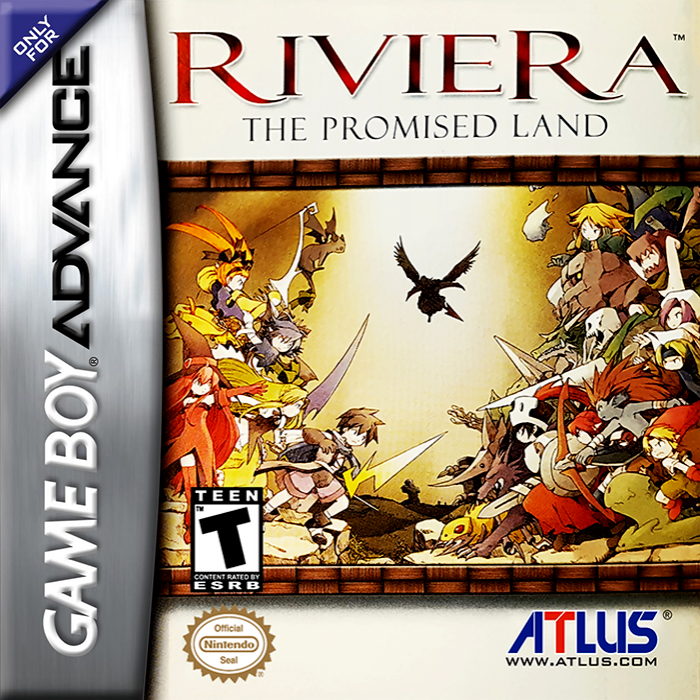
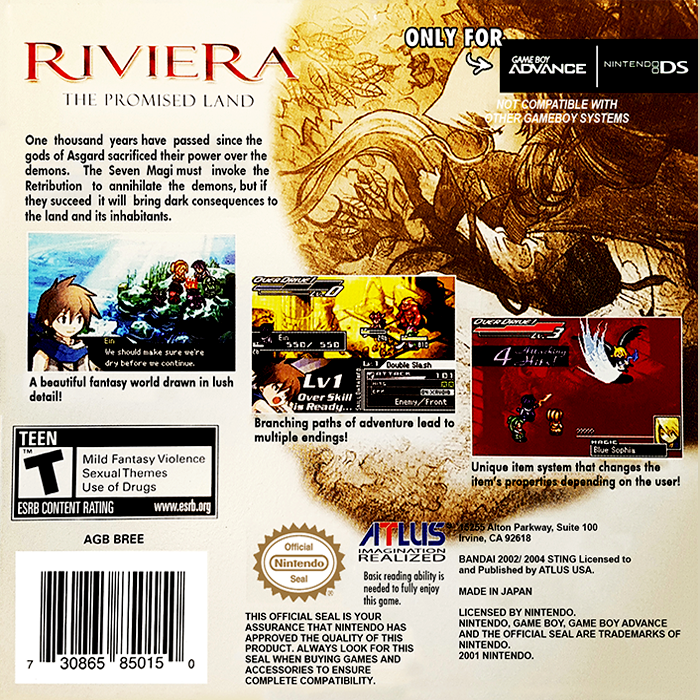
Riviera: The Promised Land for Game Boy Advance is a turn-based Japanese role-playing game developed by Sting Entertainment and published in North America by Atlus in 2005. It is the Game Boy Advance remake of Sting's 2002 WonderSwan Color release and the opening chapter of the Dept. Heaven series. The story begins after the ancient war of Ragnarok, when the gods created black-winged Grim Angels to defeat demons and transformed the demon land of Utgard into Riviera. A millennium later, Grim Angel Ein and his companion Ledah are sent to Riviera under orders connected to the feared return of those enemies.
After an early confrontation leaves Ein separated from his mission and without his memories, he is drawn into the affairs of Riviera's inhabitants. He travels with the familiar Rose and meets allies including Fia, Lina, Serene, and Cierra while the party investigates the renewed threat surrounding the land. The campaign follows Ein's effort to understand his past, protect Riviera, and confront the forces behind the crisis. Its fantasy setting uses names and ideas associated with Norse mythology, including Asgard, Utgard, Yggdrasil, and Ragnarok, while telling a self-contained adventure through locations such as villages, forests, ruins, and other dangerous regions.
Rather than letting players freely walk a character around every map, Riviera organizes exploration around screens and context-sensitive triggers. In Look Mode, players inspect points of interest to uncover events, items, battles, and sometimes further choices; many of these actions use Trigger Points earned through combat. Move Mode advances the party between screens and permits limited backtracking. This structure makes planning part of exploration: a player must decide where to spend available points before leaving an area, while stage results feed into the resources used in later sections.
Combat is turn-based but places strong emphasis on party composition and equipment. Before a battle, the player selects three combatants from the available group, chooses an attack-focused or magic-focused formation, and takes a limited set of items into the fight. An item does not work identically for everyone: a sword, staff, bow, or other tool can give different characters different actions, so matching equipment to a party member is central to strategy. Items have limited uses and eventually break, making the choice of what to carry as important as the selection of active fighters.
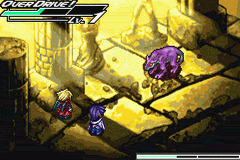
Characters improve their relationship with particular items through use, opening stronger techniques known as OverSkills. Battles also build an OverDrive gauge, which governs access to more powerful actions, while formations influence how quickly attack- or magic-oriented moves recover. Winning encounters earns ratings and can award items and Trigger Points. The Game Boy Advance version also incorporates small event and treasure-related challenges, and its chapter-based progression mixes tactical battles with exploration choices instead of relying on a traditional overworld-and-dungeon routine.
Riviera also gives conversation decisions lasting consequences. During scenes with Ein's companions, choices can affect their trust and mood, which in turn shape relationship scenes and help determine the ending reached at the conclusion of the story. This relationship component sits alongside the RPG systems rather than replacing them, giving dialogue choices a role in the game's replayable paths. For its Game Boy Advance release, Sting reworked the WonderSwan Color original with a new visual presentation, additional event material and CG scenes, and voice clips, before later expanding the game again for PlayStation Portable and modern platforms.
Gallery
Details
- Developer
- Sting Entertainment
- Publisher
- Atlus
- Genre
- JRPG
- Players
- 1
- Release Date
- June 28, 2005
- System
- GBA