About
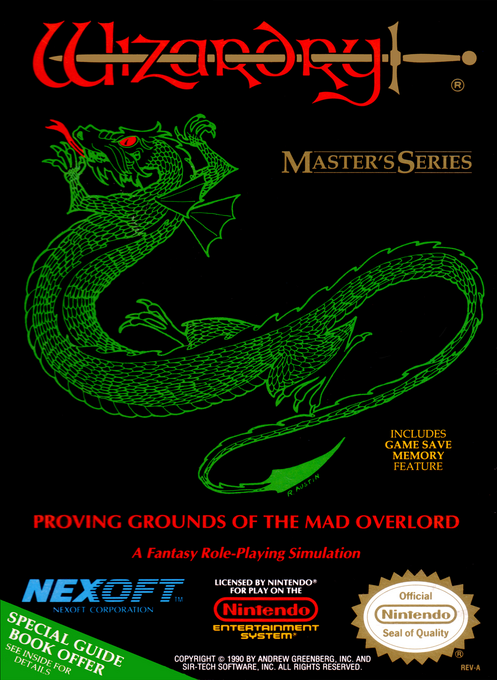
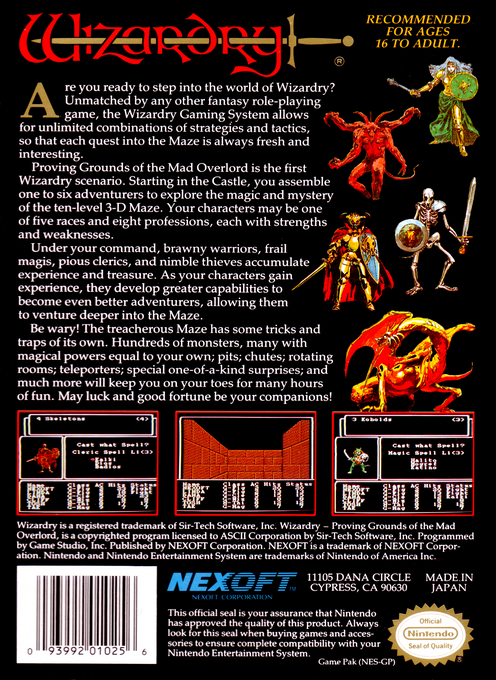
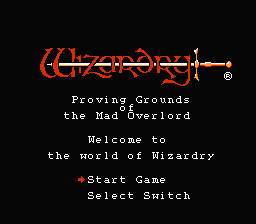
Wizardry Proving Grounds of the Mad Overlord NES is the 1990 North American Nintendo Entertainment System edition of Sir-Tech's pioneering fantasy role-playing adventure. Nexoft published this English-language release after ASCII and Game Studio had brought the game to Japan's Famicom in 1987. It adapts the first Wizardry scenario created by Andrew Greenberg and Robert Woodhead, retaining the series' first-person dungeon crawl while giving the console version its own presentation, cartridge-based character records, and carefully revised maze details.
The quest begins at Trebor's castle, where the Mad Overlord's treasured amulet has vanished. A taunting message identifies the thief as the wizard Werdna, and Trebor calls for adventurers who can descend beneath the castle, overcome the maze's dangers, and recover the stolen relic. The destination is Werdna on the tenth floor, but reaching him requires a long campaign of exploration, survival, and gradual party improvement rather than a quick march through the dungeon.
Before entering the maze, players build a party of as many as six adventurers in the Training Grounds. Race, alignment, attributes, and profession shape each character's role: sturdy front-line fighters, spell users, thieves, and later specialized paths all encourage deliberate party planning. Good and evil characters cannot adventure together, so even the roster has consequences. Gilgamesh's Tavern is used to assemble a group, while the inn, Temple of Cant, and Boltac's Trading Post provide leveling, recovery, resurrection attempts, equipment, identification, and curse removal between expeditions.
Exploration is presented from a first-person view of corridors, walls, doors, and intersections. The D-pad and menu-driven interface make each step, turn, inspection, spell, and camp decision a measured choice. Every floor is a 20-by-20 grid, and the game expects players to keep track of their route as they search for stairs, elevators, secret doors, keys, and landmarks. Light and mapping magic can reduce the uncertainty, while higher-level spells can reveal information or move the party through the labyrinth; an ill-considered teleport can be as dangerous as the monsters.
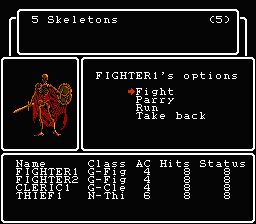
Battles are turn-based encounters against one or more groups of foes. The first three members of the marching order can make weapon attacks, while the rear positions are better suited to magic and support, so formation matters as much as equipment. On each round characters may fight, defend, cast spells, use an item, attempt to dispel undead, or try to flee. Victories bring experience, gold, and sometimes a chest, but treasure is another risk: a thief can inspect and try to disarm a trap, a cleric can use magic to investigate it, and a wrong decision can punish a promising expedition.
Wizardry: Proving Grounds of the Mad Overlord on NES preserves the original game's demanding consequences. A party can return to the castle to rest and prepare, and its progress may be saved, but danger remains meaningful: slain adventurers can require rescue by another party, while the Temple's more desperate restorations are not guaranteed. That tension turns routine actions such as opening a door, spending a spell charge, or pressing farther into an unfamiliar floor into strategic decisions.
This NES edition is more than the simple wireframe computer game placed on a cartridge. Game Studio gave its dungeon brick-walled corridors, wooden doors, colored monster imagery, and music by Kentaro Haneda, while keeping the fundamental ten-floor challenge intact. Several dungeon layouts differ from the computer version, and the console game adds a Gold Key requirement around a Level 1 Dark Zone, making NES-specific maps and knowledge useful. As the opening Wizardry adventure, it remains a foundational example of party-based, first-person console role-playing: a deliberate expedition where character management, mapping, and hard-won knowledge are as important as combat.
Gallery
Details
- Developer
- Sir-tech Software
- Publisher
- NEXOFT
- Genre
- JRPG
- Players
- 1
- Release Date
- July 2, 1990
- System
- NES