About
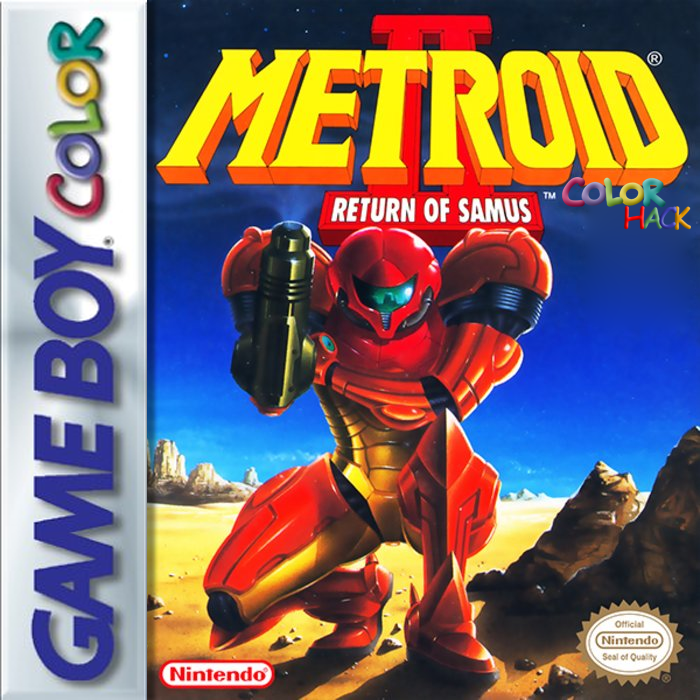
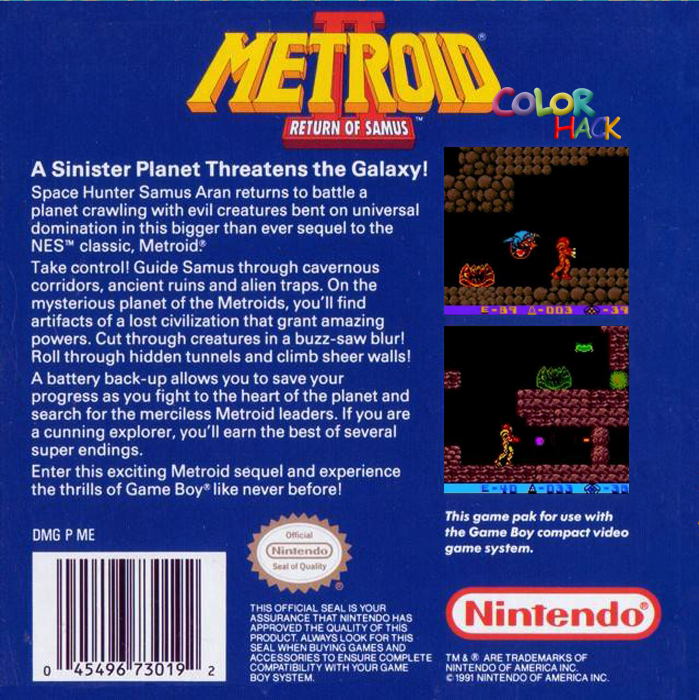
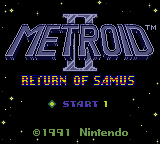
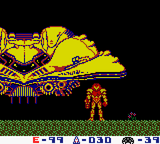
Metroid II: Return of Samus for Game Boy is Nintendo’s 1991 handheld action-adventure, later released in Japan and Europe in 1992. Developed by Nintendo R&D1 and published by Nintendo, it sends intergalactic bounty hunter Samus Aran to SR388, the home planet of the Metroids. The Galactic Federation’s earlier teams have vanished, and Samus receives the dangerous assignment of destroying the species before the Space Pirates can exploit it. Although this catalogue entry is associated with Game Boy Color compatibility, the game was originally made for the monochrome Game Boy and remains a single-player chapter in the original Metroid storyline.
SR388 is built as a connected underground world of caverns, vertical shafts, narrow passages, and sealed routes. Samus begins with familiar running, jumping, shooting, and Morph Ball movement, then extends her reach by locating hidden expansions and suit upgrades. Energy Tanks improve her endurance, missile capacity raises her offensive options, and weapons such as the Ice Beam, Spazer Beam, and Plasma Beam change how threats can be approached. Because one beam can be active at a time, choosing an equipped weapon is part of navigating the planet as well as fighting through it.
The central objective gives exploration a clear rhythm: find and eliminate the Metroids within each section of SR388. A counter tracks how many remain, and clearing an area triggers an earthquake that lowers lava barriers elsewhere on the planet. That environmental change opens routes to deeper caverns, where new items, hazards, and stronger Metroid forms await. The enemies evolve through several stages, from smaller Alpha and Gamma varieties to formidable Zeta and Omega encounters, so the mission gradually shifts from searching the maze to preparing for larger battles.
Metroid II: Return of Samus expands Samus’s movement toolkit in ways that became closely associated with later series entries. The Spider Ball lets the Morph Ball cling to many walls and ceilings, while the Spring Ball allows a jump without leaving ball form. High Jump Boots aid vertical exploration, and the Space Jump creates a chain of aerial jumps that can carry Samus across difficult gaps. Save modules placed around SR388 preserve progress, an important feature for a long handheld expedition filled with secret passages and backtracking.
The game also advances the story left by the first Metroid. After Samus reaches the depths of SR388 and confronts the Queen Metroid, the mission’s final moments turn on a newly hatched infant Metroid that follows her instead of attacking. That encounter establishes the direct narrative bridge to Super Metroid on Super NES, where the infant’s fate becomes central to the next adventure. The original Game Boy presentation also introduced the rounded-shoulder look for Samus’s Varia Suit, a visual solution that helped distinguish her upgraded equipment without relying on color and went on to influence the series’ iconic armor design.
For a Game Boy Color player, Metroid II: Return of Samus offers the original portable version of a pivotal Metroid journey: a solitary search through SR388, a fixed extermination mission that unlocks the world in stages, and an arsenal built through discovery. Nintendo later revisited the adventure with Metroid: Samus Returns for Nintendo 3DS, but this Game Boy release is the source of its locations, mission, and major story beats. Its mix of exploration, upgrades, environmental progression, and tense creature encounters captures a formative stage in Samus Aran’s long-running series.
Gallery
Details
- Genre
- Platformer
- System
- GBC