About
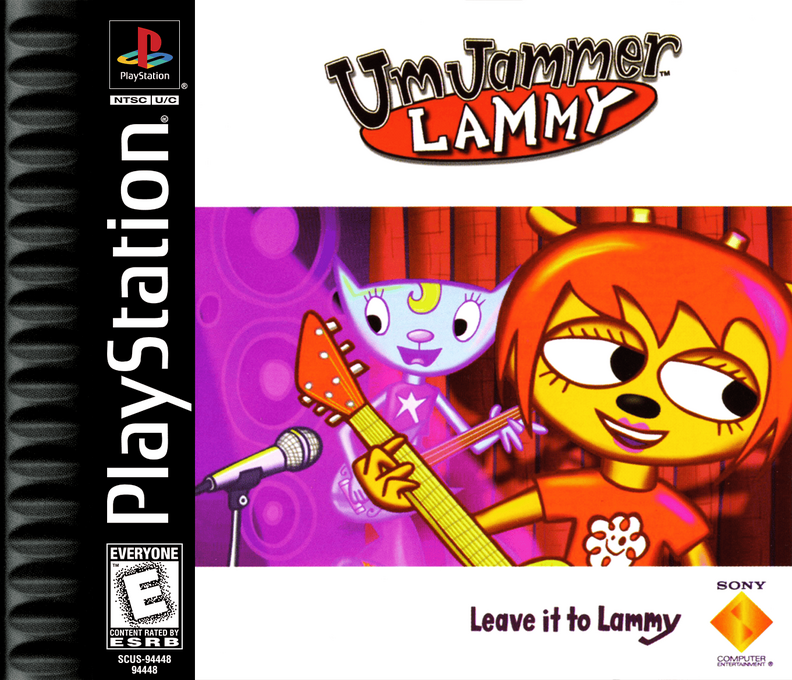
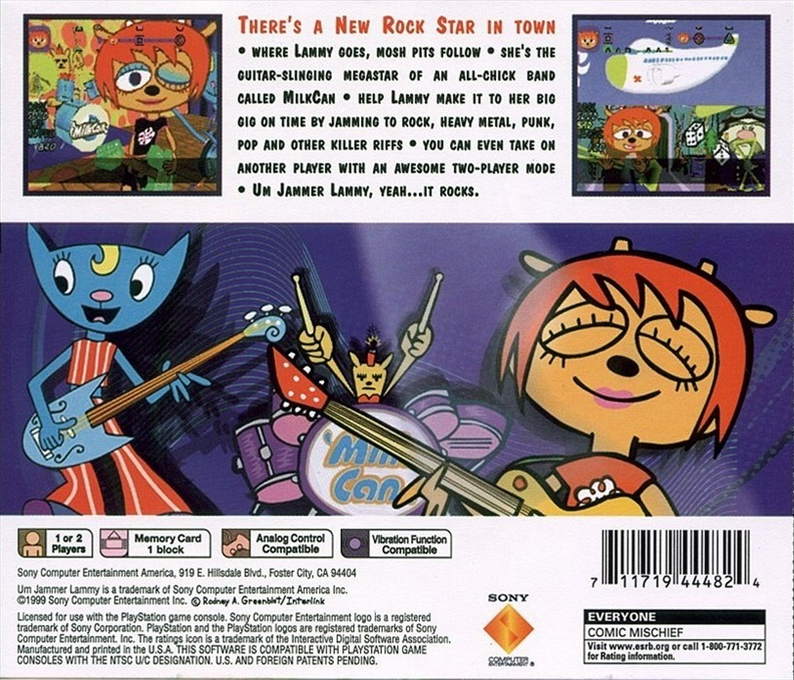
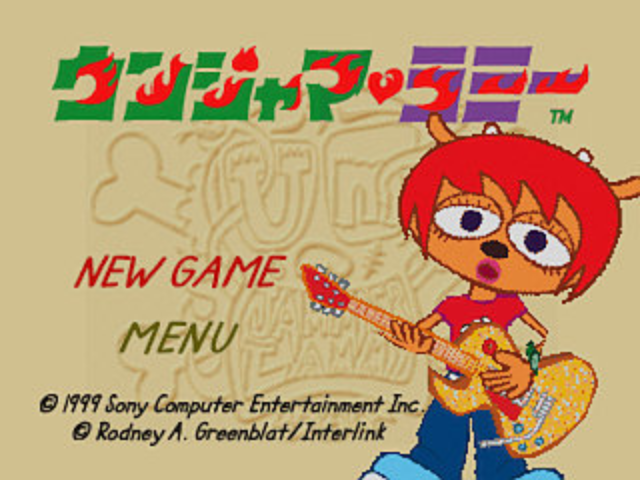
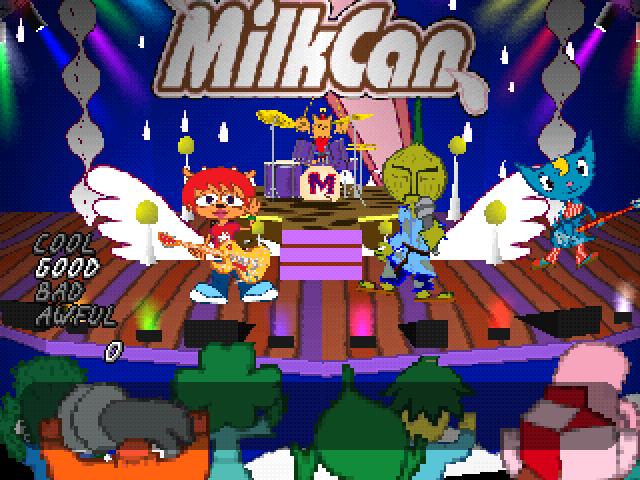
Um Jammer Lammy for the original PlayStation is a 1999 rhythm game from NanaOn-Sha, published by Sony Computer Entertainment. A follow-up to PaRappa the Rapper rather than a conventional sequel, it moves the series' call-and-response musical structure from rap to guitar-driven songs. Its lead is Lammy, the anxious left-handed guitarist of the all-girl band MilkCan. When a looming performance leaves her with only a short time to reach the venue, each absurd interruption becomes another chance to find confidence through music.
Stages are built around songs and a scrolling performance track. A teacher or fellow character demonstrates a phrase first, then the player answers by pressing the PlayStation controller's face and shoulder buttons in time with the displayed symbols. The aim is to keep a performance rating high enough to finish the song, while steady timing and inventive responses can improve the result. This retains the recognizable rhythmic exchange of PaRappa, but frames the commands as guitar notes and riffs rather than words.
Following the written patterns is only part of Um Jammer Lammy's design. Players can try their own combinations during response sections to pursue a stronger rating, and successful improvisation can lead to a freer performance section. The game also includes optional guitar sound effects, including effects that alter the instrument's tone, plus a whammy-bar-style control. These flourishes give the PlayStation game room for experimentation without changing its basic objective of responding to the music accurately.
Lammy's journey carries the player through seven increasingly strange musical situations on the way to MilkCan's concert. The supporting cast includes characters such as Chop Chop Master Onion, Chief Puddle, Nurse Cathy Piller, Captain Fussenpepper, and guitar-building beaver Paul Chuck. Lammy often has to imagine that an everyday object is her guitar before she can play with assurance, making the story's comic detours part of its music-game premise. MilkCan's singer and bassist Katy Kat and drummer Ma-san remain central to the concert-bound setting.
The PlayStation release supports one or two players. In addition to Lammy's solo story, cleared stages open cooperative and versus play involving Lammy and her counterpart Rammy; a computer partner can also fill the second role. Completing Lammy's main game unlocks a separate PaRappa mode, which revisits most of the same scenarios with PaRappa's rapping interpretations. Together, the alternate character path and multiplayer options make the game broader than a single sequence of rhythm stages.
Um Jammer Lammy was released for PlayStation in Japan, North America, and Europe during 1999, with NanaOn-Sha developing and Sony Computer Entertainment handling publication in those regions. It has a notable regional change: the Japanese and PAL releases use a Hell-themed Stage 6 scenario, while the North American version replaces it with a volcanic-island sequence and adjusts related dialogue and presentation. A Japanese arcade adaptation, Um Jammer Lammy NOW!, later brought the concept to Namco hardware, while the original PlayStation game also received PlayStation Network re-releases.
With music by Masaya Matsuura and the distinctive visual direction associated with Rodney Alan Greenblat, Um Jammer Lammy occupies a particular place in the PaRappa universe. Its flat, colorful character art and eccentric situations make an immediate contrast with the precision demanded by its rhythmic inputs. For players interested in PlayStation rhythm games, it remains a companion to PaRappa the Rapper that preserves the series' musical conversation while giving Lammy, MilkCan, guitar performance, and competitive or cooperative play their own spotlight.
Gallery
Details
- Developer
- Nanaon-Sha
- Publisher
- Sony Computer Entertainment
- Genre
- Rhythm Game
- Players
- 1-2
- Release Date
- August 18, 1999
- System
- PS1