About
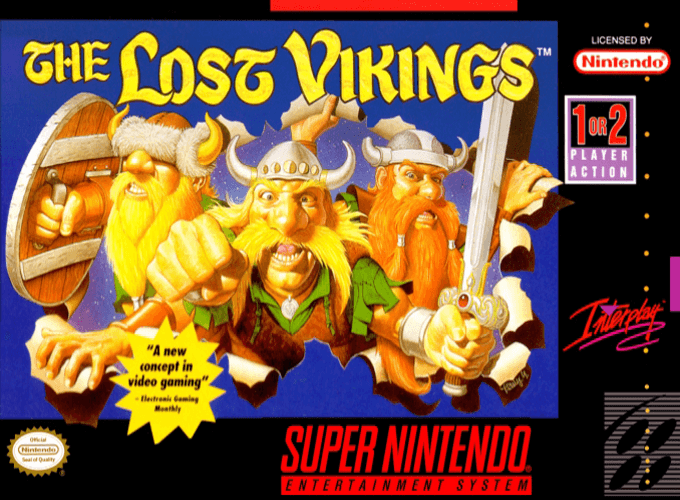
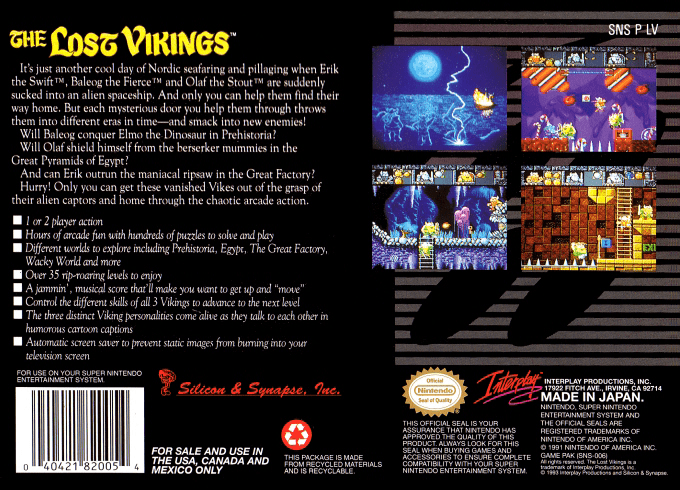
The Lost Vikings for Super Nintendo Entertainment System is a 1993 puzzle-platform game developed by Silicon & Synapse and published by Interplay. It turns a side-scrolling adventure into a cooperative problem-solving game for one player: success depends on directing three heroes whose individual talents deliberately overlap. Instead of asking one character to handle every jump, enemy, switch, and obstacle, the SNES game makes each route a small team exercise.
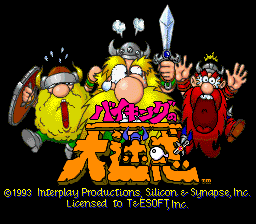
The adventure begins when Erik the Swift, Baleog the Fierce, and Olaf the Stout are taken from their home by Tomator, the alien ruler of an intergalactic menagerie. Their escape leaves them stranded far from home, sending the trio through strange places and different time periods as they work toward a confrontation with their captor. The premise gives the game room to move from Viking-themed comedy into prehistoric, Egyptian, industrial, and science-fiction surroundings without changing its central goal: get all three travelers safely to the exit.
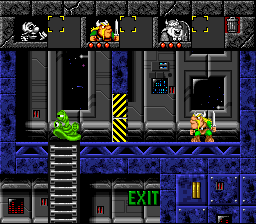
Players control one Viking at a time and can switch between them whenever the situation calls for it. A stage is not cleared just because one hero reaches safety; all three must make it through. That rule defines the rhythm of The Lost Vikings on SNES. One character might open a path, another might cross it, and a third might be needed to bring an item or activate the final mechanism. The result is a platform game where timing and dexterity matter, but reading the layout and planning the order of actions are just as important.
Erik supplies speed and mobility. He can run, jump, and charge with his horned helmet to break certain barriers or strike enemies. Baleog handles close and distant threats with a sword and a bow, and his arrows can also trigger switches beyond the group’s immediate reach. Olaf carries the most defensive tool: his shield blocks attacks, becomes a platform for the others, and can be held overhead to let him glide. The three abilities create puzzles based on protection, elevation, access, and coordination rather than simply collecting upgrades.
Keys, bombs, food, and other usable objects add another layer to the stages. Each Viking has limited inventory space, so items need to be carried by the right person and exchanged when the group is close together. Hazards and enemies can reduce a Viking’s health, while some dangers demand a fresh attempt; losing a teammate can leave a puzzle impossible to finish. The SNES version therefore encourages careful use of the character switch, attention to each hero’s position, and a willingness to reconsider a route when a door, gap, or enemy seems insurmountable.
The Lost Vikings arrived during the period when Silicon & Synapse was establishing the identity it would later carry forward as Blizzard Entertainment. It was first released on Super NES before appearing on several other systems, and the later Mega Drive/Genesis edition added content and multiplayer features not present in the original SNES configuration. The core 1993 design remained notable enough to be revisited in later releases, including the Blizzard Arcade Collection, but the Super NES original is the version built around its focused single-player puzzle journey with Erik, Baleog, and Olaf.
Gallery
Details
- Developer
- Silicon & Synapse
- Publisher
- Interplay
- Genre
- Platformer
- Players
- 1-2
- Release Date
- April 2, 1993
- System
- SNES