About
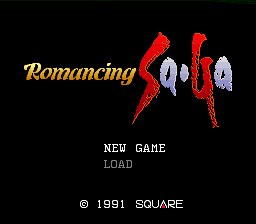
Romancing Sa-Ga for the Super Famicom is Square's 1992 Japanese role-playing game and the fourth entry in the SaGa series. Directed, designed, and written by series creator Akitoshi Kawazu, it moves the series from the Game Boy to Nintendo's 16-bit hardware with a large fantasy world and an unusually open structure. Square released it in Japan on January 28, 1992; this original Super Famicom version was not officially localized for the West at the time, so it should not be confused with the later WonderSwan Color edition or the PlayStation 2 remake, Romancing SaGa: Minstrel Song.
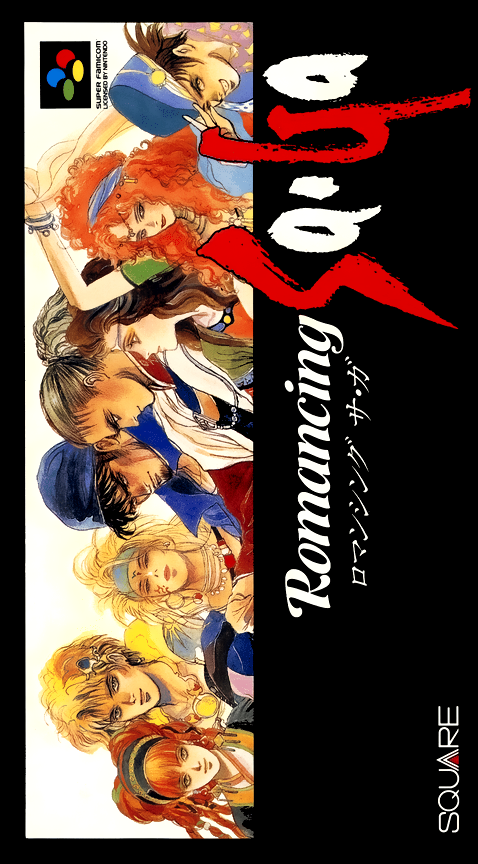
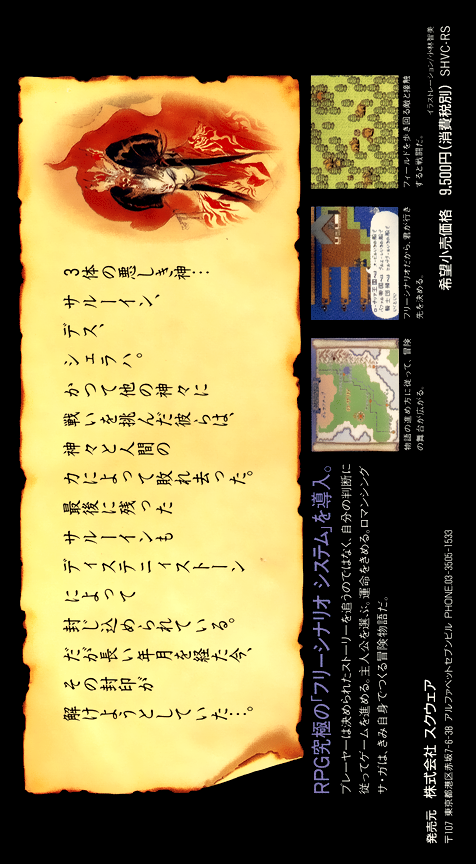
The story takes place in Mardias, where the benevolent god Elore and the hero Mirsa once sealed away the dark god Saruin. A millennium later, the seal is weakening and the fate of the world again becomes tied to the scattered Fatestones. Rather than assigning that crisis to one fixed hero, the game begins by letting players choose from eight leads: the noble Albert, nomad Aisha, thief Jamil, forest-raised Claudia, pirate Hawk, northern warrior Sif, adventurer Gray, or travelling dancer Barbara. Each selection opens with a different personal situation and starting point, while the wider quest gradually connects their journeys.
That branching setup is the foundation of Romancing Sa-Ga's Free Scenario System. Players travel across towns, wilderness, dungeons, and seas, speak with characters, recruit companions, and decide which events to pursue. Progress does not follow the tightly ordered sequence common to many contemporary console RPGs; completed events, party development, and discoveries can affect what becomes available next. Several of the other seven protagonists can be encountered during a run, making the choice of lead both a narrative viewpoint and a reason to revisit Mardias from another direction.
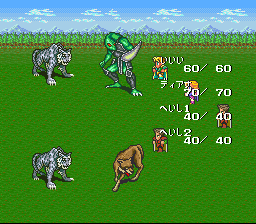
Combat uses turn-based battles triggered by visible enemy groups in fields and dungeons. A party is arranged in formations on a three-by-three layout, so position influences who can reach an opponent and who is exposed to danger. Characters equip weapons and armor, spend Battle Points to use abilities, and improve through what they actually do in fights instead of collecting conventional experience points. Attributes can grow after battle, while repeated weapon use can lead to new techniques, giving party building a practical, action-driven character. Money earned from victories supports purchases of equipment and supplies in settlements.
Romancing Sa-Ga was also a significant early showcase for the people who shaped its identity. Kawazu led the project while Masafumi Miyamoto produced it; Tomomi Kobayashi created the character illustrations in her first video-game assignment, Kazuko Shibuya handled sprites, and Kenji Ito composed and arranged the score. The resulting blend of illustrated fantasy, large character sprites, and distinctive music helps set the game apart from Square's Final Fantasy releases of the same period. Its eight viewpoints and flexible event structure established ideas that later SaGa games would continue to explore, including the two subsequent Romancing SaGa titles on Super Famicom.
Later releases build on the same premise but are separate versions. A 2001 WonderSwan Color port added material, and the 2005 PlayStation 2 remake reworked the presentation in 3D and incorporated systems associated with later SaGa games; the remake is the version that eventually reached North America under the name Romancing SaGa. For the original Super Famicom game, the appeal lies in navigating the first full Mardias adventure on its own terms: select a hero, assemble a party, follow the leads that interest you, and confront Saruin when your chosen path has carried you to the final conflict.
Gallery
Details
- Developer
- Square
- Publisher
- Square
- Genre
- JRPG
- Players
- 1
- Release Date
- January 28, 1992
- System
- SNES

/Wizardry_I-II-III_Story_of_Llylgamyn.png)