About
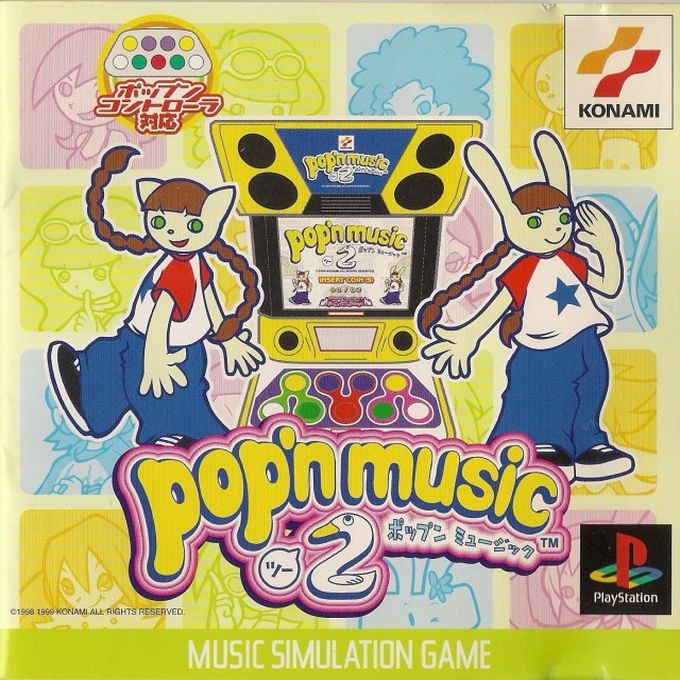
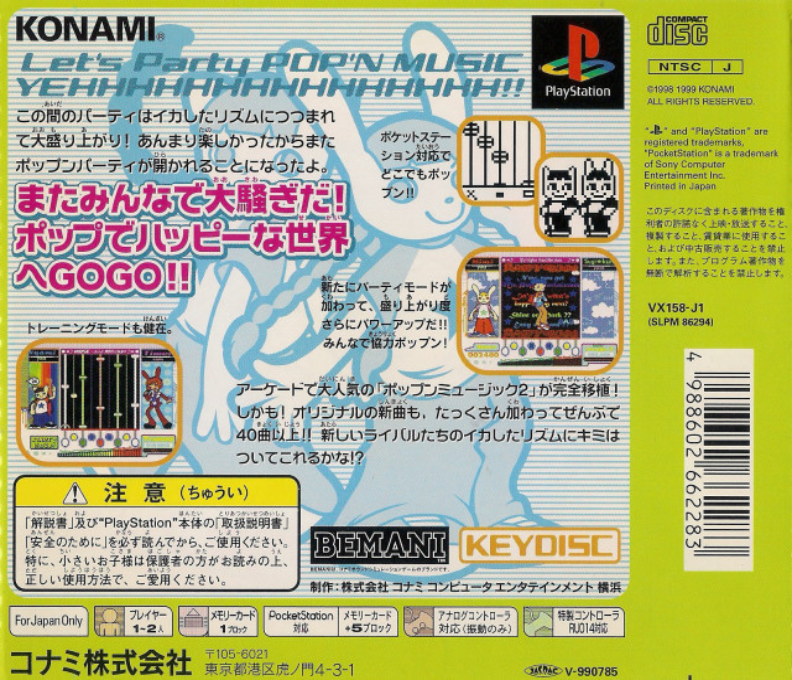
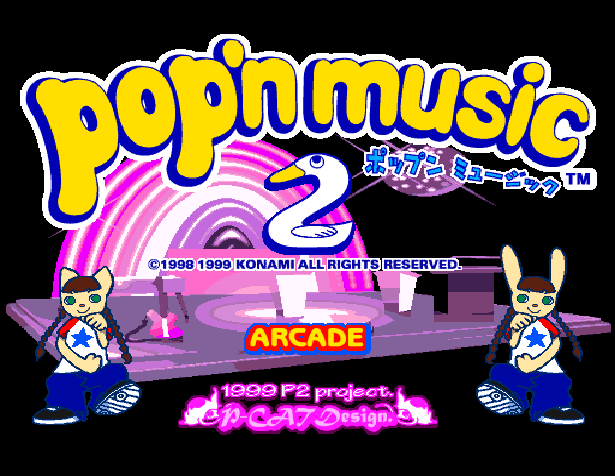
Pop'n Music 2 PS1 is Konami's Japanese rhythm game follow-up, released for PlayStation on September 14, 1999. Developed and published by Konami, it brings the colorful Bemani series home from the arcade with its own console presentation and a deliberately simple-looking interface built around large, brightly colored buttons. This is the PlayStation edition of Pop'n Music 2, not the separate Dreamcast version or the March 1999 arcade release: the Japanese PS1 disc was sold as SLPM-86294, and a budget Konami the Best reissue followed in 2000.
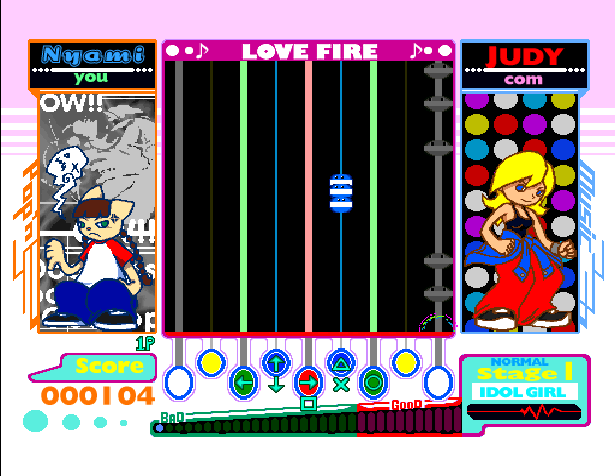
Each song turns the screen into a timing challenge. Pop-kun markers descend through vertical lanes, and the player presses the matching colored button as each marker reaches the judgement line. Accurate hits build a score, while the results screen records Great, Good, and Bad timing judgements. The rule is immediately understandable, but reading dense patterns while listening for the beat becomes more demanding as songs and their alternate charts increase in difficulty. Song difficulty is displayed with a bar-based rating, giving players a quick indication of the challenge before they commit to a stage.
Pop'n Music 2 PS1 supports play with a standard PlayStation controller, whose button assignments can be adjusted, as well as Konami's dedicated Pop'n Music Controller. The game can be played in five-, seven-, or nine-button configurations, allowing newcomers to begin with fewer active lanes and experienced players to use the complete arcade-style layout. Its PlayStation release supports up to two people playing together; both participants can share the button work during a song. Character selection adds the series' cartoon personality to the performance, while songs are organized under genre labels and tied to stage opponents and presentation.
The home version offers more than a straight sequence of songs. Arcade play is its central structure, with a standard run divided into three stages, while other menu areas include training, records, save data, and configuration options. Saved records preserve high scores and maximum combos for individual songs and chart variants, encouraging repeat attempts at better timing. The console release also includes different chart versions for selected songs, including harder Hyper arrangements that can be chosen with the full nine-button setup. Players can tailor sound settings, controller mappings, vibration behavior when using compatible hardware, and automatic saving to a PlayStation memory card.
A distinctive part of Pop'n Music 2's console role is its Key Disc function. Rather than being an append disc itself, the PlayStation game can start compatible later Pop'n Music append releases through its disc-change menu. That made it the foundation for PlayStation expansions such as Pop'n Music 3 and Pop'n Music 4 Append Disc, which added material but required a qualifying base disc to boot. The game also contains Doko Demo Pop'n Music content for Sony's PocketStation: players can download a small companion program and data to the peripheral, extending the package beyond the television screen.
The game belongs to the early period of Konami's Bemani line, following the first Pop'n Music and building on an arcade series that emphasized a wider, more playful musical identity than Beatmania. Its nine-button concept, animated Pop-kun notes, genre-spanning selection, and expressive cast established the language that later Pop'n Music entries continued to develop. For PlayStation owners, Pop'n Music 2 is especially notable as a self-contained rhythm game and as the key release that linked the system's early append-disc branch of the series.
Gallery
Details
- Developer
- Konami
- Publisher
- Konami
- Genre
- Rhythm Game
- Players
- 1-2
- Release Date
- September 14, 1999
- System
- PS1