About
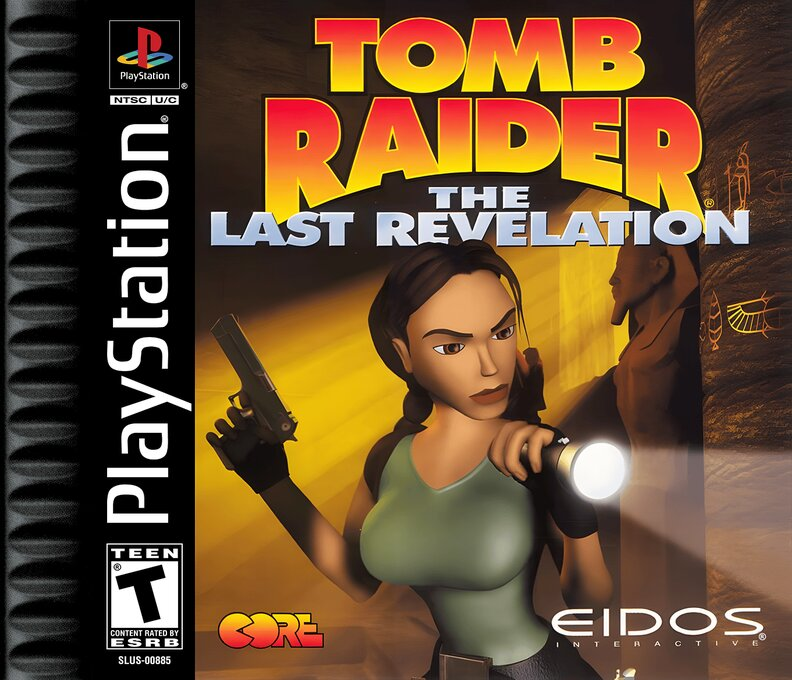
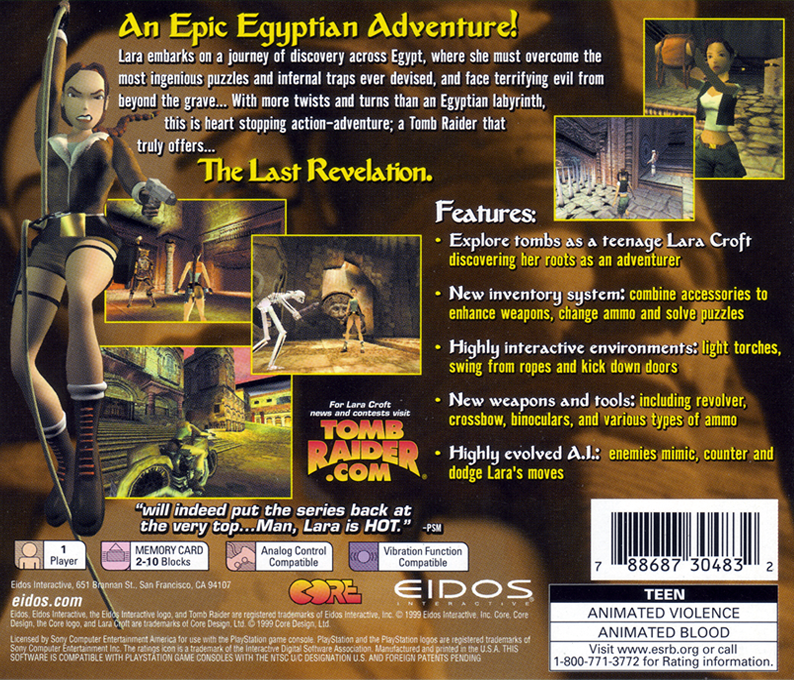
Tomb Raider: The Last Revelation is the fourth main Tomb Raider adventure, developed by Core Design and published by Eidos Interactive for the original PlayStation in 1999. It returns Lara Croft to a more concentrated archaeological journey after the globe-hopping previous games, presenting an action-adventure built around ancient ruins, elaborate mechanisms, hostile creatures, and third-person exploration. The PlayStation release sits squarely in the series' classic tank-control era, but it refines that familiar foundation with a more story-led Egyptian setting.
The story begins with a younger Lara and her mentor Werner Von Croy at Angkor Wat, then moves to Egypt in late 1999. Years after that expedition, Lara opens the Tomb of Set and unknowingly releases the Egyptian god of chaos. With the Amulet of Horus at the centre of the disaster, she must trace the means to imprison Set again before his return brings catastrophe. Von Croy's pursuit and changing role give the quest a personal edge alongside its mythological stakes.
Egypt is not simply a backdrop in The Last Revelation; it shapes the route, the atmosphere, and the obstacles. Lara searches tombs and temples around Karnak, delves into the burial places connected to Semerkhet, investigates ruins beneath Alexandria, fights through a Cairo under siege, and heads toward Giza for the climax. These locations trade the series' usual rapid changes of country for a connected expedition through monuments, city streets, underground chambers, and desert surroundings.
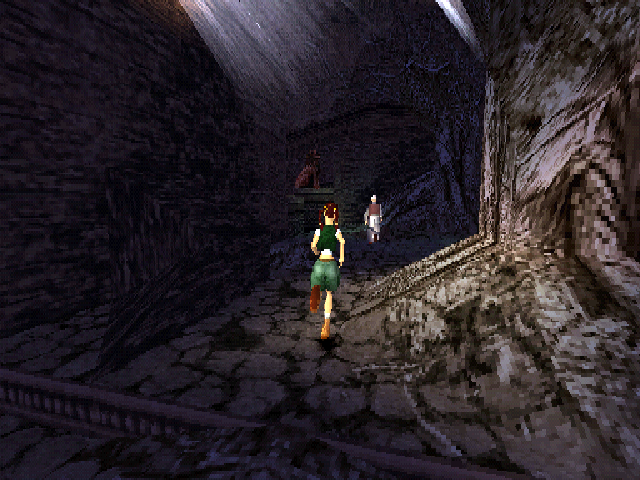
PlayStation players guide Lara through the established mixture of running jumps, timed grabs, climbs, swimming, rolling, and careful ledge work. Precision platforming remains essential: a wrong leap can mean a long drop, while a correctly judged sequence turns a chamber into a route forward. The game also adds traversal options such as climbing poles and ropes, swinging from ropes, and moving around corners, giving its vertical spaces more ways to be navigated than earlier entries.
Puzzles are a major part of the adventure. Progress commonly depends on studying rooms, operating switches, locating key objects, moving blocks, prying open barriers with the crowbar, and recognizing how one mechanism changes another area. Lara's inventory uses scrolling menus rather than the ring layout of earlier Tomb Raider games, and it supports item combinations and alternate ammunition choices. Binoculars, flares, medipacks, weapons, and collected artifacts all have practical roles in navigating dark or complex spaces.
Combat still centres on Lara's unlimited-ammo dual pistols, with additional firearms and ammunition found along the way. Players can choose automatic or manual targeting, and a laser sight can be attached to compatible weapons for more exact first-person aiming. The game balances these encounters against trap rooms and exploration rather than making every area a shooting gallery. Vehicle sections with a Jeep and a motorcycle with sidecar provide occasional changes of pace within the wider trek.
Instead of treating every stage as a completely sealed episode, The Last Revelation divides areas into linked zones and sometimes requires Lara to revisit earlier locations with a newly obtained item or a changed route. That hub-like design makes the Egyptian journey feel more continuous, while asking players to remember locks, doors, and unfinished puzzle threads. Its opening Cambodia section also works as an integrated introduction to Lara's abilities before the main Egyptian quest unfolds.
For PlayStation fans, The Last Revelation is a late-era original-console Tomb Raider that keeps the series' deliberate movement and puzzle-heavy identity while expanding its animation, interaction, and level connectivity. It first arrived alongside a Windows version in 1999; Dreamcast and Mac versions followed in 2000. That makes this PS1 edition the original home-console version of Core Design's focused ancient-Egypt chapter, with Lara facing one of her most consequential classic-era expeditions.
Gallery
Details
- Developer
- Core Design
- Publisher
- Eidos Interactive
- Genre
- Other Adventure
- Players
- 1
- Release Date
- November 22, 1999
- System
- PS1