About
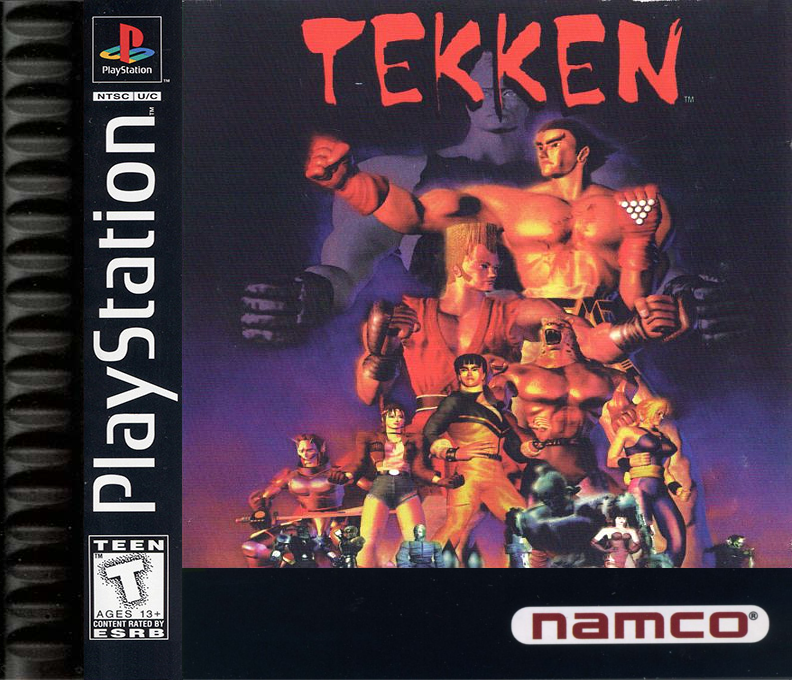
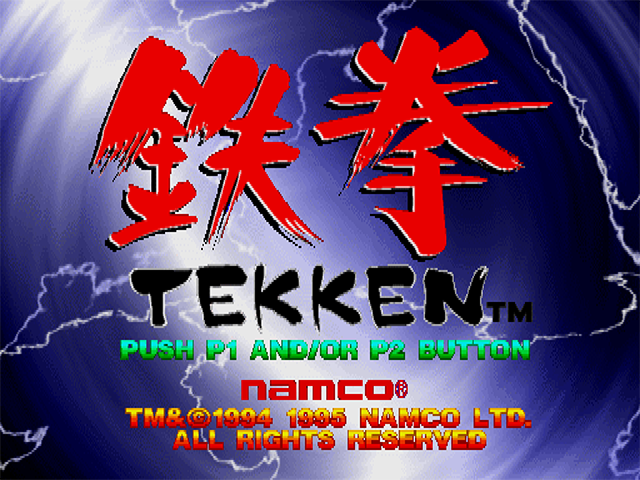
Tekken brings Namco’s 1994 arcade fighter to the original PlayStation in 1995, establishing the first chapter of the long-running series. Namco both developed and published the game. Its tournament story centers on the King of Iron Fist Tournament, an event organized by Mishima Zaibatsu head Heihachi Mishima; his son Kazuya enters with a personal score to settle, while fighters from around the world chase their own reasons for winning.
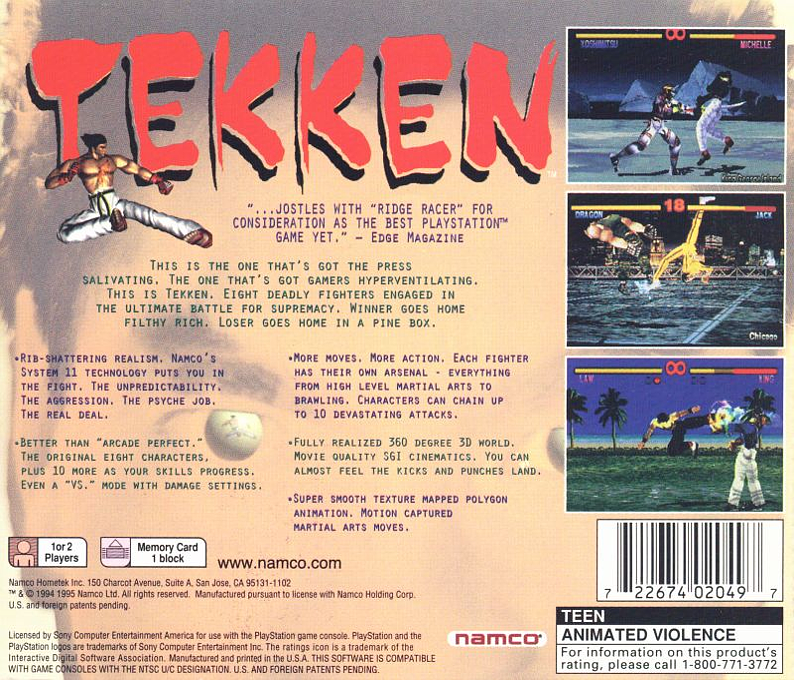
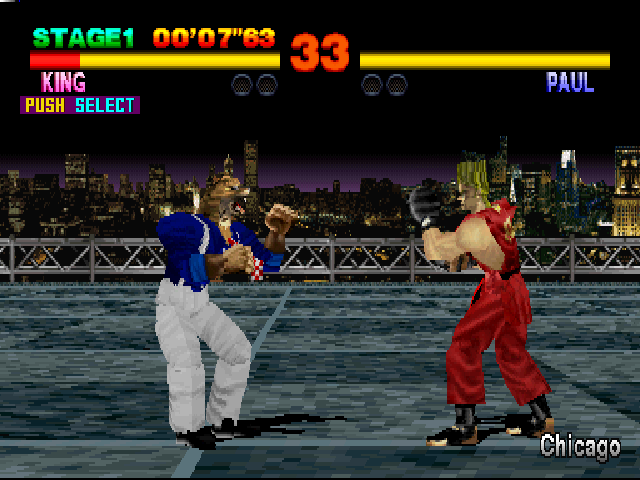
The bouts are one-on-one, polygonal 3D martial-arts contests viewed from a shifting camera. Rather than mapping buttons to weak and strong attacks, Tekken assigns a limb to each attack button: left punch, right punch, left kick, and right kick. That layout makes individual strikes easy to identify while encouraging players to build combinations from specific body parts, mix punches and kicks, use throws, and guard or reposition at close range.
The starting lineup includes Kazuya, King, Nina Williams, Paul Phoenix, Marshall Law, Michelle Chang, Jack, and Yoshimitsu. Their contrasting styles range from Kazuya’s Mishima karate to King’s wrestling, Law’s fast martial arts, Nina’s assassination-flavored techniques, and Yoshimitsu’s sword-based oddities. Arcade Mode pits the chosen fighter against a run of opponents before a character-specific sub-boss and the final confrontation with Heihachi, giving the roster a small web of rivalries as well as a straightforward single-player ladder.
Local Versus play lets two players settle matches directly, and the core Arcade Mode provides the route through the game’s hidden material. Completing the ladder with different regular characters opens their associated sub-bosses for selection, expanding the console roster beyond the eight fighters available in the arcade version. Finishing Arcade Mode with the original cast also reveals character ending movies, turning repeat play into a way to see more of the tournament’s personalities and story.
The PlayStation release ultimately offers 18 selectable fighters. Along with the sub-bosses and Heihachi, it adds Devil as an unlockable Kazuya costume; access to it is tied to the Galaga-style loading minigame. These unlocks matter because many of the additional fighters have variations on an established character’s move set, giving newcomers a familiar foundation while still adding new attacks and matchups to explore.
Tekken was especially well suited to the PS1 because its System 11 arcade hardware was closely based on PlayStation technology. The conversion preserves the arcade game’s 3D fighting framework while adding home-focused incentives such as unlockable combatants, ending videos, and arranged CD-audio music; players can also select the arcade-style music. It is therefore not merely an arcade copy, but an early PlayStation version that expands the original game for repeated home play.
As an early entry in the 3D fighting boom, Tekken favors deliberate spacing, distinct move inputs, and learning how attacks link together over later series mechanics such as universal sidesteps or elaborate mode suites. Its character-specific sub-boss system, four-limb controls, and PlayStation-exclusive rewards make this first Tekken a useful snapshot of the series before Tekken 2 broadened the formula with additional modes and a much larger roster.
Gallery
Details
- Developer
- Namco
- Publisher
- Namco
- Genre
- Fighting
- Players
- 1-2
- Release Date
- October 15, 1995
- System
- PS1