About
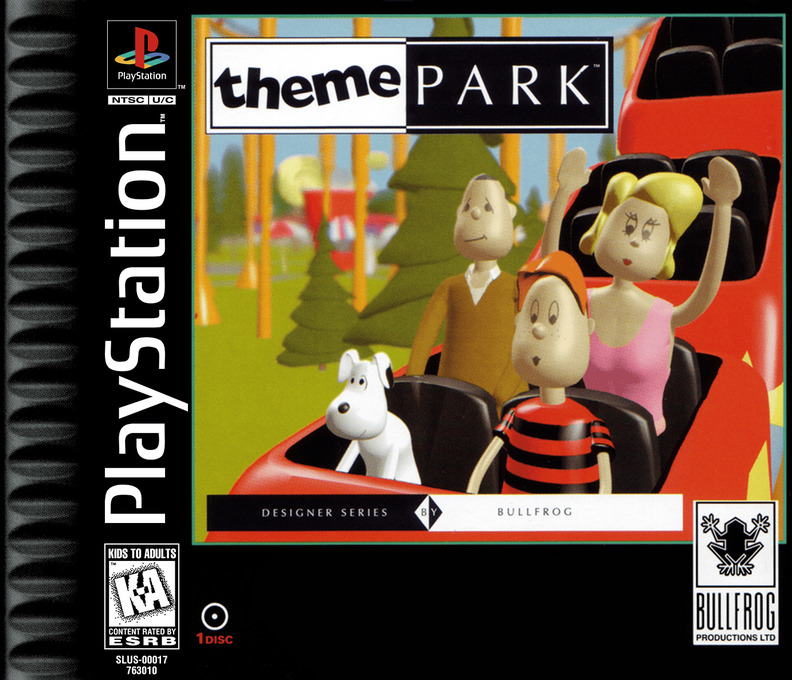
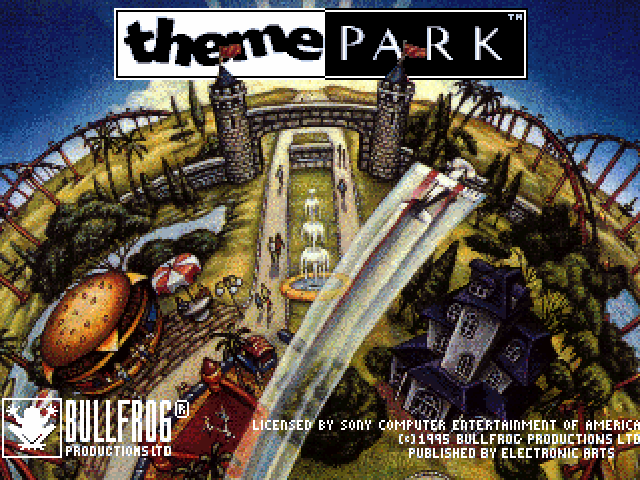
Theme Park for PlayStation brings Bullfrog Productions’ eccentric amusement-park management game to Sony’s 32-bit console. Originally created by Bullfrog and published by Electronic Arts in 1994, the game reached PlayStation in 1995 in a version developed by Krisalis Software. It is a real-time business and construction simulation in which the player begins with open land, a budget, and the responsibility for turning a modest fairground into a successful international attraction. Rather than following a fixed story, Theme Park centres on a chain of decisions: what to build, what to charge, whom to employ, and how to keep visitors returning.
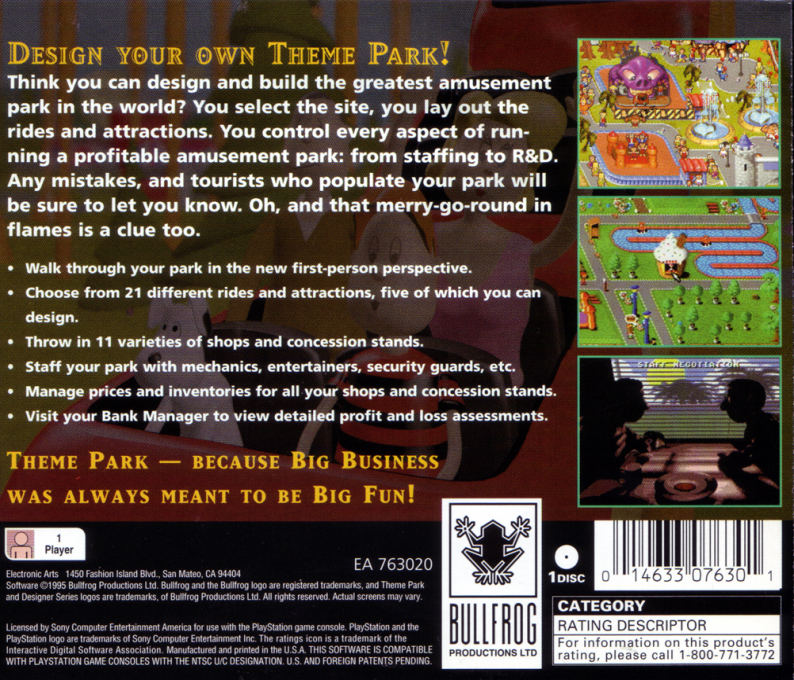
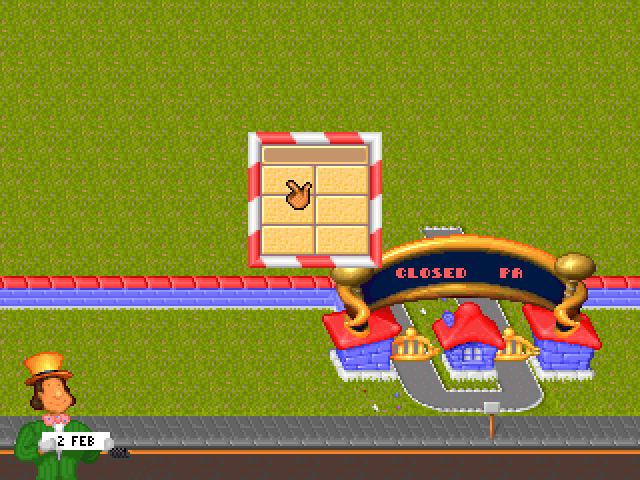
Every park starts as a blank canvas. Paths must link the entrance to rides, food stalls, toilets, scenery, and other facilities, while queues need to be planned so guests can reach popular attractions. The growing catalogue includes gentle diversions, thrill rides, water attractions, sideshows, shops, and large projects such as roller coasters. Some attractions need their own track layouts, making the player responsible for both the overall park plan and the design of individual rides. Trees, fountains, lakes, and other decorations are not merely visual extras; they help shape the atmosphere of a park that visitors are meant to enjoy.
Running the business is as important as laying out the grounds. Ticket prices, shop prices, staff wages, stock, loans, and research all affect the balance sheet. The player hires handymen to keep paths clean, mechanics to maintain rides, security guards to discourage trouble, and entertainers to add spectacle to the crowds. Neglect has visible consequences: litter accumulates, machines break down, queues grow frustrated, and visitors become less willing to spend. Theme Park deliberately turns many of these pressures into comic setbacks, including strikes, sabotage, and the possibility of an improperly maintained ride ending in an explosive failure.
Research provides the route from a small local park to a more ambitious operation. By choosing areas to investigate and deciding how much money to devote to them, players can unlock new rides and facilities or improve the efficiency and durability of what they already own. The game offers different levels of management detail, letting players concentrate on building and presentation or take closer control of the economics behind the park. Time advances through a calendar, and the pace can be adjusted, so a player can pause to reorganize a busy layout or accelerate through the consequences of a long-term plan.
The ultimate aim is expansion. A well-run park increases its value and cash reserves, allowing it to be sold so its owner can move to a new site elsewhere in the world. These later locations introduce their own conditions, including differences in terrain, weather, local economy, and the cost of land. That progression gives Theme Park a sense of movement beyond a single map: success is measured not only by a crowded midway or a newly opened coaster, but by the ability to repeat the process under new circumstances and build a larger amusement-park business.
Although the PlayStation release uses a controller rather than the mouse-driven interface of the original computer version, it retains the series’ core combination of construction, management, and cartoonish personality. Krisalis Software adapted the game for the console during a period when PlayStation libraries were beginning to include more strategy and simulation titles alongside action games. The PlayStation edition is part of a broad run of Theme Park conversions that also appeared on home computers and several contemporary consoles, reflecting the appeal of Bullfrog’s accessible approach to a complex subject.
Theme Park was the opening entry in Bullfrog’s Theme line and helped establish the studio’s recognizable style of letting players oversee a busy system while reacting to humorous, unpredictable details. Its broad attraction list, adjustable business settings, and shifting international locations make each park a different logistical puzzle. Later Theme titles and theme-park management games explored related ideas, but the original Theme Park remains notable for presenting the fantasy of designing a dream amusement park alongside the less glamorous work of maintenance, budgets, staffing, and keeping every guest entertained.
Gallery
Details
- Developer
- Krisalis Software
- Publisher
- Electronic Arts
- Genre
- Management Simulation
- Players
- 1
- Release Date
- October 15, 1995
- System
- PS1