About
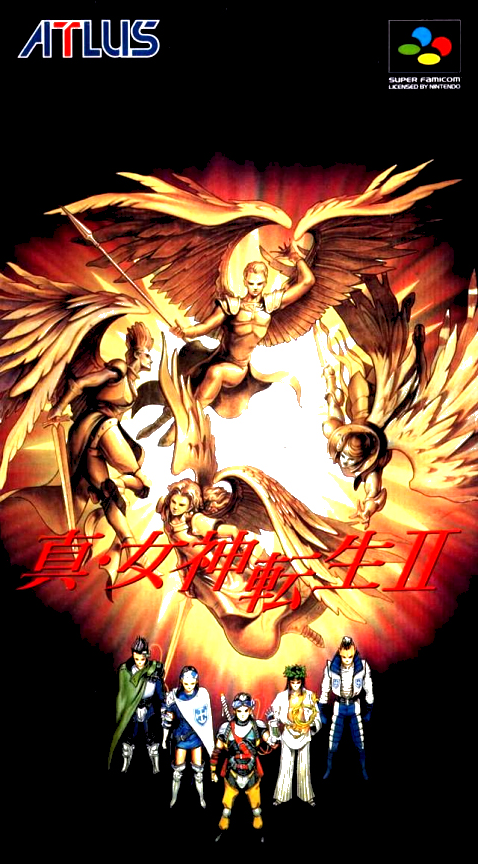
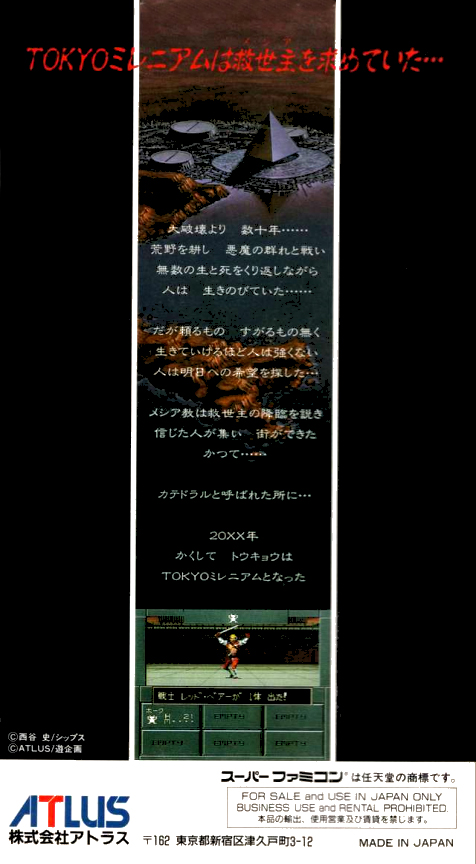
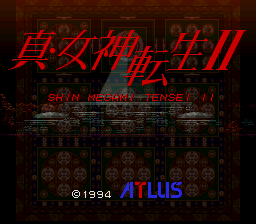
Shin Megami Tensei II for Super Famicom is Atlus's 1994 post-apocalyptic role-playing game and the second numbered entry in the Shin Megami Tensei series. Released in Japan on March 18, 1994, it returns to a future shaped by the events of the first game, but follows a new protagonist and a separate crisis. The adventure opens in Tokyo Millennium, a sealed settlement built over the remains of Tokyo, where the ruling Messian order promises safety and salvation while dividing its inhabitants by status.
The player begins as an amnesiac gladiator in Valhalla, the harsh outer district whose fighters compete for a route into the privileged Center. As the hero uncovers the truth behind the city and his own role in its plans, the scope widens from arena battles and local investigations to a conflict over who should determine humanity's future. Key figures include the rebellious Temple Knight Hiroko, the mysterious Beth, the rival Daleth, and the increasingly conflicted Zayin. The narrative uses religious imagery, competing ideologies, and the promise of a manufactured paradise to frame its dystopian setting.
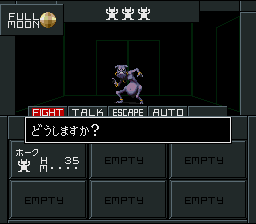
Exploration alternates between top-down field maps and first-person dungeon corridors. Random encounters lead into turn-based battles in which the hero can use equipment and magic alongside a party of allied demons. Rather than treating every enemy as a simple target, Shin Megami Tensei II lets players initiate conversations. A successful negotiation can yield money or items, provide information, or persuade a demon to join the party, while an unsuccessful exchange can turn hostile. The moon phase and a demon's disposition help make these meetings less predictable.
Recruitment feeds directly into the game's demon fusion system. At fusion facilities, compatible demons can be combined to create new allies, and the resulting demon may inherit abilities from its components. The Super Famicom game also includes several fusion variations, including combinations involving three demons and options connected to weapons, giving party building a large role in preparing for difficult areas. Managing demon strengths, affinities, skills, and the resources needed to support them is as important as choosing attacks in battle.
Player decisions influence the protagonist's alignment along the familiar Law, Chaos, and Neutral spectrum. That alignment helps shape the story's route and ending, while also affecting relationships with particular demons and the practical choices available to the party. The system gives moral and strategic weight to major decisions: a player is not merely selecting dialogue, but steering the hero toward a different answer to Tokyo Millennium's struggle between order, freedom, and survival.
Although it follows Shin Megami Tensei, this Super Famicom chapter stands on its own through its new cast, enclosed-city setting, and escalating Messiah narrative. Atlus later brought the game to other Japanese platforms, but the 1994 Super Famicom original established its combination of first-person dungeon crawling, demon negotiation, fusion, and branching alignment choices. Its dark vision of Tokyo Millennium makes it a defining early entry for players exploring the series' classic 16-bit era.
Gallery
Details
- Developer
- Atlus
- Publisher
- Atlus
- Genre
- JRPG
- Players
- 1
- Release Date
- March 18, 1994
- System
- SNES