About
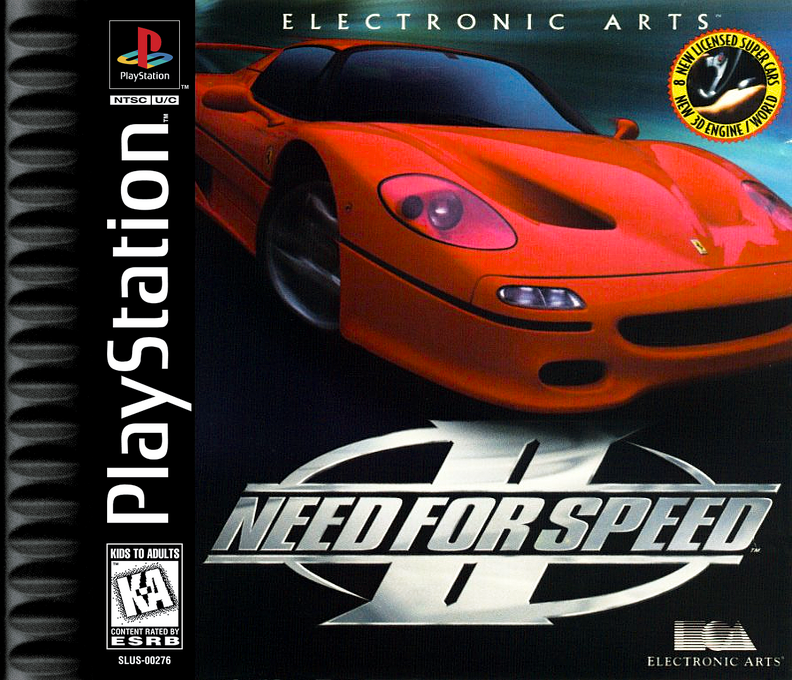
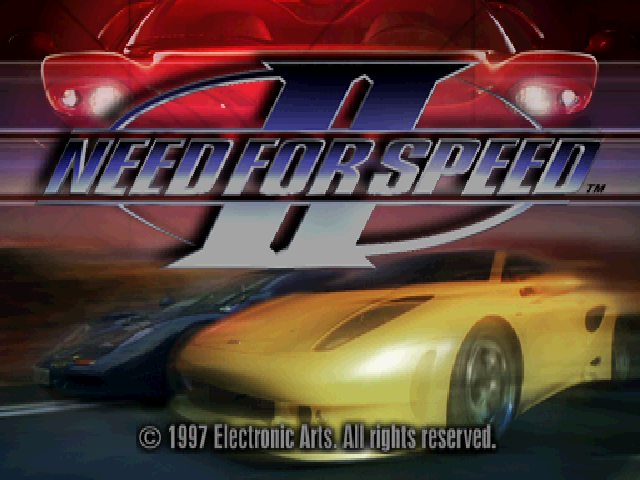
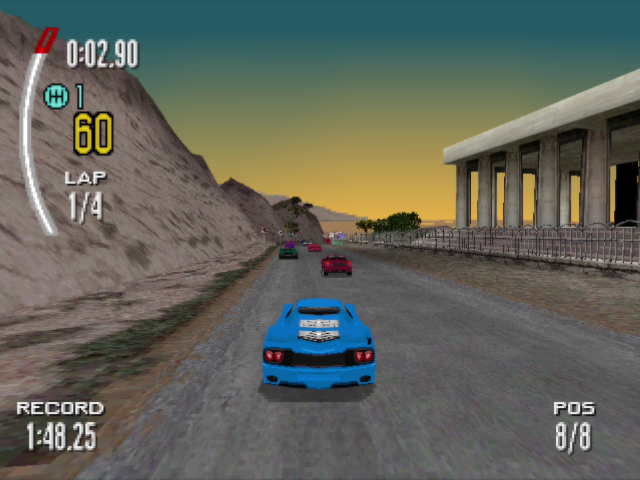
Need for Speed II on PlayStation is a 1997 arcade-leaning racing game developed by EA Canada and published by Electronic Arts. The second entry in the Need for Speed series moves the action from conventional circuits to fictional international road courses, putting licensed supercars through fast, dramatic routes inspired by locations including Australia, Canada, Greece, Norway and Nepal. It arrived in North America on March 31, 1997; the Japanese PlayStation release was titled Over Drivin' II.
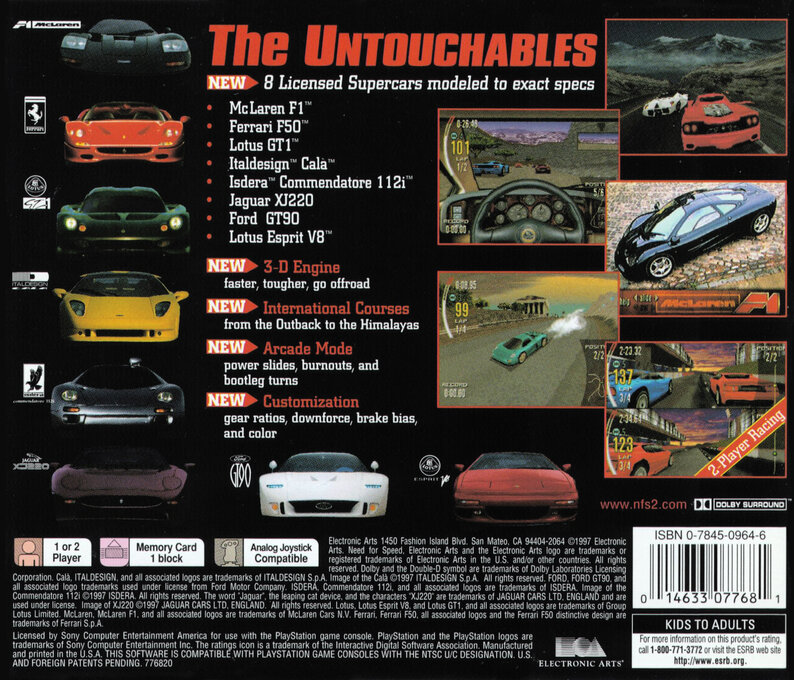
The PlayStation game centers on winning point-to-point and circuit races in eight high-performance machines. Its lineup combines real production exotics with concept cars: the McLaren F1, Ferrari F50, Lotus GT1, Jaguar XJ220 and Lotus Esprit V8 appear alongside the Ford GT90, Italdesign Cala and Isdera Commendatore 112i. The cars have different performance and handling characteristics, so selecting a vehicle is part of preparing for a course's long straights, sharp bends, elevation changes and off-road detours.
Players can set up a quick contest in Single Race, tackle the multi-event Tournament, or enter Knockout races where the driver at the back of the field is eliminated after each round. Tournament progress provides the main route to unlockable content, while the individual-race options let players choose laps, opponents and traffic. The PlayStation edition also supports two players in split-screen competition, making the same course and car selection available for local head-to-head races as well as solo play against computer-controlled rivals.
Need for Speed II gives its driving model an arcade option for slides, burnouts and dramatic turns, but it also allows a more simulation-minded driving style. Manual or automatic transmission can be selected, and the setup menu permits adjustments to gear ratios, downforce, brake bias and paint color. Four race camera views—including an in-car perspective—offer different ways to follow the road, while the replay feature uses multiple cinematic angles. Mastering braking and carrying speed through the courses matters, particularly when traffic, narrow roads and sudden corners interrupt a flat-out run.
Rather than build its tracks around a single real-world championship, the game uses stylized travel destinations as backdrops for high-speed road racing. One route can send cars through a Greek village, while others head into snowy, mountainous or outback scenery. Completing the initial selection of courses opens an additional track, and hidden shortcuts reward repeated runs and familiarity with each layout. The broader environments and alternate paths distinguish its course design from a closed-circuit racer, even though every event still comes down to crossing the line ahead of the opposition.
As a sequel, Need for Speed II retained the series' interest in detailed, licensed automobiles while changing the original game's Road & Track-branded approach. Electronic Arts licensed the featured cars directly from their manufacturers, and the game includes a car showcase with photographs, video material and background information on the vehicles and marques. It was later followed by Need for Speed III: Hot Pursuit in 1998. A separate Windows release, Need for Speed II: Special Edition, added content and technical features; those additions are distinct from this original PlayStation version.
Gallery
Details
- Developer
- EA Canada
- Publisher
- Electronic Arts
- Genre
- Racing & Driving
- Players
- 1-2
- Release Date
- March 31, 1997
- System
- PS1