About
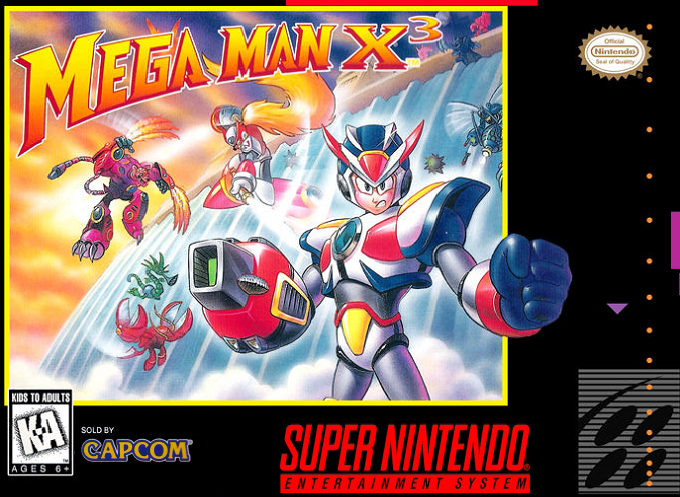
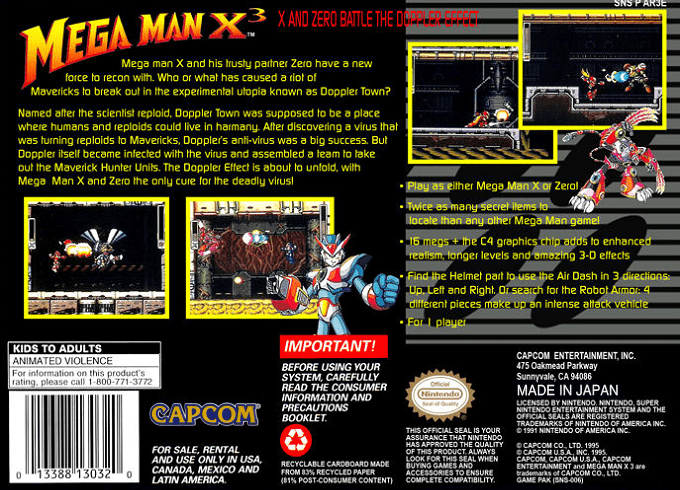
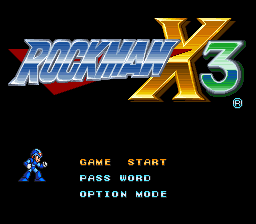
Mega Man X3 for the Super Nintendo Entertainment System is a 1995 action-platform game released as Rockman X3 in Japan and brought to North America in 1996. Published by Capcom and developed by Minakuchi Engineering, it is the third entry in the Mega Man X series and its final original SNES installment. The story returns to the far-future world of humans and Reploids, the autonomous robots whose occasional violent uprisings are classified as Maverick incidents. With Maverick activity erupting around the supposedly peaceful Doppler Town, X and his partner Zero investigate the scientist Dr. Doppler and the forces gathered under his name.
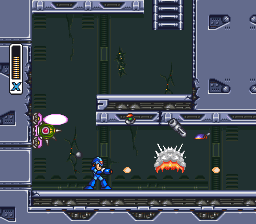
The game uses the series' familiar stage-selection structure. Players guide X through eight Maverick stages in an order of their choosing, confronting hazards, enemies, and a boss at the end of each route. Defeating a Maverick gives X that character's special weapon, while the bosses have corresponding weaknesses that reward experimentation with stage order and equipment. The basic movement set combines running, jumping, dashing, and wall climbing with the chargeable X-Buster arm cannon, making each level a mix of careful traversal, quick reactions, and weapon management.
Exploration is a major part of Mega Man X3 on SNES. Hidden Heart Tanks raise X's maximum energy, while Sub-Tanks store recovered health for use later. The game also places armor capsules around its stages, offering parts for the head, body, legs, and X-Buster; special chips provide further ability choices, though X can normally benefit from only one chip at a time. Ride Armor machines return as situational vehicles, and some collected items let X call them in more broadly. These systems make revisiting a difficult route with new mobility or firepower a practical part of progression rather than just a search for secrets.
Zero is playable for the first time in a Mega Man X game, although his role here is deliberately limited compared with later series entries. He can be called in to take over much of a stage, but he does not collect X's upgrades and generally cannot take on the stage bosses. His use still gives the campaign a second combat perspective and matters to an important late-game outcome. X remains the principal character, while Zero's involvement underlines the partnership at the center of the X series as the pair trace the new Maverick crisis beyond Doppler's public utopia.
Mega Man X3 continues the 16-bit presentation established by its predecessors, including the SNES Cx4 chip's occasional wireframe and transformation effects. Its eight Maverick opponents include creatures and machines such as Blast Hornet, Blizzard Buffalo, Gravity Beetle, Toxic Seahorse, Volt Catfish, Crush Crawfish, Tunnel Rhino, and Neon Tiger. The design pairs their themed stages with the weapon-copying system, so a newly earned ability can open an advantageous tactic against a different boss. The Japanese title is Rockman X3, while Western releases use Mega Man X3 and the original SNES release dates vary by region.
Capcom later issued 32-bit versions for PlayStation, Sega Saturn, and Windows. Those editions added animated sequences, rearranged music, and different sound effects, distinguishing them from the SNES original rather than simply duplicating it. The SNES game subsequently returned through Virtual Console releases and as part of Mega Man X Legacy Collection. As a closing chapter for the series on Super Nintendo, Mega Man X3 preserves the fast, upgrade-driven format of the first two X games while introducing Zero's limited playable debut and expanding the number of optional enhancements available to X.
Gallery
Details
- Developer
- Capcom
- Publisher
- Capcom
- Genre
- Platformer
- Players
- 1
- Release Date
- February 14, 1996
- System
- SNES