About
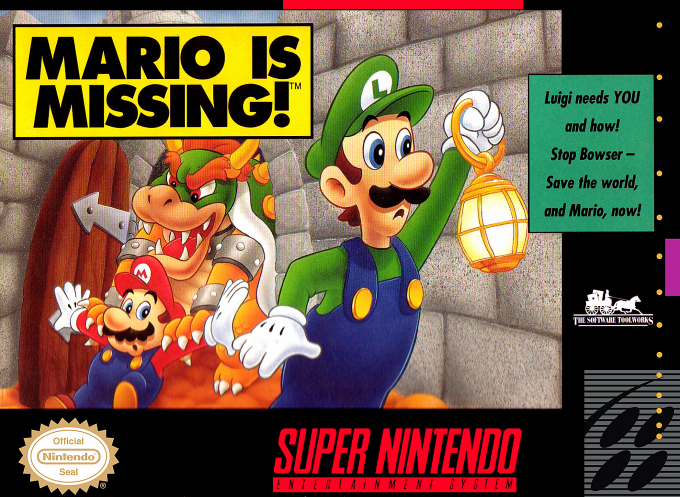
Mario Is Missing! for Super Nintendo Entertainment System is an educational action game built around Nintendo characters and released in the early 1990s. Developed by The Software Toolworks under license from Nintendo, it puts Luigi—not Mario—in the starring role after Bowser captures his brother and establishes a fortress in Antarctica. Bowser's Koopas use a network of PORTALS to steal famous landmarks and cultural treasures from cities around the world. Luigi must work through the castle, investigate the affected locations, and eventually rescue Mario while stopping Bowser's scheme.
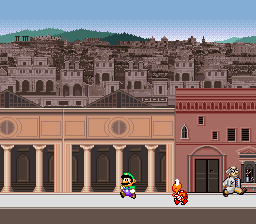
Each city stage blends simple side-scrolling movement with geography questions. Luigi walks and runs through a stylized real-world location, talks with local residents, and gathers clues that reveal where he is. The player then uses that information to identify the city correctly. Stolen objects are carried by Koopas roaming the stage; jumping on a Koopa recovers its item, and returning the item to its proper landmark leads to a short knowledge check. The questions turn the journey through the level into the game's central learning activity rather than a conventional race to the exit.
The SNES version visits fifteen cities spread across several continents, including San Francisco, Moscow, Nairobi, Beijing, Rome, Paris, Mexico City, Sydney, Buenos Aires, Athens, London, Cairo, Tokyo, Rio de Janeiro, and New York City. Landmarks and artworks give each stop its subject matter, while information booths and conversations provide the hints needed to connect a place with its country and region. Luigi records the progress of recovered treasures, and successful returns build a photo album that marks the cities restored during the adventure.
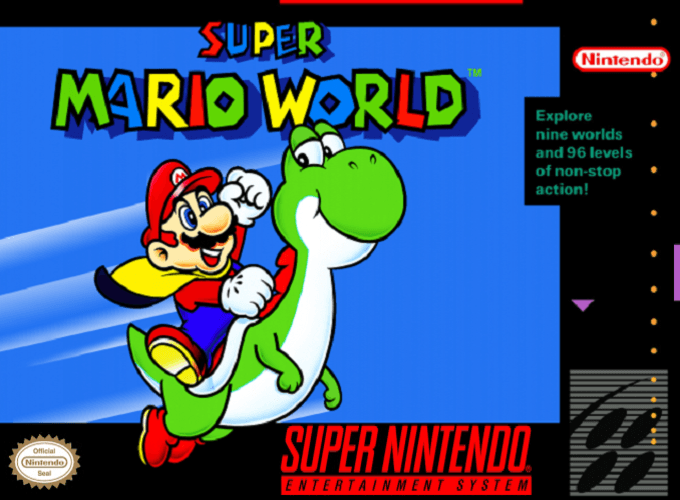
A key part of Mario Is Missing! on SNES is the Globulator, a world map Luigi can consult after learning his location. It is used to bring Yoshi from Bowser's Antarctic base to the current city. Riding Yoshi improves Luigi's mobility, but the dinosaur also solves the immediate obstacle at the level exit: a Pokey blocks the pipe leading back to the castle, and Yoshi's presence sends it away. This requirement gives the geography deduction a practical role in the action-game structure, since a stage cannot be completed merely by finding the artifacts.
Progression is arranged through floors of Bowser's castle. Once Luigi has resolved the cities connected to a floor, he faces a Koopaling before gaining access to the next group of PORTALS. These encounters use the familiar Mario-series idea of stomping enemies, though the emphasis remains on completing the world-city assignments. The Super NES release adapts visual and audio elements associated with Super Mario World, helping make its educational premise legible to players accustomed to 16-bit Mario platformers while giving the game a distinct purpose from a standard Mario adventure.
Mario Is Missing! belongs to the small group of Mario educational games created when character licenses were used to introduce subjects such as geography and history to younger players. Its console design differs from the computer versions, which lean more heavily on point-and-click adventure conventions; the SNES edition adds a more direct platform-style way to confront Koopas and move through cities. It is also notable for centering Luigi at a time when he rarely led a Mario game, making his search for Mario, his partnership with Yoshi, and the globe-spanning structure an unusual chapter in the Super Nintendo library.
Gallery

Details
- Developer
- The Software Toolworks
- Publisher
- Nintendo
- Genre
- Educational
- Players
- 1
- Release Date
- June 9, 1994
- System
- SNES