About
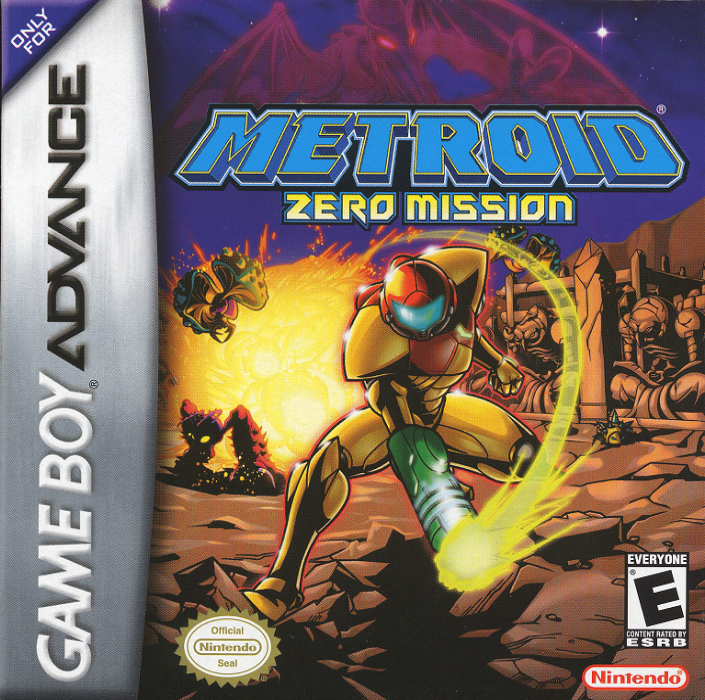
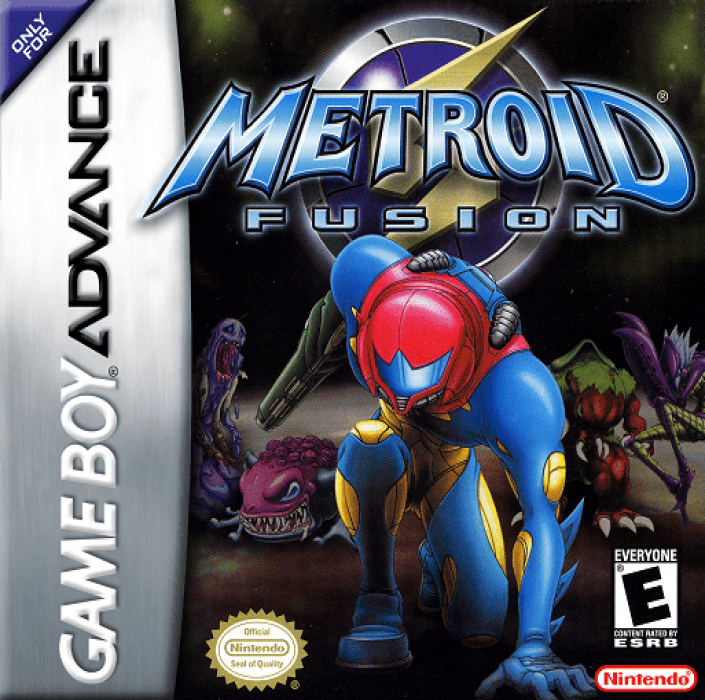
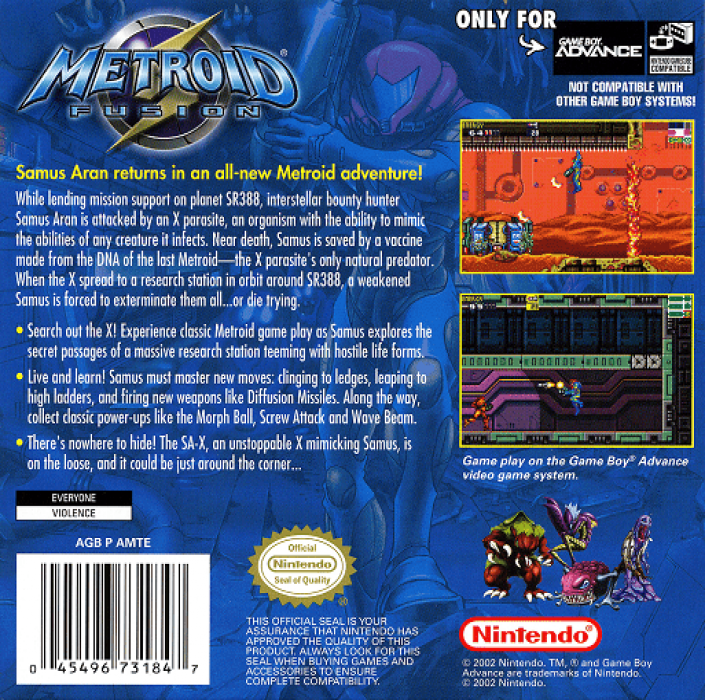
Metroid Fusion is a tense 2D action-adventure for Game Boy Advance that sends bounty hunter Samus Aran back into the shadow of SR388. After an X parasite attacks her during a mission on the Metroids' home planet, Samus survives only through a vaccine made from Metroid DNA. The cure changes her as much as it saves her: she can absorb X parasites for energy, but the infection has left her newly vulnerable to cold. Soon afterward, an outbreak aboard the Biologic Space Laboratories research station turns that personal danger into a race to stop a threat that can copy the creatures it consumes.
The setting gives the adventure its distinct pressure. Instead of simply wandering a distant planet, Samus enters a sealed orbital station divided into themed sectors, laboratories, and hidden service passages. Navigation rooms provide mission briefings and point her toward the next objective, giving the game a more directed story than earlier 2D Metroid adventures without removing the pleasure of probing suspicious walls, revisiting blocked routes, and finding the path that a new tool finally opens. Its compact Game Boy Advance scale makes every corridor feel close, hostile, and worth checking twice.
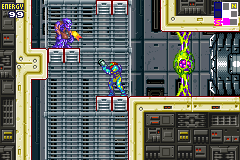
At the center is the series' familiar rhythm of exploration and growth. Samus runs, jumps, aims in multiple directions, rolls through narrow tunnels in Morph Ball form, and searches for expansions that increase her health, missile capacity, and bomb supply. Data Rooms restore major equipment, while boss encounters can yield Core-X parasites that return abilities taken from her at the beginning. Classic upgrades such as the Wave Beam and Screw Attack build her power steadily, and abilities like ledge grabbing and ladder climbing give this entry its own agile feel.
The X parasite changes the meaning of every victory. Defeated enemies release drifting X that can be absorbed to recover health, missiles, or bombs, so combat rewards quick movement as well as careful shooting. But the organisms also imitate their hosts, making the station's wildlife unpredictable and allowing the game to build dread around the SA-X: a copy of Samus in her original, fully armed Power Suit. Early encounters are deliberately about escape rather than conquest, turning a recognizable hero silhouette into one of the adventure's most alarming sights.
Metroid Fusion balances that suspense with satisfying problem-solving. Doors, hazards, and terrain repeatedly ask players to read the room, test weapons, and connect a new upgrade to an old obstacle. Missiles take on useful new forms, including ice and diffusion variations, while the map and navigation guidance help maintain momentum through the station's changing conditions. Hidden missile tanks, energy tanks, and other expansions reward detours for players who want to push beyond the critical route, so the structured mission flow still leaves room for the series' essential curiosity.
The story is unusually prominent for a Game Boy Advance Metroid game, delivered through Samus's mission reports and her exchanges with the computer she calls Adam. It keeps the focus on isolation, containment, and the unsettling consequences of the Federation's research while allowing the threat to unfold through exploration rather than cutscenes alone. The result is a focused science-fiction chase: Samus grows stronger, but so does the sense that something equally capable may be moving elsewhere in the station.
Originally released for Game Boy Advance in 2002, Metroid Fusion stands as a polished handheld chapter built around responsive platforming, secret-filled maps, escalating equipment, and a sharply defined atmosphere. It is a strong choice for players who enjoy classic side-scrolling Metroid design but want a clear narrative drive and a more urgent survival-horror edge. Whether hunting for every expansion or following the main mission through the BSL station, players get a concentrated Samus adventure in which each recovered power brings both confidence and another reason to fear what is waiting ahead.
Gallery
Details
- Developer
- Nintendo
- Publisher
- Nintendo
- Genre
- Platformer
- Players
- 1
- Release Date
- November 17, 2002
- System
- GBA