About
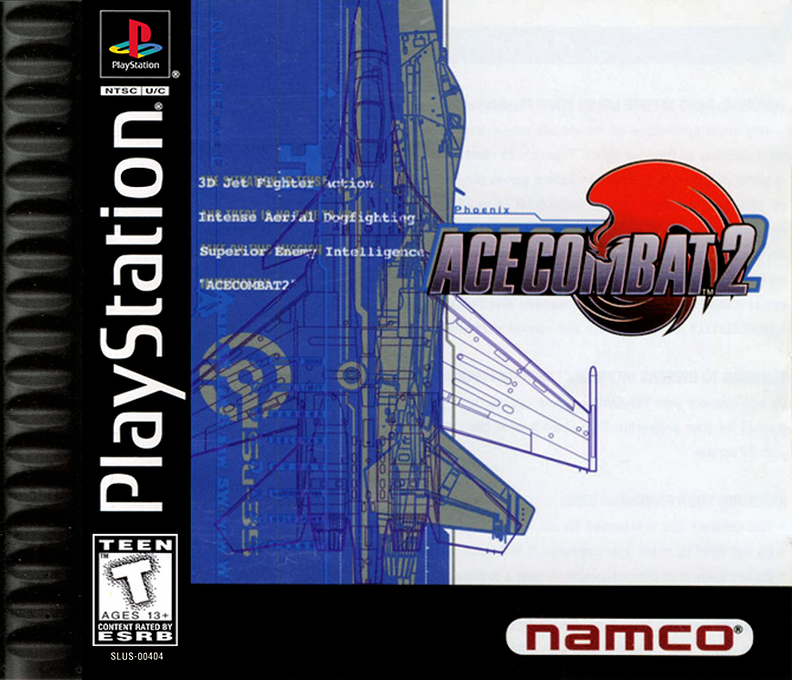
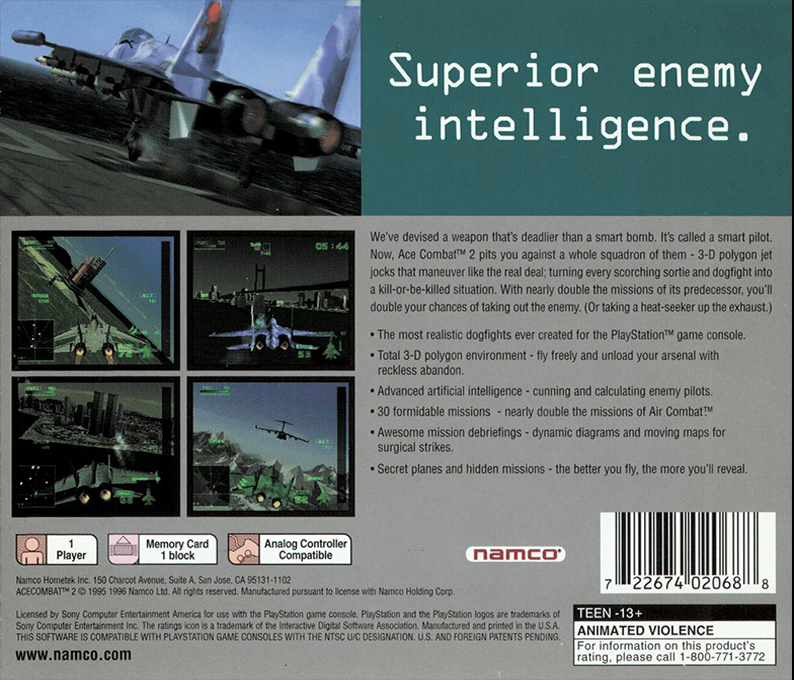
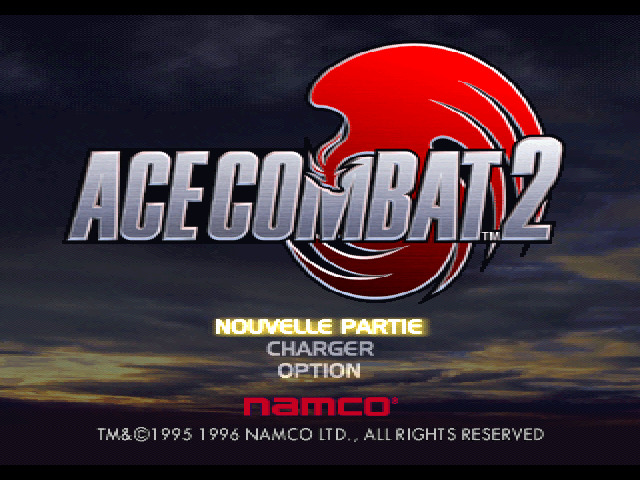
Ace Combat 2 for PlayStation is Namco’s 1997 flight-combat game and the second entry in the Ace Combat series, following the 1995 PlayStation release known internationally as Air Combat. Released in Japan on May 30, 1997 and later issued in North America and Europe, it puts the player in the cockpit of a mercenary fighter pilot during a fictional military crisis. Rather than aiming for a demanding real-world simulator, the game presents aerial combat as a fast, accessible 3D dogfighting experience built around dramatic missions, rapid target acquisition, and the appeal of piloting recognizable jet fighters.
The main campaign is a sequence of sortie briefings and combat assignments in which the player must meet a specific objective before returning to base. Missions can ask for the destruction of key ground or naval targets, the interception of hostile aircraft, or the defense of friendly positions. Success earns money for the player’s hangar, allowing additional aircraft to be purchased and expanding the options available for later sorties. The overall mission flow also branches, so choices in the campaign can lead to different assignments instead of following one completely fixed route.
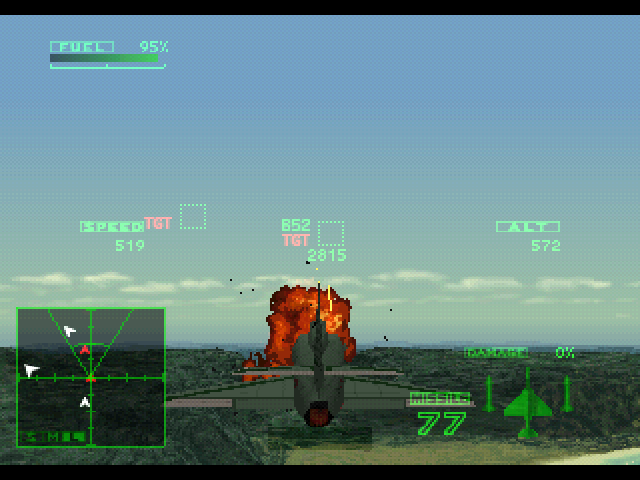
At its core, Ace Combat 2 uses a simple control scheme to keep attention on maneuvering and firing. Players steer and pitch their aircraft, regulate speed, and select weapons while watching enemy positions and mission information on the display. A limited fuel supply adds pressure to each operation: flying, afterburning, and engaging enemies consume the available reserve, making efficient attacks and a direct route to the objective important. The game offers Novice and Expert settings, with the latter permitting more advanced maneuvers and asking more from the pilot’s handling of the aircraft.
Namco supplied 24 flyable aircraft, mixing real-world-inspired fighters and attack planes with secret unlocks. Aircraft are not merely cosmetic selections; the hangar and earnings system makes the search for a more suitable machine part of the campaign’s progression. Ace pilots provide another layer of challenge. Finding and defeating these specially identified opponents can earn medals and open up bonus aircraft, giving players a reason to revisit missions and explore alternative routes. A wingman can join the player after the opening missions, adding support during the later aerial engagements.
The PlayStation presentation was a major step beyond its predecessor. Namco described it as a 3D dogfighting game and promoted improved operation, graphics, and multi-route story progression. It supports the standard PlayStation pad as well as the NeGcon, PlayStation Analog Joystick, and analog controller, letting players choose between conventional digital input and more specialized hardware. Briefings, radio-style communication, cockpit and external viewpoints, and a replay feature frame the sorties, while mission environments range across sea, land, and built-up targets designed for fast combat runs.
Ace Combat 2 helped establish several ideas that would remain familiar within the series, including medals, replays, unlockable content, and a campaign centered on distinct aerial-combat scenarios rather than one repeated objective. It is a single-player PlayStation game whose arcade-minded handling makes it approachable even as its later missions and expert setting demand careful flying. For players exploring the early history of Namco’s long-running flight-action series, it captures the point at which the original formula broadened into a larger campaign of branching missions, aircraft collecting, and high-speed dogfights.
Gallery
Details
- Developer
- Namco
- Publisher
- Namco
- Genre
- Rail Shooter, Shoot 'em Up
- Players
- 1
- Release Date
- July 31, 1997
- System
- PS1