About
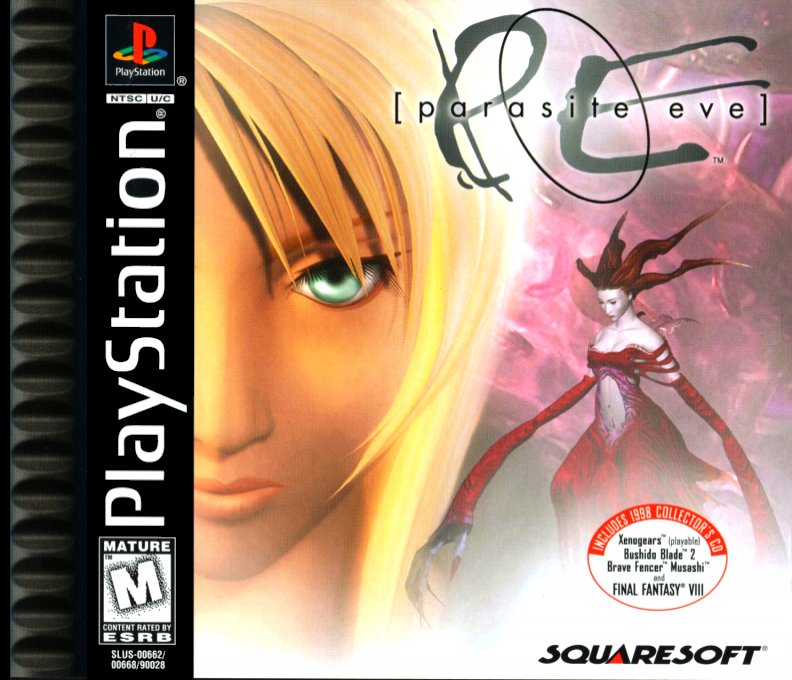
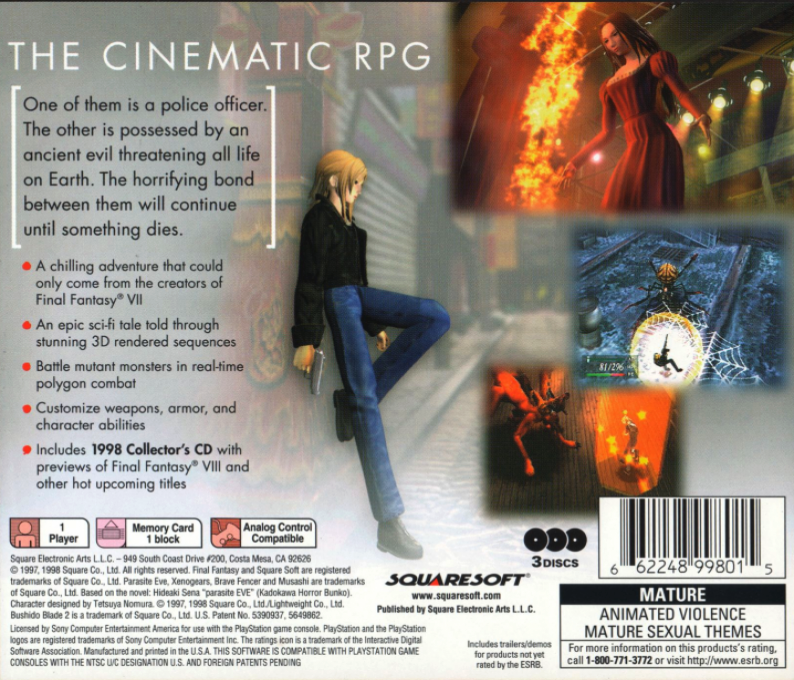
Parasite Eve for PlayStation is a 1998 cinematic role-playing game from Square, released in Japan in March and in North America that September under the SquareSoft name. It adapts the world of Hideaki Sena’s novel as a new story rather than retelling it. The game follows Aya Brea, a rookie New York City police officer, over six days during Christmas 1997, as a violent mitochondrial threat turns Manhattan into the center of an escalating emergency. Its science-fiction horror premise, modern city setting, and role-playing systems set it apart from Square’s more traditional fantasy releases of the period.
Aya’s investigation begins at an opera performance at Carnegie Hall, where a disaster leaves her confronting the performer Melissa Pearce and the entity calling itself Eve. Aya is unusually able to withstand Eve’s influence, and the case brings her together with detective Daniel Dollis and visiting researcher Kunihiko Maeda. Their search moves through recognizable Manhattan locations and leads from police work and scientific investigation to confrontations with mutated creatures. The story combines a police procedural framework with the fictional idea of mitochondria acting against their human hosts.
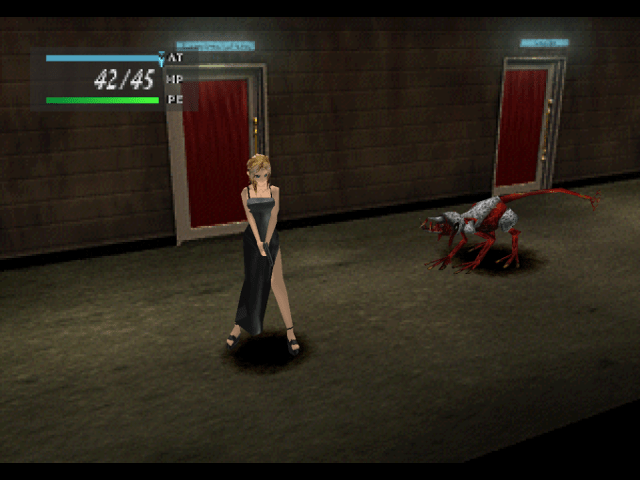
Exploration is organized around a Manhattan map and a series of destination-based areas, including the NYPD precinct, Central Park, hospitals, and the Museum of Natural History. Aya searches rooms, speaks to supporting characters, collects supplies, and advances through the six-day narrative. Hostile encounters can appear while she travels through an area, but battles do not switch to a separate arena. Enemies share the scene with Aya, creating fights in which positioning matters as much as selecting a command.
Parasite Eve uses a pausable real-time battle system built around an Active Time Bar. Aya must wait for the bar to fill before choosing an action, yet she can keep moving while it recharges to avoid attacks and find a better firing position. When she attacks, the action pauses briefly so the player can choose a target inside the equipped weapon’s range. Along with firearms and items, Aya can spend Parasite Energy on offensive, defensive, and support abilities. That energy replenishes during combat, although repeated use slows its recovery.
Role-playing progression extends beyond Aya’s experience level. Level gains improve her abilities and award bonus points that can be assigned to areas such as her action gauge, inventory capacity, weapons, or armor. Guns and protective gear also support a tune-up system: limited tools let the player transfer certain attributes or special effects between compatible pieces of equipment. This makes equipment management part of the adventure, whether preparing for a boss encounter or adapting Aya’s loadout to the threats in the next location.
The original PlayStation release is a single-player game directed by Takashi Tokita, produced by Hironobu Sakaguchi, with character design by Tetsuya Nomura and music by Yoko Shimomura. Square developed it with contributions from Square USA, and its presentation uses pre-rendered locations, computer-generated sequences, and an opera-tinged soundtrack to support the contemporary New York setting. Completing the main story unlocks the EX Game mode, which carries equipment forward and adds the Chrysler Building, a 77-floor optional challenge. Parasite Eve later continued with Parasite Eve II and The 3rd Birthday, but this first game establishes Aya Brea’s case and the series’ distinctive blend of RPG progression, investigation, and horror.
Gallery
Details
- Developer
- Squaresoft
- Publisher
- Squaresoft
- Genre
- Survival Horror
- Players
- 1
- Release Date
- September 8, 1998
- System
- PS1