About
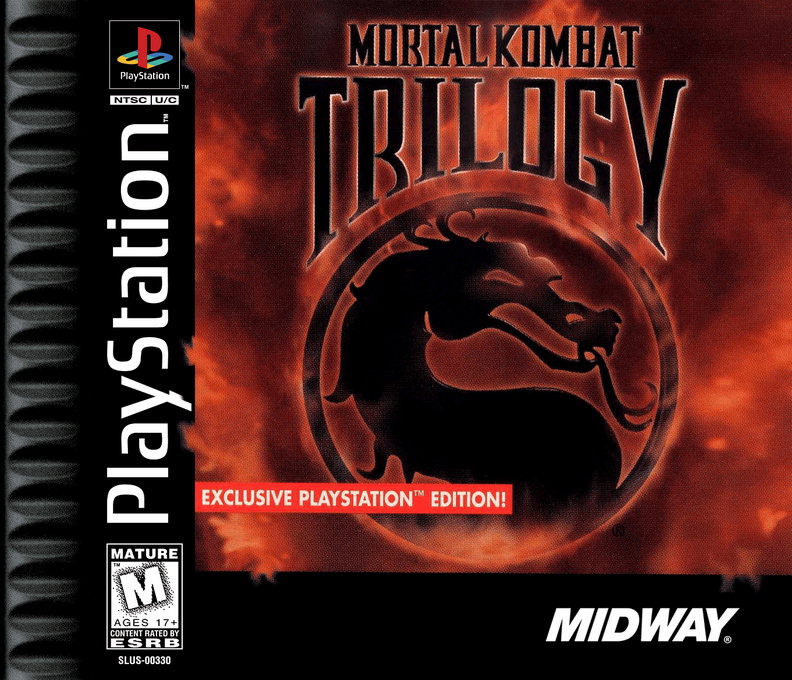
Mortal Kombat Trilogy for PlayStation is a 1996 one-on-one fighting game developed by Avalanche Software and published by Midway. Built as the second and final expansion of the Mortal Kombat 3 era, it combines material from Mortal Kombat, Mortal Kombat II, Mortal Kombat 3, and Ultimate Mortal Kombat 3 into a single home-console package. The PlayStation release arrived in October 1996 and was one of several versions, but its lineup and presentation are specifically tailored to Sony's CD-based system. Its tournament framing continues the conflict surrounding Shao Kahn, while the real focus is a broad roster drawn from the series' first three arcade games.
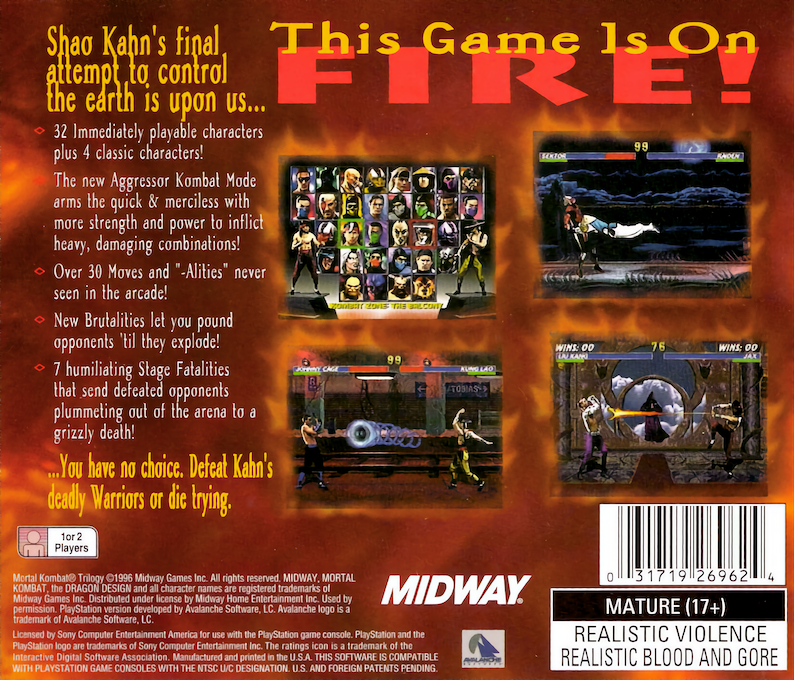
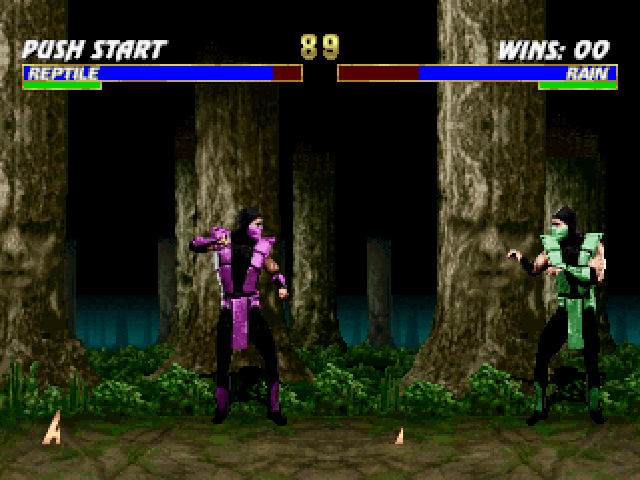
Matches retain Mortal Kombat's familiar two-dimensional format: two fighters face off across themed arenas, trade punches, kicks, throws, special moves, and combos, then attempt a finishing move after the final round. Players can choose a fighter for solo ladder battles or challenge another player locally. The cast includes returning heroes and villains such as Liu Kang, Sonya Blade, Johnny Cage, Raiden, Kitana, Mileena, Scorpion, Sub-Zero, Reptile, Jax, Baraka, and Shang Tsung, alongside playable bosses including Goro, Kintaro, Motaro, and Shao Kahn. Alternate forms of several characters also expand the selection, allowing matchups that the original individual releases could not offer.
Mortal Kombat Trilogy uses the run button and dial-a-combo structure associated with Mortal Kombat 3 and Ultimate Mortal Kombat 3. Each combatant has a distinct set of projectiles, mobility options, and close-range attacks, so spacing, blocks, jump timing, and recognition of special-move inputs remain central to a round. The game also adds an Aggressor meter that fills during combat, with blocking contributing more quickly. When activated, the filled meter gives a temporary boost to movement speed and attack strength, creating a short opening for a fighter to press an advantage or reverse the pace of a match.
The package restores characters and stages from earlier Mortal Kombat games while preserving the newer mechanics of the third installment. Raiden, Baraka, and Johnny Cage are among the major additions beyond the Ultimate Mortal Kombat 3 roster, and the PlayStation version includes several classic character variants. It also supports the series' range of end-of-match flourishes, including Fatalities, Babalities, Friendships, Animalities, and stage-specific finishers where applicable. Trilogy introduced Brutalities to this lineup: long, exact attack sequences performed after victory conditions are met. Secret characters and Kombat Kodes add further reasons to revisit the versus and single-player modes.
As a PlayStation release, Mortal Kombat Trilogy trades cartridge limits for CD storage and features a larger character selection than the Nintendo 64 version. That breadth comes with loading considerations, particularly around Shang Tsung's transformations; the game offers configuration choices for character morphing to manage them. Multiple PlayStation revisions were released, with later editions refining aspects of play. Rather than a newly built sequel, Mortal Kombat Trilogy serves as a large-scale snapshot of the series' early fighting style, assembling its digitized fighters, recognizable arenas, secret content, and competitive systems before Mortal Kombat moved on to its next main installment.
Gallery
Details
- Developer
- Avalanche Software
- Publisher
- Midway
- Genre
- Fighting
- Players
- 1-2
- Release Date
- October 11, 1996
- System
- PS1