About
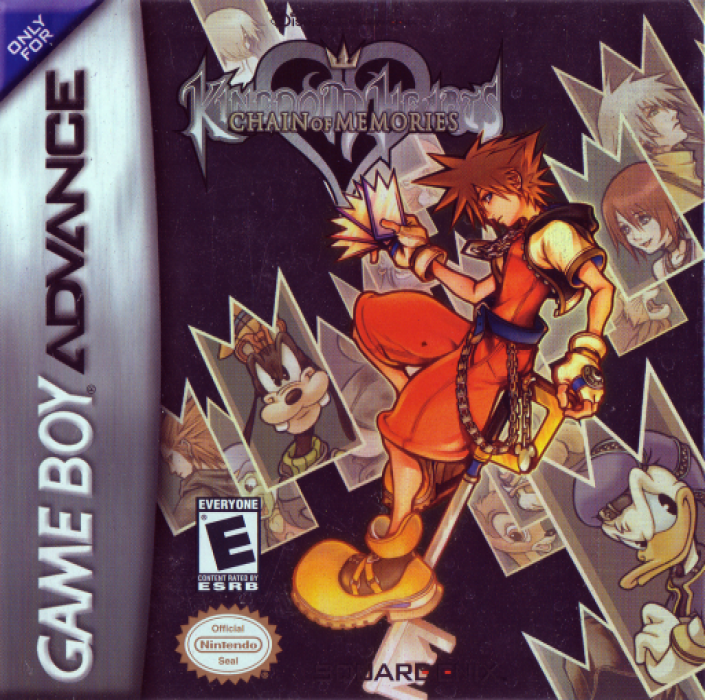
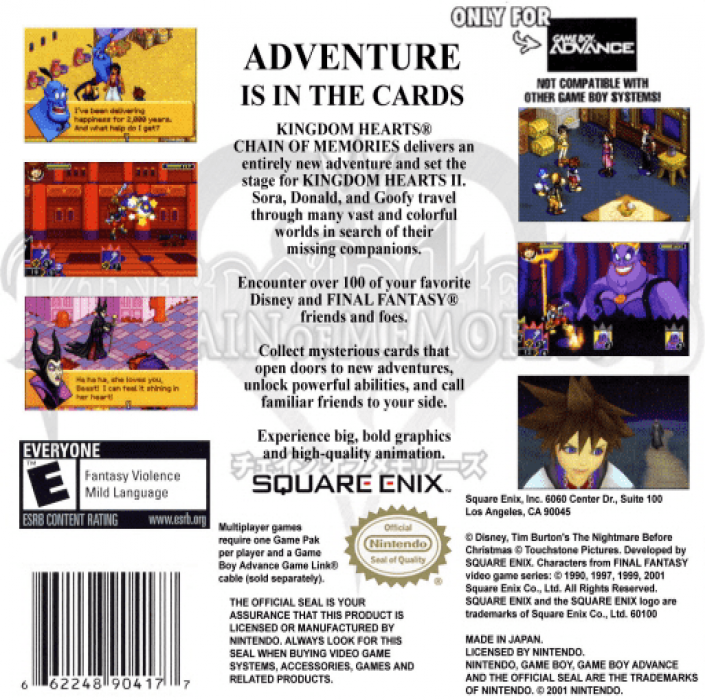
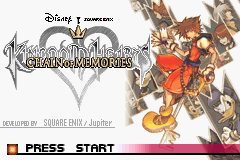
Kingdom Hearts: Chain of Memories is the Game Boy Advance chapter that carries Sora, Donald, and Goofy from the ending of the first Kingdom Hearts toward Kingdom Hearts II. Developed by Jupiter and published by Square Enix, it reached North America on December 7, 2004. Rather than trying to reproduce the PlayStation 2 original on a handheld, this entry builds a sprite-driven action RPG around the strengths and limits of the GBA while preserving the series’ Disney, Final Fantasy, and original-character blend.
The journey begins with the trio still searching for Riku and King Mickey when a black-coated stranger points them to Castle Oblivion. Inside, their powers and memories begin to slip away. Every floor is shaped by cards and by Sora’s recollections, letting familiar worlds and faces return in altered, memory-based forms. The central mystery turns the adventure into more than a collection of revisited locales: Sora is being drawn into a conflict involving the enigmatic Organization XIII and Naminé, whose connection to his memories changes the course of the story.
Combat is the feature that most clearly defines the original Chain of Memories. Battles play out in real time, but every Keyblade swing, spell, item, summon, and defensive response is tied to a numbered card. Players arrange decks before battle, then decide when to spend a card, combine three cards into a more powerful sleight, reload, or hold a zero card for a timely interruption. A higher card number can break an opponent’s move, while a zero can defeat any card or combo if used after it has been played. The result mixes quick movement with deck planning and risk management.
Cards also govern exploration. Victories award map cards that open the doors between Castle Oblivion’s rooms. Choosing a card changes the next room’s conditions, such as the enemies it contains, the strength of those enemies, the availability of treasure, or whether a save point appears. This room-synthesis system gives the castle a modular structure and connects progression to the same card collection that fuels combat. It also makes deck-building matter outside a fight, since the resources collected on one floor help determine the route through the next.
Sora’s campaign is only one side of the game. Completing it unlocks Reverse/Rebirth, a parallel story starring Riku as he moves upward from Castle Oblivion’s basement levels. Riku’s deck is fixed by the world he is in, shifting the emphasis from Sora’s careful customization to a different set of tactical choices. His battles also use Dark Mode and dark points, tying his mechanical arc to his struggle with the darkness inside him. Together, the two campaigns show overlapping events from opposing perspectives and give key characters room that the main route alone would not provide.
Chain of Memories is especially important for its place in the series narrative. It introduces Organization XIII, Naminé, Castle Oblivion, and several plot threads that lead directly into Kingdom Hearts II. The story asks what remains of a friendship when memories are changed, and it places Sora’s determination beside Riku’s more personal attempt to accept both light and darkness. By the end, Sora and his companions enter sleep chambers so their memories can be restored, accepting that they will forget their time in the castle. That bittersweet choice is the bridge between the two numbered games.
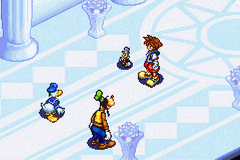
This is the 2D Game Boy Advance original, not Kingdom Hearts Re:Chain of Memories. Re:Chain of Memories is a later PlayStation 2 remake with polygonal 3D environments and battles, voice-acted scenes, revised presentation, and added material. The remake retains the card combat and room system, but it is a separate version of the same core story. The GBA release remains distinctive for its compact isometric rooms, detailed sprite work, handheld pacing, and the way its card mechanics were designed around the original portable format.
For retro RPG players, Kingdom Hearts: Chain of Memories offers an unusual meeting point between action game reflexes and collectible-card strategy. It rewards learning the values in a deck instead of relying on a single favorite attack, and its two campaigns make Castle Oblivion feel like a pivotal stop rather than a side story. Whether approached as a direct sequel to Kingdom Hearts or as essential context before Kingdom Hearts II, the GBA original stands as a deliberately different chapter with its own visual style, combat rhythm, and role in Sora and Riku’s journeys.
Gallery
Details
- Developer
- Jupiter
- Publisher
- Square Enix
- Genre
- Action RPG
- Players
- 1-2
- Release Date
- December 7, 2004
- System
- GBA