About
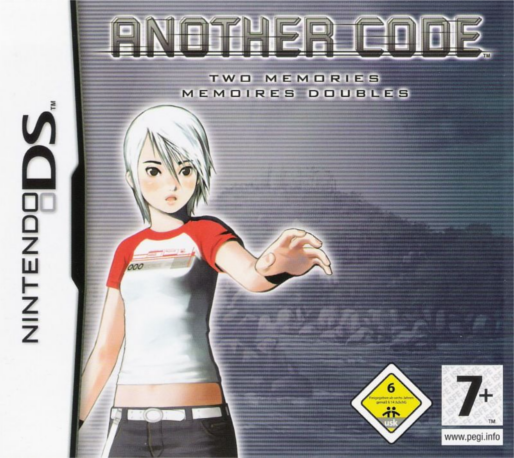
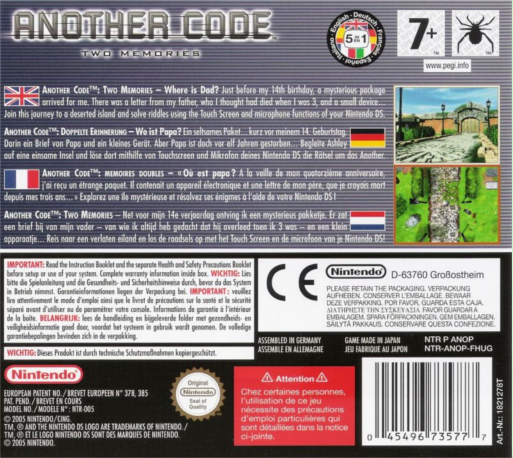
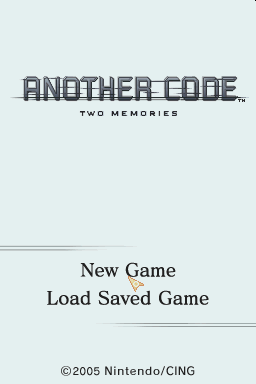
Another Code : Two Memories for Nintendo DS is a single-player mystery adventure developed by Cing and published by Nintendo. First released in Japan in February 2005, it reached Europe in June and North America on September 27, 2005, where it was titled Trace Memory. The game follows Ashley Mizuki Robbins, a young girl who has long believed her parents to be dead. A message from her father instead draws Ashley and her aunt Jessica to the isolated Blood Edward Island, beginning an investigation shaped by family history, missing memories, and a long-abandoned mansion.
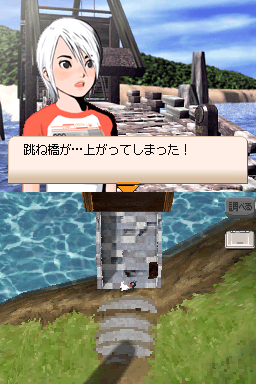
Rather than relying on combat or quick reactions, the Nintendo DS adventure centers on exploration, observation, and puzzle solving. Ashley walks through the island’s grounds and interiors while players inspect scenery, collect useful items, and look for clues that open the way forward. The upper screen presents the current location while the Touch Screen supplies an overhead view and interactive controls. Ashley can be directed with the stylus or the system’s controls, and close examinations turn ordinary objects into small hands-on puzzles.
Cing built the game around the hardware’s two-screen layout. Players tap and drag to handle objects, make notes of details in the environment, and use the Nintendo DS microphone for particular challenges. The in-game DAS device also supports the investigation by storing data cards, messages, photographs, and an inventory of found items. These features make the handheld itself part of the detective work: progress often comes from reconsidering a room, a document, or an object from a different angle rather than overpowering an obstacle.
Ashley’s search soon becomes intertwined with D, a ghostly boy she meets on the island who cannot remember his own past. Their parallel quests lead through the Edward family’s old property and toward answers about Ashley’s father, her mother, and the island’s troubled history. Dialogue and discovery carry much of the experience, with an illustrated character style set against three-dimensional environments. The story’s focus on recollection gives the title its meaning while keeping the player’s attention on the clues that connect its characters and locations.
The game is known as Another Code: Two Memories across much of Europe and as Trace Memory in North America; the different title is worth knowing when looking for the same Nintendo DS release in regional catalogues. It is a self-contained DS story, although Ashley later returned in the Wii sequel Another Code: R – A Journey into Lost Memories in territories where that game was released. Nintendo later revisited both adventures in Another Code: Recollection for Nintendo Switch, but the DS original remains distinctive for puzzles designed around the stylus, microphone, and paired screens.
Another Code : Two Memories captures an early approach to Nintendo DS adventure design: a compact, story-led investigation that turns the portable system’s uncommon inputs into part of its fiction. Its structure favors patient searching, conversations, and environmental problem solving over action sequences, so it suits players who want to uncover a mystery at their own pace. For fans of Cing’s narrative games or Nintendo DS adventures that make direct use of the system’s features, Ashley’s visit to Blood Edward Island is a notable example of a mystery built specifically for the handheld.
Gallery
Details
- Developer
- Cing
- Publisher
- Nintendo
- Genre
- Point-and-Click Adventure
- Players
- 1
- Release Date
- September 27, 2005
- System
- NDS