About
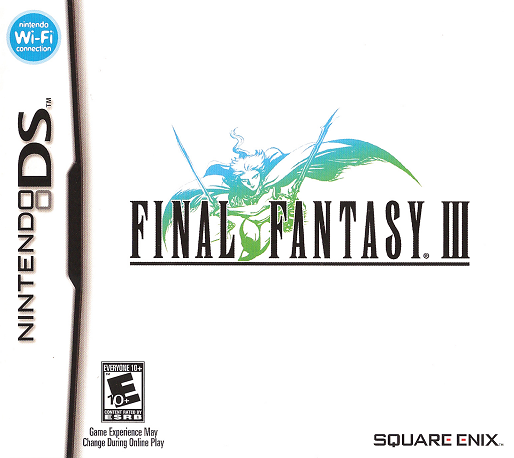
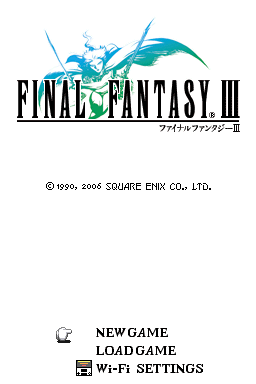
Final Fantasy III for Nintendo DS is the 2006 3D remake of Square’s 1990 Famicom role-playing game, developed by Matrix Software with Square Enix and published by Square Enix. It arrived in Japan in August 2006 and North America that November, giving the original Final Fantasy III its first official release outside Japan. This is not the Super NES game once released in North America as Final Fantasy III; it is the earlier series entry rebuilt for Nintendo’s dual-screen handheld, with a new interface, polygonal presentation, and a more fully characterized party.
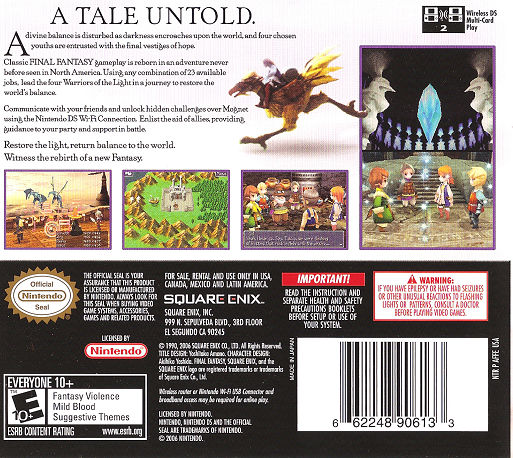
The adventure begins when Luneth, an orphan from the village of Ur, discovers a hidden cave and encounters a crystal. He is soon joined by Arc, Refia, and Ingus, four young heroes chosen to restore the light of the elemental crystals and confront the darkness threatening their world. Their journey moves between towns, castles, caves, seas, and floating lands as the group meets allies, pursues the source of the crisis, and searches for a path between separate worlds. The DS version preserves the original game’s broad crystal-centered quest while giving its formerly unnamed protagonists individual designs, names, backgrounds, and additional character scenes.
At its heart, Final Fantasy III is a single-player, turn-based Japanese RPG. Players guide a four-character party across an overworld, investigate locations, speak with non-player characters, manage equipment and items, and enter random battles. Combat is menu driven: each party member selects an action such as attacking, using an item, casting magic, summoning, or applying a job-specific skill before the round plays out. Victories provide experience and gil for strengthening the party and buying supplies, while towns, shops, and rest points help prepare the group for increasingly demanding dungeons and bosses.
Its defining system is the job system, an important early Final Fantasy feature that lets the player change each hero’s combat role. A party can be arranged around jobs such as Warrior, Monk, White Mage, Black Mage, Thief, Knight, Scholar, Bard, Dragoon, and more, with different weapons, magic, attributes, and special abilities attached to each choice. Jobs are awarded over the course of the story, encouraging players to rethink their formation when a new enemy, dungeon gimmick, or boss calls for another approach. The remake rebalances these roles and uses job levels to reflect experience with a profession, while temporary adjustment effects make frequent job changes a tactical decision rather than a purely cosmetic one.
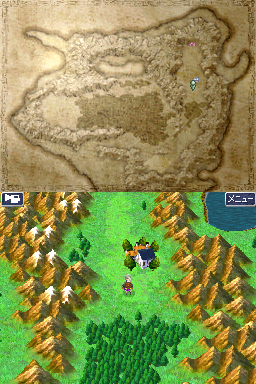
The Nintendo DS presentation distinguishes this version from the original Famicom release. Its world, characters, and battles were recreated in 3D, while an opening movie and redesigned character art give the adventure a more contemporary handheld-era look. The two screens and stylus support movement and menu navigation, though standard buttons remain part of the control scheme. The remake also includes Mognet, a communication feature through which players could exchange messages with other users or correspond with certain in-game characters; its online functionality depended on Nintendo Wi-Fi Connection, which is no longer active.
Final Fantasy III stands at a notable point in the series’ history. The 1990 original introduced concepts that became recurring Final Fantasy touchstones, including flexible jobs and summoned creatures, and the DS remake brought that chapter to a much wider audience. For players exploring the Nintendo DS library, it offers a substantial quest built around party customization, traditional turn-based battles, and the contrast between an early Final Fantasy design and a remake tailored to the hardware of 2006.
Gallery
Details
- Developer
- Matrix Software
- Publisher
- Square Enix
- Genre
- JRPG
- Players
- 1-2
- Release Date
- November 14, 2006
- System
- NDS