About
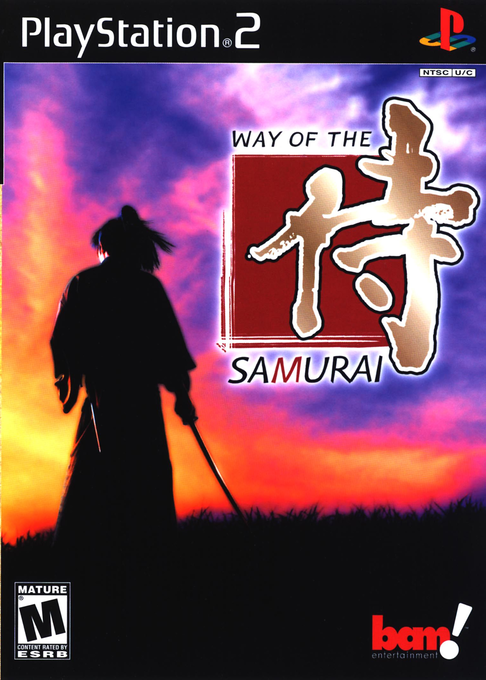
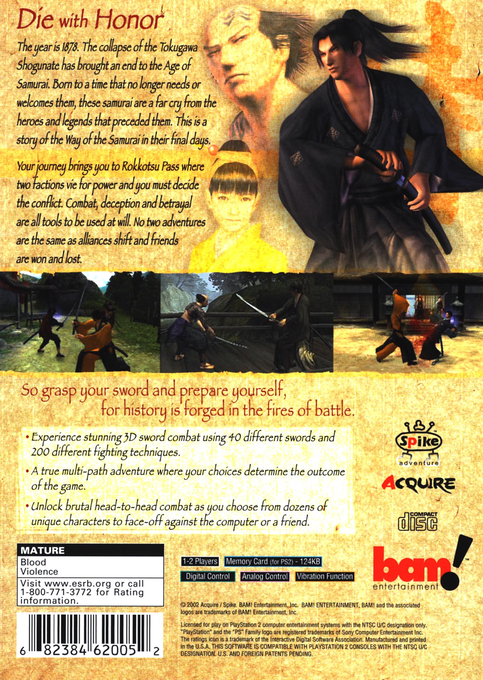
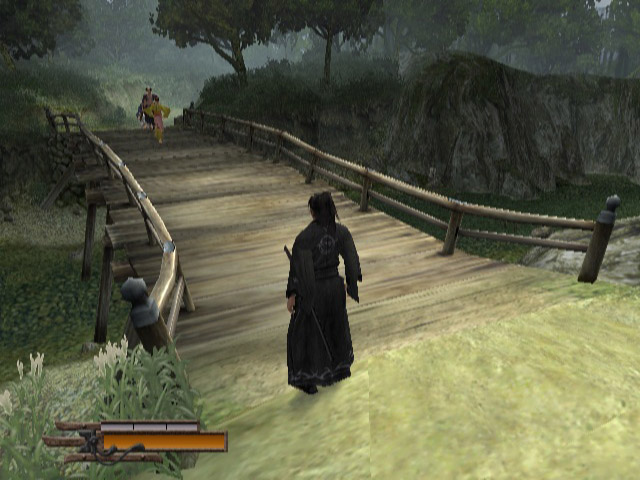
Way of the Samurai for PlayStation 2 is an action-adventure game from Acquire, first released in Japan in February 2002 as Samurai. Its overseas editions followed later that year: Bam Entertainment handled North America, while Eidos Interactive published the European release. The game places its lone swordsman, Kenji, in the unsettled Japan of 1878, when the Meiji government’s growing authority has left the old samurai order in a precarious position. Rather than telling one fixed heroic tale, it makes the player's behavior the force that shapes a short, repeatable journey through Rokkotsu Pass.
Kenji arrives at the rural pass as a wandering rōnin and almost immediately encounters a confrontation that can be approached in several ways. He can intervene, side with the aggressors, or walk away, and that early decision establishes the game’s central idea: scenes are not simply obstacles to clear, but opportunities to choose an allegiance or refuse one. Conversations, acts of help, betrayals, and violence steer the story toward different encounters and conclusions. The result is a compact adventure designed for replay, where a return visit can reveal another perspective on the same conflict instead of merely repeating an unchanged campaign.
Rokkotsu Pass stands at the center of a dispute over an iron foundry. Government forces, armed with the tools of a modernizing state, seek control of the area; the Kurou family is trying to preserve its influence; and the Akadama clan opposes both the government’s advance and the Kurou family’s plans. Ordinary residents have little power in the struggle, so Kenji can become a protector, a partisan, an opportunist, or an observer. This setting gives the branching routes a historical tension without requiring the player to follow a single prescribed moral path. Choices can also be reversed or complicated later, making alliances feel less permanent than they first appear.
Sword combat is the other major part of Way of the Samurai. Kenji begins with limited equipment but can take weapons from defeated opponents, gradually building a collection of blades. Each sword has its own move combinations and fighting stance, while the basic control set includes ordinary and stronger attacks, guarding, and kicking. Players can carry a small number of swords during a run, so deciding which weapon to keep has practical consequences. Sword attributes affect offense, defense, durability, and Kenji’s vitality, and the local swordsmith offers another way to develop a favored weapon with items found during play.
The durability system makes even a successful fight something to manage. Striking and blocking generate heat, and excessive strain can break a blade, encouraging attention to both the weapon’s condition and the opponents in front of Kenji. Battles may be avoided in some situations, but a confrontation can also draw several enemies into the fight at once. The PlayStation 2 version additionally includes a two-player versus mode, separate from the story paths, for sword fights between players. Taken together, its route-based structure, collectible weapons, and close-range combat give the game an identity that differs from a conventional linear action adventure.
Way of the Samurai began a series that continued on later hardware, but the first entry is especially defined by the contrast between a very small setting and a broad range of possible actions within it. Japan later received Samurai Kanzenban, an expanded PlayStation 2 edition with additions and fixes based on the Western versions, and Samurai Dō Portable brought the original game to PSP in 2008. For the original PS2 release, though, the appeal lies in revisiting a moment of transition in its fictionalized Meiji-era world and seeing how a rōnin’s decisions alter the road ahead.
Gallery
Details
- Developer
- Acquire
- Publisher
- Eidos Interactive
- Genre
- Action-Adventure
- Players
- 1-2
- Release Date
- February 7, 2002
- System
- PS2