About
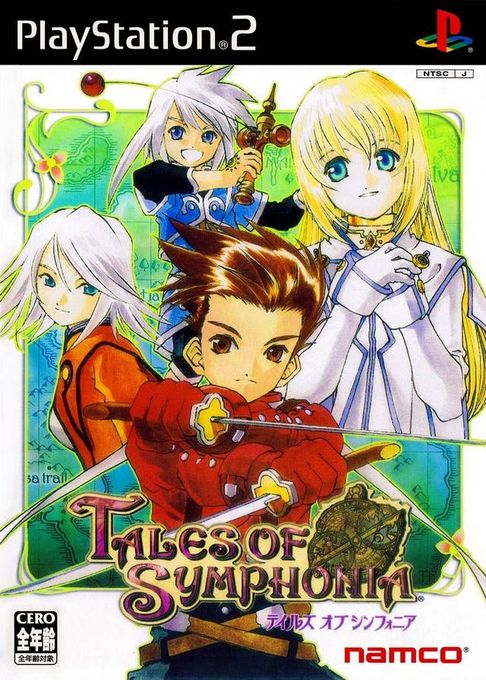
Tales of Symphonia is a Japanese PlayStation 2 role-playing adventure built around a world in need of renewal, a restless young swordsman named Lloyd Irving, and a journey that grows far beyond its small-town beginning. It pairs a vivid cel-shaded 3D presentation with the fast, character-driven energy that defines the Tales series, carrying players across forests, ruins, ports, and cities where every new stop brings fresh conversations, discoveries, and reasons to keep moving forward. Its broad sense of travel gives the game an inviting road-trip rhythm, while its larger questions about coexistence, responsibility, and the cost of an ideal lend the adventure real weight.
The Japanese PS2 release arrived on September 22, 2004 as an enhanced port of the 2003 Nintendo GameCube original. That distinction matters: this is the expanded PS2 edition, not the later HD remasters or collection releases. It preserves the original game’s ambitious full-3D journey and ensemble cast while adding new events, additional artes and techniques, and extra Unison Attack combination techniques. For players seeking the version that broadened the original adventure’s content in its 2004 form, this is the edition to look for.
At its center is a party whose personalities make even routine travel feel lively. Lloyd’s directness and determination set the pace, while the companions who join him bring their own humor, doubts, specialties, and points of view. Optional conversations and changing party dynamics make the road feel personal rather than mechanical, and the game takes time to let its cast breathe between major objectives. The result is a classic JRPG party adventure that can shift naturally from warm banter to serious reflection without losing its momentum.
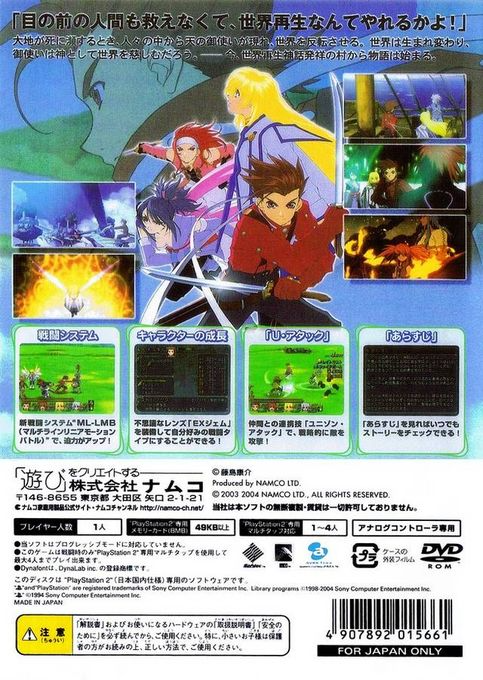
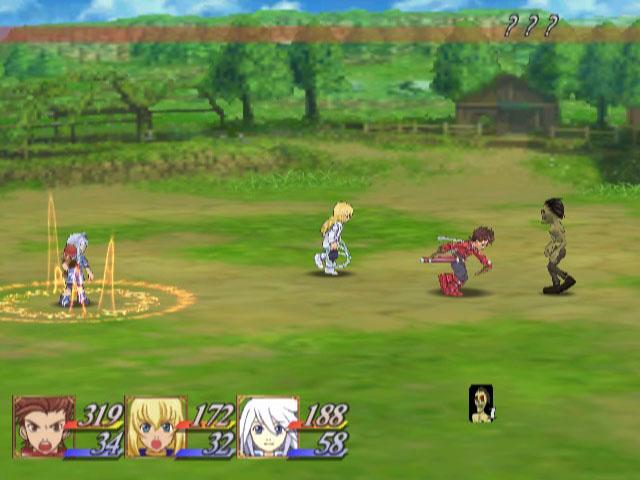
Combat uses the Multi-Line Linear Motion Battle System, turning encounters into active 3D clashes instead of distant menu exchanges. You control one fighter directly, move around enemies, block, strike, and trigger artes while allies follow configurable strategies. Positioning matters because the battlefield offers room to circle opponents and create openings, while the series’ familiar real-time pace rewards a good sense of timing. It is approachable for anyone who wants an action-forward RPG, yet leaves room to experiment with characters, equipment, elemental options, and different approaches to a difficult fight.
One of the most satisfying battle tools is the Unison Attack system. By filling the party’s shared gauge, players can link attacks from multiple characters into coordinated sequences and pursue special combined techniques. This makes the whole group feel involved in a big finish rather than reducing companions to background support. The PS2 version expands that cooperative side with additional combination techniques, giving returning players more to explore and giving newcomers a strong reason to learn how each party member’s moves can complement the others.
Growth is flexible without becoming opaque. Characters develop through levels, equipment, titles, EX Skills, and branching artes, encouraging players to shape a favorite fighter around their own habits. A sword-focused character can be tuned toward different strengths, spellcasters can become more specialized, and party composition can be adjusted to match the challenge at hand. The game also welcomes curiosity away from battle: towns, side activities, cooking, collectibles, and character moments give the world texture and make progress feel like more than a straight line from dungeon to dungeon.
Exploration has an old-school sense of scale. The world map gradually opens into a larger playground, while distinct locations provide puzzles, secrets, and the pleasure of seeing a new region’s visual identity unfold. The art direction has a bright, storybook clarity that suits the setting especially well, and animated scenes add a theatrical flourish to major moments. Its music and expressive character work help establish a strong sense of place, whether the party is preparing for the next destination or pausing for a quieter exchange.
Tales of Symphonia remains an easy recommendation for players who want a substantial PS2 JRPG with a memorable group of heroes, energetic real-time combat, and a journey that balances optimism with emotional stakes. The Japanese PS2 port is particularly notable as the version that expanded the GameCube original with more events, techniques, and Unison Attack possibilities. Whether approached as a landmark Tales entry or as a long-form fantasy adventure on its own terms, it delivers the satisfying feeling of setting out with a party, growing stronger together, and uncovering a world worth exploring.
Gallery
Details
- Developer
- Namco
- Publisher
- Namco
- Genre
- JRPG
- Players
- 4
- Release Date
- September 22, 2004
- System
- PS2