About
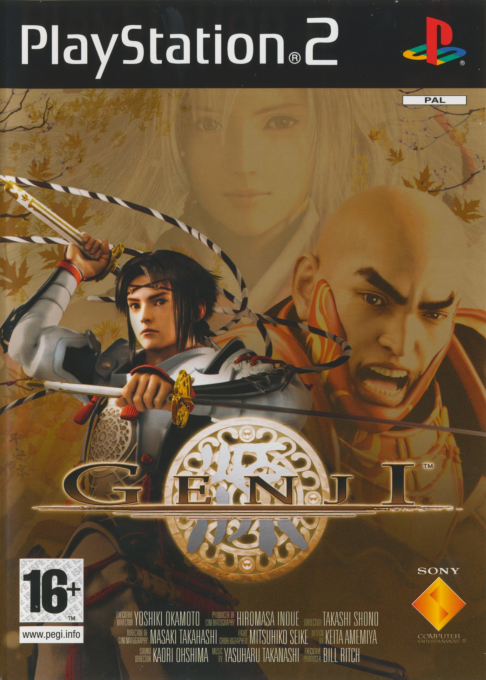
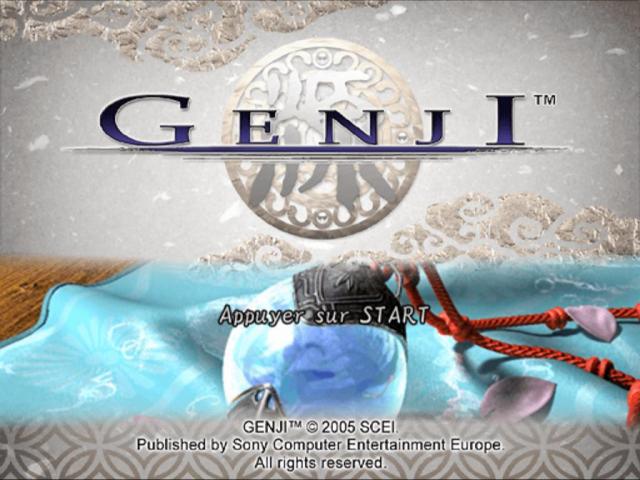
Genji, released in North America as Genji: Dawn of the Samurai, is a single-player PlayStation 2 action-adventure from Game Republic and Sony Computer Entertainment. It arrived in Japan in June 2005, followed by North American and European releases later that year. Set in a fantastical vision of late-Heian-period Japan, the game draws on the history and legends surrounding Minamoto no Yoshitsune and the conflict between the Genji and Heishi clans. Its story is a work of fantasy rather than a historical retelling, mixing samurai drama with supernatural power.
The campaign begins as Yoshitsune leaves his mountain refuge to oppose the Heishi and their ruler, Kiyomori. The clan has used mysterious Amahagane stones to seize power, and their effects are felt across a Japan under harsh control. Yoshitsune's mission becomes entwined with the Tamayoribito, guardians of the stones, including Kiichi Hogen and his daughter Minazuru. The result is a journey through feudal landmarks and mythic encounters in which familiar names from Japanese tradition share the stage with invented magical elements.
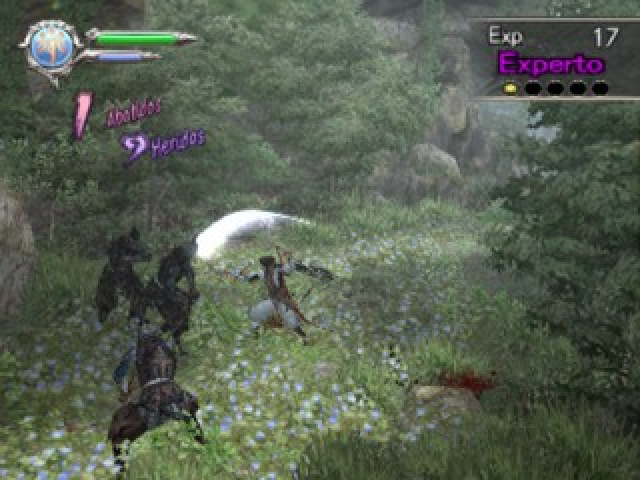
Genji: Dawn of the Samurai is played from a third-person perspective and centers on close-quarters battles against groups of enemies and larger foes. Players guide Yoshitsune or the warrior monk Benkei as the story requires, with each hero bringing a markedly different fighting style. Yoshitsune is the faster and more agile combatant, wielding two swords and using his mobility to reach narrow footholds and traverse ledges. Benkei trades that speed for powerful, wide-reaching blows from his huge war club, which can also break through obstacles and heavy doors that halt his companion.
Their contrasting abilities make character changes more than a cosmetic choice. Certain routes and barriers call for one hero's physical strengths, while combat encourages the player to learn the rhythm of each character's normal and special attacks. Progress brings experience, money, equipment, and consumable items, with important resources shared by the two warriors. Essence of Amahagane can be spent to improve attributes, so advancement supports both the immediate challenge of a chapter and the differing demands of Yoshitsune and Benkei's combat roles.
A central combat system is Kamui, the supernatural technique linked to Amahagane. By responding at the right moment to an incoming attack, a character can enter a heightened defensive state and counter in a dramatic exchange. Successful timing lets the player continue the sequence against additional enemies, while missed timing leaves the fight to be settled through conventional attacks and movement. This counter-focused mechanic gives Genji its own identity within the PlayStation 2 era's sword-and-sorcery action games, alongside the two-character structure and its stylized historical setting.
Although its English title invokes the famous Tale of Genji, the game's conflict and principal historical inspiration are closer to tales of the Genji and Heishi struggle, particularly the traditions around Yoshitsune and Benkei. Regional naming also matters: the original Japanese and European releases were simply called Genji, while the North American version added the subtitle Dawn of the Samurai. The PlayStation 2 game later received a follow-up, Genji: Days of the Blade, for PlayStation 3, continuing the series on Sony's next console generation.
Gallery

Details
- Developer
- Game Republic
- Publisher
- Sony Computer Entertainment
- Genre
- Other Adventure
- Players
- 1
- Release Date
- October 21, 2005
- System
- PS2