About
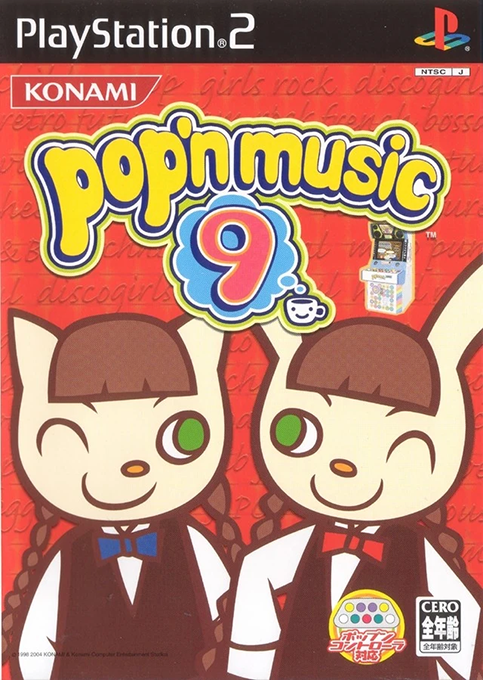
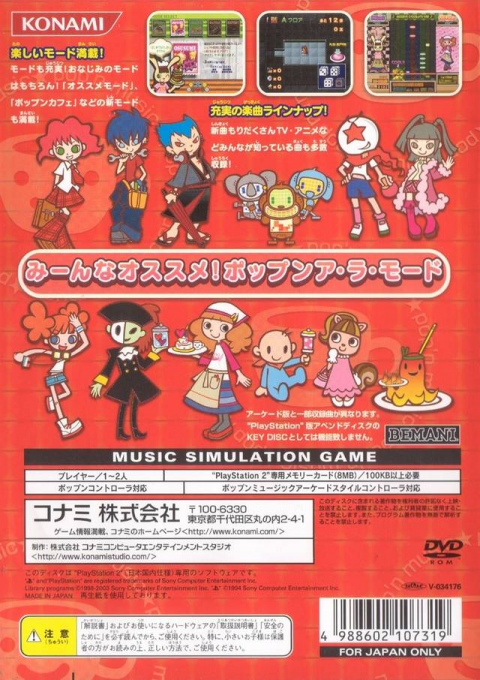
Pop'n Music 9 PS2 is Konami's Japanese PlayStation 2 rhythm game, released on February 19, 2004 as the home version connected to the ninth arcade installment. Its bright presentation, animated character art, and broad music selection place it firmly in the long-running BEMANI series, but the rules are easy to grasp: watch the falling Pop-kun markers, then press the matching color-coded button in time with the song. Konami built the game around nine large on-screen lanes and a deliberately accessible visual style, while leaving plenty of room for demanding charts and precision play.
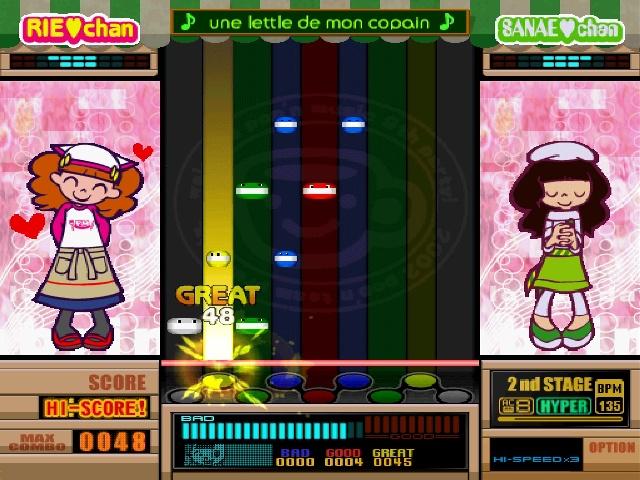
Each performance is a test of timing and consistency. Markers descend toward the judgment line, and accurately timed inputs raise the Groove Gauge while missed notes cost momentum. Clearing a song depends on finishing with enough gauge remaining, so players must balance reading the scrolling patterns with keeping the beat. The layout can be played with the full nine-button arrangement, creating patterns that move across the controller rather than imitating a traditional instrument. As songs become more difficult, denser note sequences and wider button travel make coordination as important as rhythm.
The PS2 release offers more than 110 songs, with much of its music drawn from Pop'n Music 9's arcade material. That range is central to the game's identity: selections are presented through the series' distinctive genre labels and paired with colorful characters and short animated scenes. A player chooses a song, character, and difficulty before performing, then works through the set one stage at a time. The result is a single-player rhythm game that can be approached as a casual song-picking session or as a longer attempt to improve clears and scores across the library.
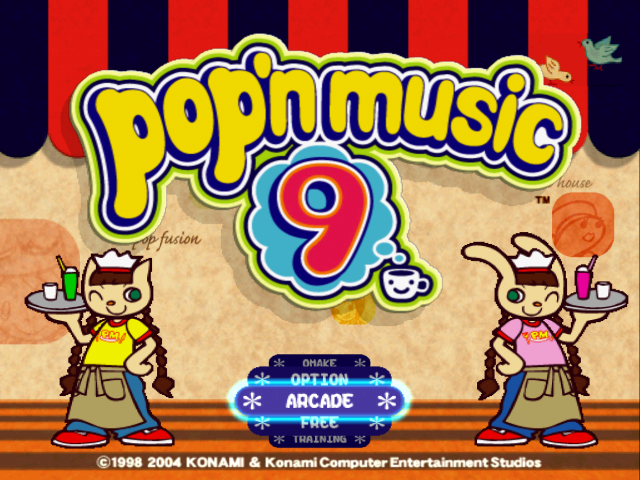
Several familiar Pop'n Music play options return for the console version, including Arcade, Free, Challenge, Battle, and Study modes. Arcade mode provides a structured route through performances, while Free mode lets players revisit available music more directly. Challenge mode adds goals and rule changes for players seeking a tougher run, and Battle adapts the format for competitive play. Study mode focuses on learning the button arrangement and basic rhythm-game skills, which makes it a useful bridge between the game's inviting presentation and its more demanding nine-button charts.
Progress is also tied to the PS2 version's Gambler de Z unlock feature. After Arcade play, the game sends players into a themed minigame where earned progress can open additional songs and items. That gives repeated performances a purpose beyond a single high score and distinguishes this home release from simply selecting tracks in an arcade cabinet. The package reflects Konami's early-2000s approach to consumer BEMANI games: preserve the core music-game challenge, then add modes and progression systems designed for longer sessions at home.
Pop'n Music 9 follows the arcade Pop'n Music 9 release from late 2002 rather than serving as a new numbered sequel, and it remains a snapshot of the series' PlayStation 2 period. It carries forward the franchise's signature combination of nine-button note play, a Groove Gauge, stylized genre variety, and cartoon-like performers. For players interested in Konami rhythm games of the era, this edition shows how the series translated its colorful arcade format to a console library with a large song roster, practice-oriented options, competitive play, and unlock-driven repeat sessions.
Gallery
Details
- Developer
- Konami
- Publisher
- Konami
- Genre
- Rhythm Game
- System
- PS2