About
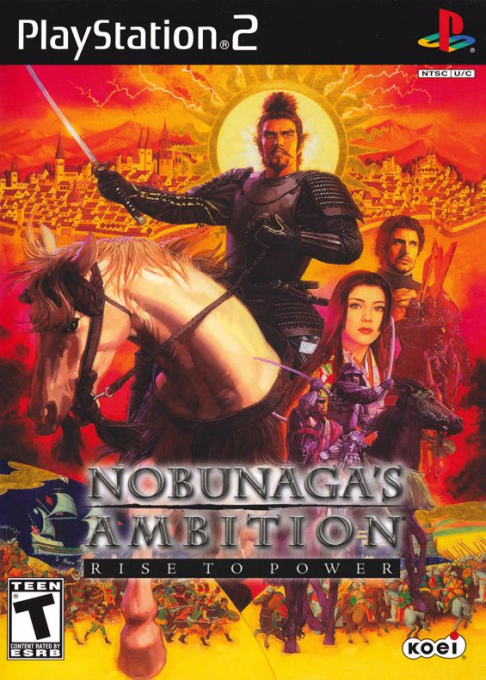
Nobunaga's Ambition: Rise to Power for PlayStation 2 is Koei's Sengoku-period strategy game, released in North America on February 5, 2008. Known in Japan as Nobunaga no Yabou: Tenka Sousei, it is the eleventh main entry in the long-running Nobunaga's Ambition series. The player takes the role of Oda Nobunaga or another historical daimyo, attempting to expand a clan's authority and ultimately unite a fractured sixteenth-century Japan under a single ruler. Koei developed and published the PS2 game, whose Japanese version had arrived in 2004 after the original Windows release in 2003.
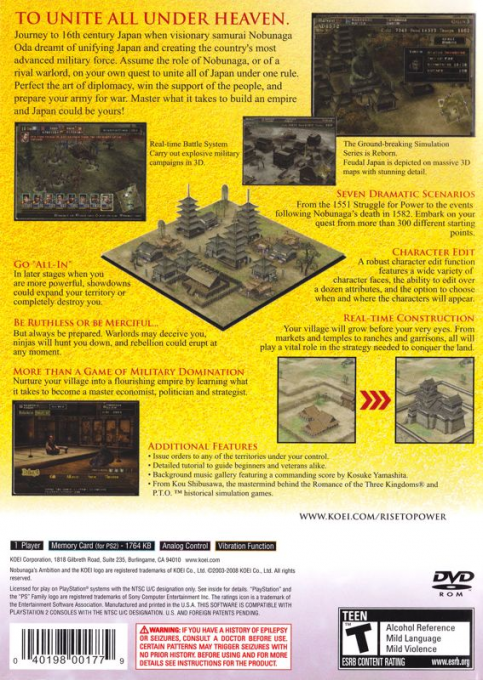
Its campaign selection places the player at more than 300 starting positions across seven historical scenarios. The timeline begins with the 1551 struggle for power and extends to events following Nobunaga's death in 1582, so a campaign can begin with an established great clan or a much smaller regional force. Each choice changes the starting land, officers, neighbours, and pressures facing the player. Nobunaga is the title character rather than a compulsory protagonist: leading the Oda is one route to unification, while rival daimyo provide their own paths through the same unsettled era.
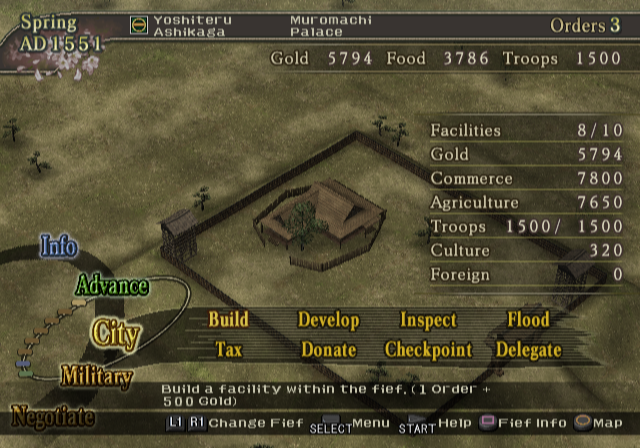
Rise to Power links conquest to domestic rule. A clan needs troops and capable officers, but it also needs fiefs that can support them. Players assign officers to development and administration, expand military capacity, recruit personnel, acquire equipment, and handle relations with neighbouring powers. Diplomacy can buy time through arrangements such as alliances or marriages, while military success can bring new territory and officers into the fold. The balance between building a durable base and committing resources to an attack is central to a campaign, especially for a ruler who begins with only one castle.
On the battlefield, Nobunaga's Ambition: Rise to Power combines real-time strategy presentation with army composition and officer-led units. Forces can include spear and pike troops, archers, cavalry, and firearm-equipped soldiers, with the selected officers and available armaments affecting how an army operates. Morale, unit positioning, defensive structures, and battle skills matter when fighting for a fief. Muskets offer ranged firepower, while siege-oriented weapons and infantry are useful against fortifications, giving a castle assault a different emphasis from a field engagement.
The PlayStation 2 entry is particularly associated with its castle towns and unified castle sieges. Instead of treating administration as an abstract set of screens alone, it presents the management side in full 3D and lets the condition and construction of a domain carry into its defense. Town facilities, garrisons, keeps, and other defenses make development relevant when an enemy arrives. An attacker may weaken an opposing fief before taking its castle, whereas a defender can use the layout and buildings of a developed stronghold to resist a larger force.
Designed as a single-player strategy experience, Rise to Power focuses on the long arc from local survival to nationwide rule rather than a short scripted campaign. Its PS2 localization brought an earlier Japanese Nobunaga's Ambition installment to North America several years after the original release, retaining the historical scenario framework and the series' emphasis on officers, diplomacy, economy, and war. For players exploring the PlayStation 2 library, it stands as the Tenka Sousei entry: a Sengoku simulation built around shaping a clan's towns, armies, and alliances before the decisive drive to unify Japan.
Gallery
Details
- Developer
- Koei
- Publisher
- Koei
- Genre
- Turn-Based Strategy
- Release Date
- February 5, 2008
- System
- PS2