About
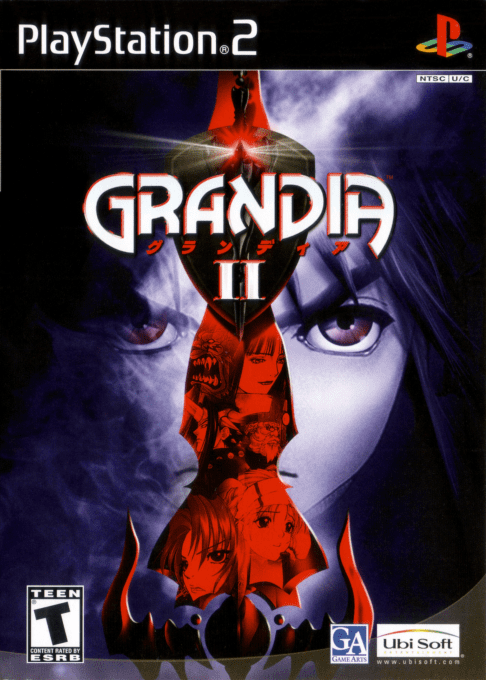
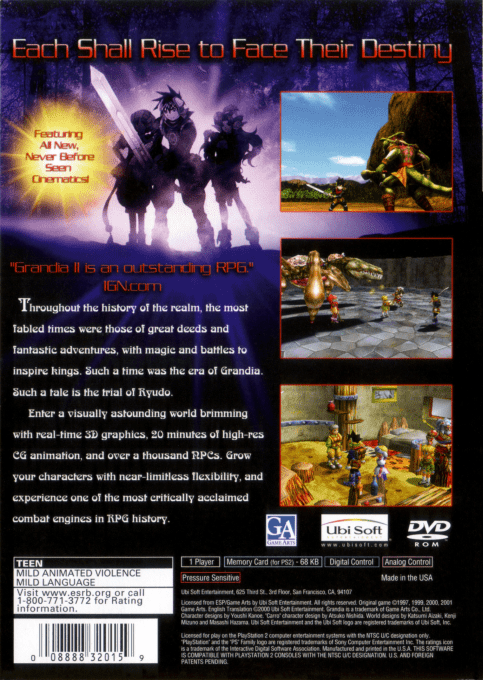
Grandia II for PlayStation 2 is a fantasy role-playing game developed by Game Arts and released in North America by Ubi Soft in January 2002. It brings the second main Grandia adventure to Sony's console after the game's 2000 Dreamcast debut. The story follows Ryudo, a hard-edged mercenary known as a Geohound, and Skye, the talkative bird who travels on his shoulder. A routine protection job for the Church of Granas draws Ryudo into an escalating journey with Elena, a young Songstress, through a world still marked by an ancient conflict between the god Granas and the dark god Valmar.
The PlayStation 2 game is a single-player RPG built around exploration, party-based combat, towns, dungeons, equipment, magic, and story scenes. Ryudo and his companions travel between settlements and dangerous locations while pursuing answers about Elena's connection to Valmar. The adventure gradually adds allies with different weapons and combat roles, including the mysterious Millenia, the young prince Roan, the beast man Mareg, and the Automata Tio. Their trip begins as an escort mission, but the party’s encounters with the scattered pieces of Valmar turn it into a much broader struggle over the world’s past and future.
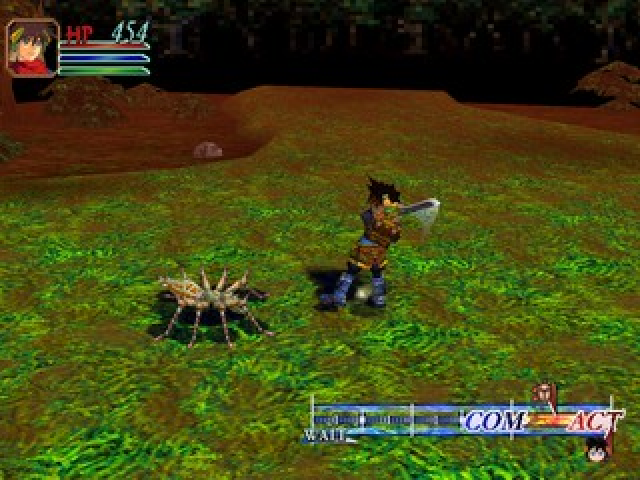
Grandia II’s battles use the series’ Initiative Point, or IP, gauge rather than a simple fixed turn order. Icons for party members and enemies move across the gauge toward a command point and then an action point, so selecting an attack is only part of the decision. Timing matters because an enemy can be delayed or have a pending move cancelled by a well-placed critical strike. Characters can also move within the battle area, close distance before attacking, use two-hit combo attacks, defend, evade, cast magic, or employ special moves. This active timing system makes it important to watch both the party’s position and the opponent’s place on the gauge.
Progression gives the player room to shape the group’s abilities. Mana Eggs grant access to magic, while Magic Coins and Skill Coins are used to improve spells and learned moves. Raising an ability can improve its effectiveness and reduce the time required before it activates on the IP gauge. Skill Books supply additional abilities that can be equipped to alter statistics or add useful effects. Weapons, armor, accessories, healing items, and elemental spells further support different approaches to regular encounters and boss battles, while the changing party composition introduces new options as the story advances.
Visually, Grandia II was designed as a fully three-dimensional entry in the Grandia series, combining character models and 3D environments with animated scenes and an orchestral score by Noriyuki Iwadare. Its tone differs from the original Grandia by centering on a more cynical lead character and on questions surrounding faith, history, and responsibility. Even so, the game keeps the series’ focus on a traveling party, colorful fantasy locations, and a combat system that rewards attention to momentum. Dialogue between Ryudo and Skye, along with the contrasting outlooks of Elena and Millenia, gives the journey its central character dynamic.
The PlayStation 2 edition is a port rather than a separate sequel or remake. It preserves the same main scenario, characters, exploration, and IP-gauge combat as the earlier Dreamcast release, making it a way to experience this chapter of the Grandia series on PS2. Later versions appeared for Windows and, much later, in remastered forms, but this 2002 console release remains specifically tied to the original PlayStation 2 era. For players interested in turn-based Japanese RPGs that add movement and interruption to their battles, Grandia II on PlayStation 2 offers a substantial quest led by a mercenary reluctantly pulled into a conflict of gods and demons.
Gallery
Details
- Developer
- Game Arts
- Publisher
- Ubi soft Entertainment
- Genre
- JRPG
- Players
- 1
- Release Date
- January 28, 2002
- System
- PS2