About
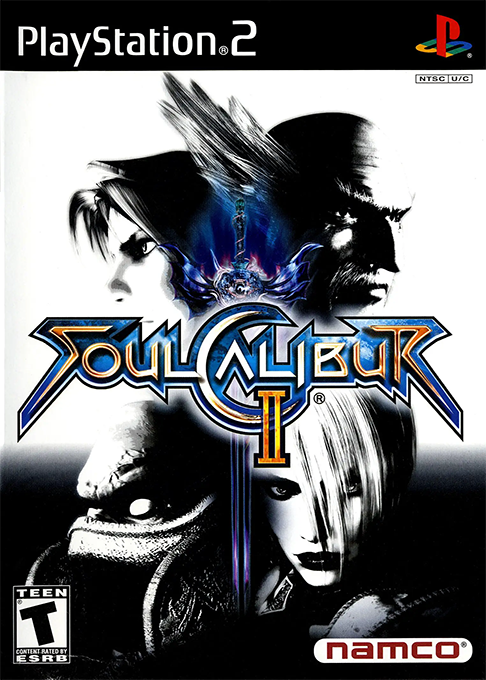
Soulcalibur II is Namco's weapon-based 3D fighting game, developed and published by Namco. After its 2002 arcade debut, it arrived on PlayStation 2 in 2003 as the third main entry in the Soulcalibur series. Its story returns to a world destabilized by fragments of the cursed sword Soul Edge: warriors with competing loyalties set out to claim, destroy, or understand the weapon, while Nightmare's threat begins to rise again.
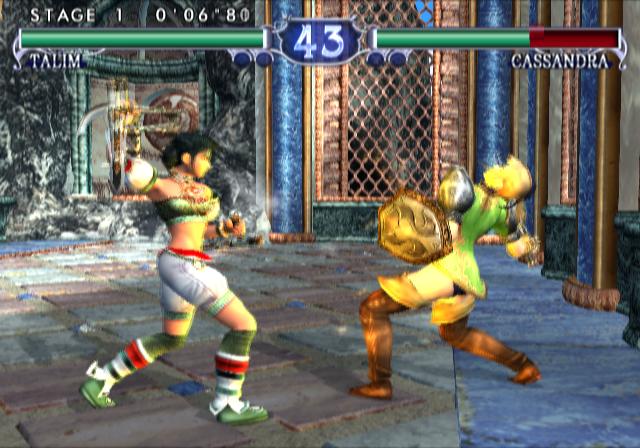
The matches balance immediate, readable attacks with a deep movement game. Fighters use character-specific weapons and styles, from swift blades and polearms to heavy axes, whips, and unusual tools, so range and rhythm are as important as raw damage. Horizontal strikes check sidesteps, vertical attacks punish careless movement, and throws pressure opponents who rely too heavily on blocking. Ring outs remain a decisive way to win, making the shape and edges of each arena part of every exchange.
Soulcalibur II's eight-way run lets players move freely around an opponent instead of remaining on a fixed side-to-side line. That mobility supports evasive footwork, angle-changing attacks, and pursuit around the arena, while the game's step and avoid options help turn anticipation into position. Defense is active as well: a correctly timed Guard Impact can repel or parry an incoming attack and create an opening for a counterattack. Guard Break attacks add another layer by punishing opponents who simply hold guard.
Soul Charge expands the risk-and-reward side of combat. By building energy into a weapon, a fighter can temporarily strengthen attacks and gain access to charged possibilities, with three charge levels encouraging players to judge when there is room to power up. Combined with command timing, clash situations, and the varied properties of individual move lists, this gives rounds more to consider than straightforward health-bar damage.
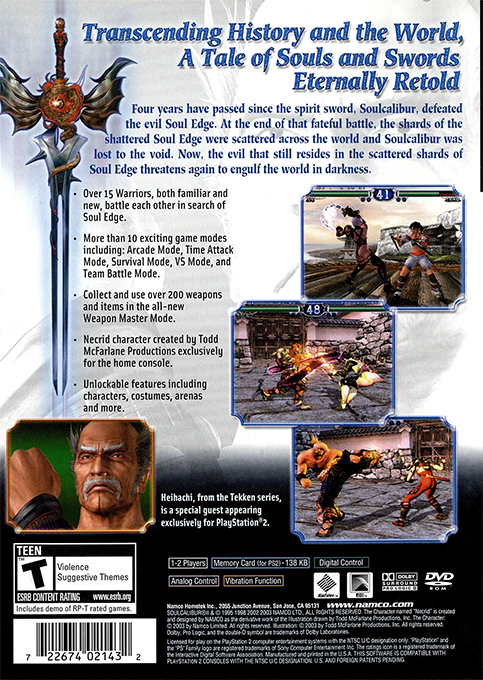
The PlayStation 2 edition is distinguished by Heihachi Mishima, the Tekken veteran who was exclusive to this console version at its original release. Rather than carrying a traditional blade, Heihachi brings his bare-handed martial arts into Soulcalibur II's weapon-focused roster, making his punches, kicks, throws, and close-range pressure a deliberate contrast to the armed cast. The other original console editions had different guests—Link on GameCube and Spawn on Xbox—so Heihachi is a defining reason to seek out the PS2 release.
There is plenty beyond ordinary one-on-one play. Arcade Mode gives each fighter a route through opponents, while Versus Battle, team battles, Time Attack, Survival, Practice, and extra variants accommodate local competition, record chasing, or learning matchups. The game also includes a Museum and theater-style options for viewing artwork, profiles, demonstrations, and CPU battles, giving the console release a sizeable collection of unlockable material.
Weapon Master Mode provides the largest solo challenge. In an alternate-world quest across map regions, players take missions with special rules, fight for experience and money, raise their rank, and spend rewards on weapons, costumes, art, and videos. Its equipment is more than cosmetic: alternate weapons can change attack, defense, or special effects such as health-draining or defense-piercing properties. With story chapters, optional missions, and many weapons to experiment with, Weapon Master Mode turns Soulcalibur II from a quick competitive fighter into a substantial PlayStation 2 campaign.
Gallery
Details
- Developer
- Namco
- Publisher
- Namco
- Genre
- Fighting
- Players
- 1-2
- Release Date
- August 26, 2003
- System
- PS2