About
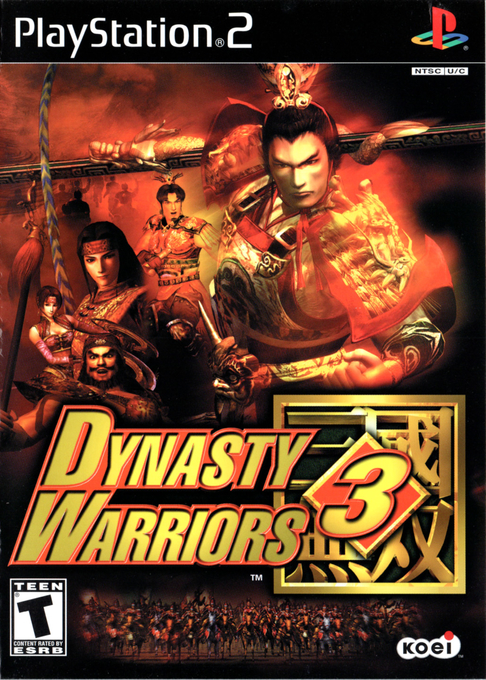
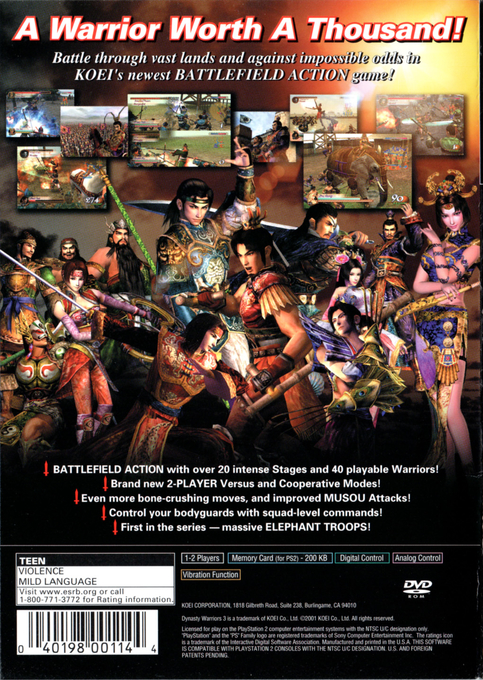
Dynasty Warriors 3 for PlayStation 2 is Omega Force and Koei’s 2001 action game built around the tumultuous Three Kingdoms era of China. Known in Japan as Shin Sangoku Musou 2, it is the North American series’ third numbered entry and follows the PS2 original Dynasty Warriors 2. Its campaign turns episodes associated with Romance of the Three Kingdoms into large-scale battles, placing celebrated officers from Wei, Shu, Wu, and rival forces at the centre of a struggle for unification.
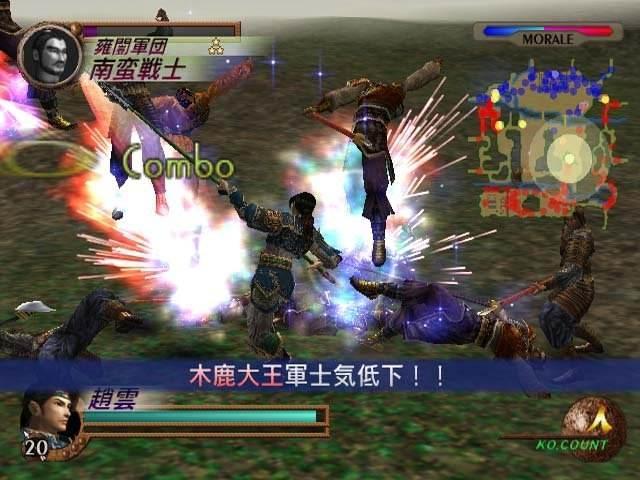
Each battle gives the player direct control of one officer amid a packed 3D battlefield. Basic attacks can be linked into longer strings, while a charge attack and the character’s Musou attack provide stronger answers to dangerous crowds and opposing generals. The objective is usually to defeat the enemy commander, but a stage is shaped by more than a straight path to that target: protecting the allied commander, securing gates, defeating officers, and responding to changing battlefield conditions all matter. The PlayStation 2 controller’s face buttons handle attacks and actions while the player navigates on foot or rides a horse across the map.
The game’s battles draw on a mixture of history and the novel’s dramatized tradition. The Yellow Turban Rebellion, Hulao Gate, Guandu, Chi Bi, and other famous conflicts are reimagined as playable scenarios, with named officers, dialogue, ambushes, and triggered events giving them their own momentum. Dynasty Warriors 3 deliberately presents its figures as larger-than-life warriors rather than strict historical reconstructions: generals can cut through formations of soldiers, employ striking special moves, and dramatically alter a battle’s balance.
Musou Mode is the main single-player progression route. Players select a faction officer and advance through a fixed sequence of battles associated with that kingdom’s war, unlocking additional characters along the way. The initial roster expands through play, ultimately offering more than forty officers. Every playable warrior has a distinct weapon style, and weapons can be improved through several levels; equipment and battlefield pickups can also strengthen attributes such as attack, defense, life, and Musou capacity. These persistent upgrades make repeat trips into difficult stages useful even when the immediate goal is simply clearing a scenario.
Morale is an important part of the PS2 game’s battlefield design. Stage events and victories can bolster an army, encouraging allied troops to fight more effectively, while losses can make the situation harder to control. Officers, gate captains, and hidden items therefore serve both as combat encounters and as strategic priorities. This creates a broad, accessible style of action in which the player is always fighting personally but is also deciding where their presence will have the greatest effect.
Dynasty Warriors 3 also introduced split-screen two-player play to the series. A second player can join battles cooperatively, retaining earned character development, or compete in one-on-one matches designed around default statistics. Cooperative partners can combine their Musou attacks when close together for an enhanced strike, making timing and positioning part of the shared action. The original PS2 release stands as a key early Musou entry, expanding the formula’s roster, scenarios, equipment progression, and local multiplayer while establishing many features closely associated with later Dynasty Warriors games.
Gallery
Details
- Developer
- OMEGA Force
- Publisher
- Koei
- Genre
- Beat 'em Up
- Players
- 1-2
- Release Date
- November 26, 2001
- System
- PS2