About
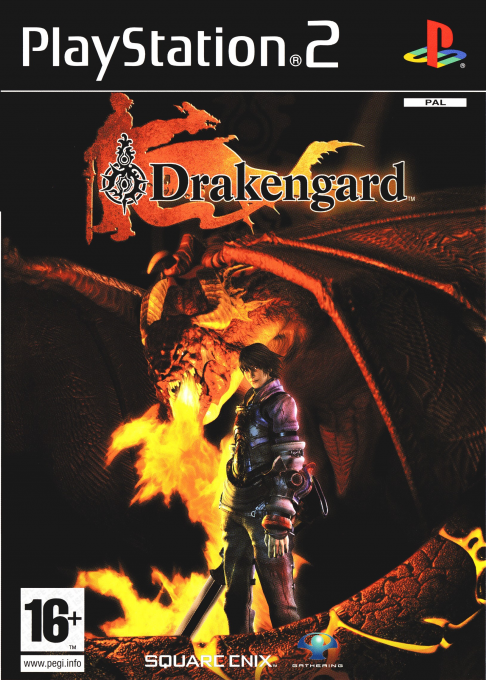
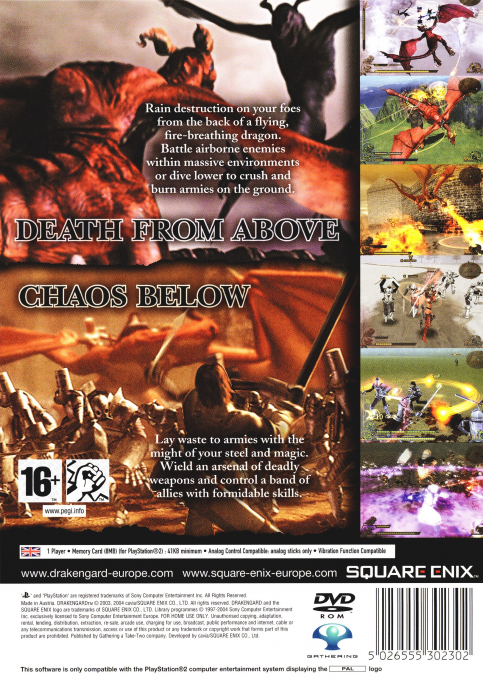
Drakengard is a dark fantasy action RPG developed by Cavia and originally released for PlayStation 2 in Japan as Drag-On Dragoon on September 11, 2003. Square Enix published that Japanese edition and the North American release, which arrived on March 2, 2004. The European and Australian versions followed on May 21, 2004, published by Gathering of Developers; that European date is the one represented by this record. It is a single-player PS2 game, not a later remake or remaster. Yoko Taro made his directing debut here, and the game’s unusual severity, apocalyptic imagery, and disquieting character drama already mark it as a distinctive early work in the Drakengard universe.
The story is set in a medieval world where a Union battles the expansionist Empire while magical seals hold back a catastrophic force. Caim, a former prince serving as a Union soldier, is gravely wounded during a battle. Near death, he makes a life-binding Pact with a dying red dragon, Angelus, despite his hatred of dragons. The Pact saves them both but takes Caim’s voice, tying the two unwilling partners together as they pursue the Empire and try to protect Caim’s sister Furiae, the current Goddess of the Seal. The premise begins as revenge and rescue, but it steadily broadens into a bleak war story about sacrifice, faith, and a world coming apart.
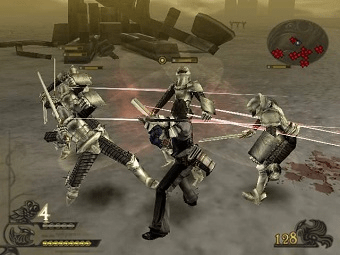
Most missions put the player on foot as Caim in broad battlefields filled with enemy troops. He cuts through groups with swords, spears, and other weapons, using basic melee attacks, magic, dashes, and weapon-specific growth. Weapons gain experience and become more powerful; collecting them and replaying chapters are central both to progression and to unlocking optional routes. Allied characters join the party over the campaign, though Caim remains the regular playable ground fighter. Some ground stages let him summon Angelus and mount her, creating a practical switch between close-range fighting below and dragon attacks against formations or targets from above.
Separate aerial missions put the player directly in control of Angelus. These stages turn the action into dragon-riding combat: fly through open skies, lock onto enemies, fire her breath weapon, evade hostile projectiles, and attack airborne monsters, ships, or large structures. The game therefore alternates between foot-based hack-and-slash battles, free expeditions, and aerial assaults rather than treating dragon riding as only a story flourish. Its two combat modes were an ambitious part of its identity at release, even if the large-scale ground encounters and camera controls can feel deliberately rough by modern standards.
Drakengard does not end with one simple conclusion. It has five endings, with additional branches opened through conditions such as completing optional chapters and acquiring weapons. The first ending resolves the immediate conflict in one direction, while later routes expose stranger consequences for Caim, Angelus, Furiae, their allies, and the seals. These are not merely alternate final scenes: replaying the game opens new chapters and develops the scenario toward increasingly surreal outcomes. The structure makes completion more than a single credits roll and helps explain the game’s enduring reputation for a story that refuses conventional heroic closure.
The fifth ending is especially important to series history, but it should be described precisely. In that route, Caim and Angelus are transported from their fantasy world to modern-day Tokyo in 2003. Its aftermath became the point of departure for NieR, released years later; it does not mean that the original PS2 game is a NieR remake, nor that every Drakengard ending feeds directly into it. Drakengard 2 is a separate 2005 PS2 sequel set after one branch of the original, while Drakengard 3, released in 2013, is a prequel. Those games are separate releases and should not be confused with this first installment.
Regional context matters for collectors and players. The Japanese disc bears the title Drag-On Dragoon, while the English-language release is Drakengard. Square Enix handled Japan and North America, whereas Gathering of Developers published the original European and Australian release; later budget editions do not change the identity of the 2003 PS2 original. The game was localized for Western territories rather than newly made for them, and it remains associated with the PlayStation 2 era. Any modern way of playing it through backward-compatible hardware or emulation is not an official PC port or a remaster.
At its core, Drakengard pairs the immediate spectacle of a warrior and dragon carving through armies with an intentionally grim narrative. Caim’s silence makes Angelus and the rest of the cast carry much of the dialogue, while the Pact gives every victory a personal cost. Its blend of ground warfare, aerial combat, weapon collecting, repeatable missions, and branching endings makes it a useful starting point for the wider Drakengard and NieR lineage, but it is also complete as its own bleak, experimental PS2 action RPG.
Gallery
Details
- Developer
- Cavia
- Publisher
- Square Enix
- Genre
- JRPG
- Players
- 1
- Release Date
- May 21, 2004
- System
- PS2