About
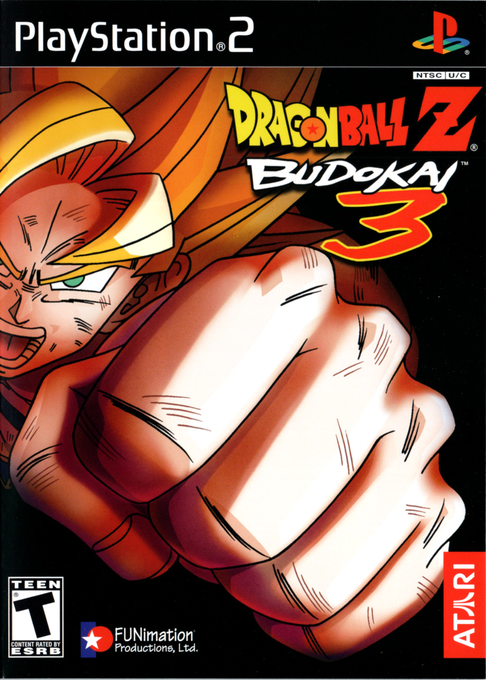
Dragon Ball Z Budokai 3 PS2 is a 3D fighting game developed by Dimps for PlayStation 2, released in North America by Atari on November 16, 2004. Known in Japan as Dragon Ball Z3, it is the third main entry in the Budokai series, following Dragon Ball Z: Budokai and Budokai 2. Its cel-shaded presentation turns characters and energy attacks from Akira Toriyama's Dragon Ball world into fast one-on-one contests, with Bandai handling publishing in Japan and Europe.
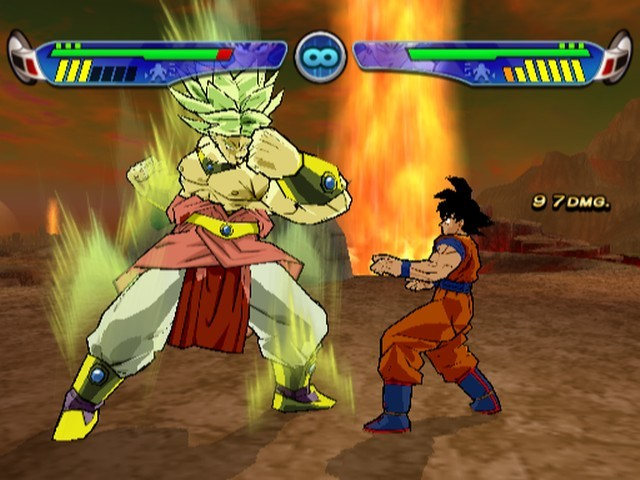
Fights are built around close-range strings, throws, guard timing, sidesteps, dashes and Ki management. Ki naturally moves toward a fighter's current base level, so it affects both offensive pressure and the ability to respond with techniques such as teleports. Timed defensive actions can evade an incoming blow at a Ki cost, while a launched opponent can be pursued through the air for extra attacks. Beam attacks can meet in a struggle, making familiar ranged moves as much a contest of timing and resources as spectacle.
Budokai 3 expands the series' battle movement with free flight. Players can rise or descend during a match, taking combat from the ground into the air rather than treating the arena as a flat plane. Hyper Mode opens the way to Dragon Rush sequences and ultimate attacks, but it also changes the risks of a confrontation by preventing ordinary blocking as Ki drains away. Transformations alter a character's base Ki and statistics instead of simply consuming Ki continuously, and selected characters can use fusion to gain a new form and move set.
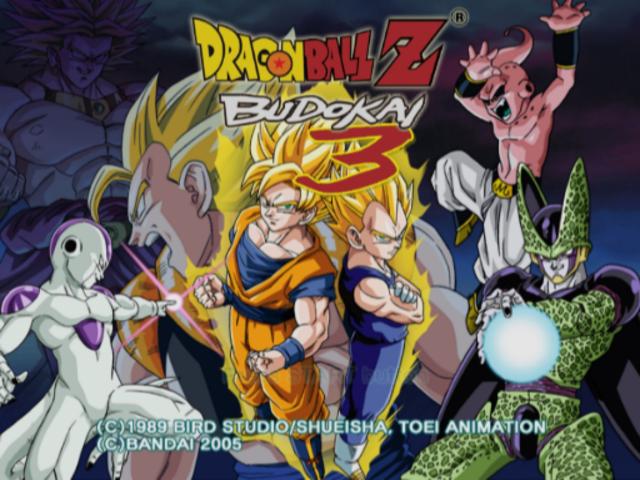
The playable selection draws from Dragon Ball, Dragon Ball Z, Dragon Ball GT and Dragon Ball Z films. Goku, Vegeta, Gohan, Piccolo, Krillin and Frieza stand beside characters including Kid Goku, Bardock, Broly, Cooler, Gogeta and Omega Shenron, with further fighters and forms earned through play. Rather than giving every combatant an identical loadout, the game uses a capsule system: players assign attacks, transformations and support effects to limited skill slots, then tailor a fighter for a particular matchup or style.
Its principal single-player mode, Dragon Universe, follows individual characters across Earth and Namek maps. Flying around those maps reveals battles, capsules, Zennie, Dragon Balls and story events, while repeated character playthroughs expose different portions of the wider narrative. The material begins with the Saiyan conflict and reaches the Kid Buu era, with additional touches from films and GT. Progress there unlocks much of the roster and its other content, giving the campaign a collection and character-development element beyond a simple linear ladder of matches.
Other PS2 modes focus on direct competition and training. Duel permits matches against the computer or another player using customized skills, while the World Tournament offers different tournament classes and prizes. The Cell Games use their own ring rules, and the game also includes an Edit Skills area for buying, equipping and learning about capsules. Dragon Arena becomes available after substantial Dragon Universe progress, providing another progression-oriented challenge for developed characters.
Dragon Ball Z: Budokai 3 was made specifically for PlayStation 2, not to be confused with the later PlayStation 2 fighter Dragon Ball Z: Infinite World or the separate Budokai Tenkaichi line. Regional editions also differed. The Japanese release included additional costume content, and later European Collector's/Platinum and corrected North American Greatest Hits editions added features such as access to Japanese voices and extra costumes. A later HD Collection reused Budokai 3 for PlayStation 3 and Xbox 360, but this entry remains the original 2004 PS2 version with its own modes, progression and release-era variants.
Gallery

Details
- Developer
- Dimps
- Publisher
- Bandai
- Genre
- Fighting
- Players
- 1-2
- Release Date
- November 16, 2004
- System
- PS2