About
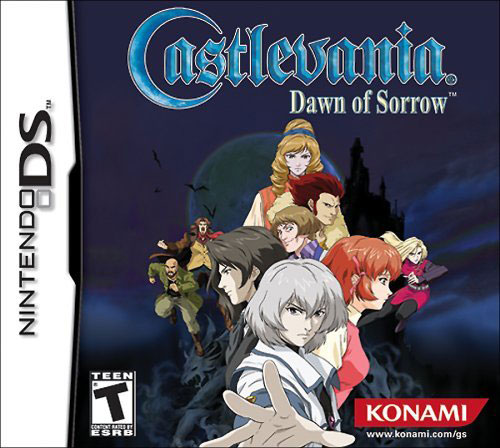
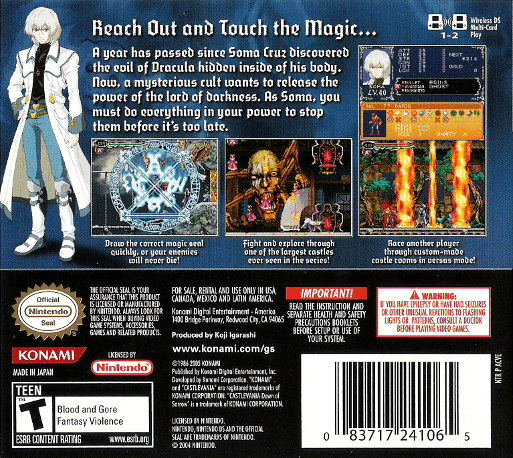
Castlevania: Dawn of Sorrow for Nintendo DS is a 2005 action-adventure game developed and published by Konami. It is the direct follow-up to the Game Boy Advance title Castlevania: Aria of Sorrow and the first Castlevania installment made for Nintendo DS. Set in 2036, it returns to Soma Cruz, a young man who has learned that he carries Dracula’s power within him. A year after the previous adventure, a cult attempts to create a new dark lord, drawing Soma into a dangerous replica of Dracula’s castle.
The adventure unfolds as a 2D side-scrolling exploration game with role-playing elements. Soma travels through a connected castle full of hostile creatures, hazards, hidden rooms, and powerful bosses. Defeating enemies earns experience points that raise his abilities, while equipment such as weapons and armor can change his combat options. The castle gradually opens as he discovers items and powers that let him reach previously inaccessible routes, encouraging players to revisit earlier areas in search of secrets and upgrades.
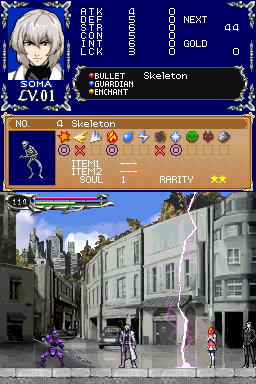
Its central mechanic is the Tactical Soul system, carried over and expanded from Aria of Sorrow. Many defeated monsters can yield a soul, and each acquired soul can grant Soma a magical attack, an ongoing effect, a passive bonus, or a movement ability. Players choose combinations suited to their approach, from projectile attacks and summoned companions to resistances and traversal tools. Some souls may be collected more than once to strengthen their effects, and certain weapons can be improved by sacrificing specified souls at Yoko Belnades’s shop.
Nintendo DS hardware shapes several of Dawn of Sorrow’s features. The touchscreen is used for the Magic Seal system: after weakening certain bosses, the player must draw a displayed symbol before time runs out to finish the encounter. The stylus also has a role in selected interactions and abilities. The dual-screen layout keeps useful map and status information close at hand, while the system’s wireless connection allows two players with game cards to trade collected souls.
Soma is joined by familiar figures from the preceding story, including Mina Hakuba, the mysterious Genya Arikado, vampire hunter Julius Belmont, witch Yoko Belnades, and the merchant Hammer. The cult’s leader, Celia Fortner, sets Soma against other candidates for the dark lord’s power. This premise makes the conflict more personal than a simple hunt for Dracula: the danger lies in whether Soma can resist the fate the cult wants to impose on him. Story choices and preparation during key events affect which ending the player sees.
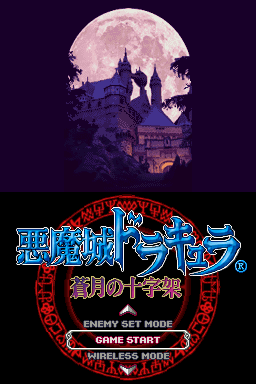
Completing the main quest also opens additional content. Julius Mode revisits the castle with Julius Belmont, Yoko, and Alucard as playable characters, each with distinct attacks and abilities. Dawn of Sorrow also includes an Enemy Set feature, in which players use souls collected in the main game to arrange monsters in rooms and create a course for wireless competition. These modes extend the game beyond Soma’s campaign while making use of the large collection of enemy abilities gathered during play.
Dawn of Sorrow continues the exploration-focused branch of Castlevania that blends platforming, combat, character growth, and a large interconnected map. Konami’s release came early in the Nintendo DS library, and its presentation combines detailed 2D environments, animated monsters, and music written for a gothic adventure. Character portraits use a more overt anime-inspired style than the artwork associated with several earlier series entries, distinguishing this chapter visually while retaining its monster-filled castle setting.
Originally released in North America on October 4, 2005, Castlevania: Dawn of Sorrow was also released in Europe that September. Its story follows directly from Aria of Sorrow, but its collection-driven combat, multiple endings, and unlocked modes give it a self-contained structure on Nintendo DS. The game later returned in Castlevania Dominus Collection, preserving Soma Cruz’s sequel alongside the other Nintendo DS Castlevania adventures for modern platforms.
Gallery
Details
- Developer
- Konami
- Publisher
- Konami
- Genre
- Action RPG
- Players
- 1-2
- Release Date
- October 4, 2005
- System
- NDS