About
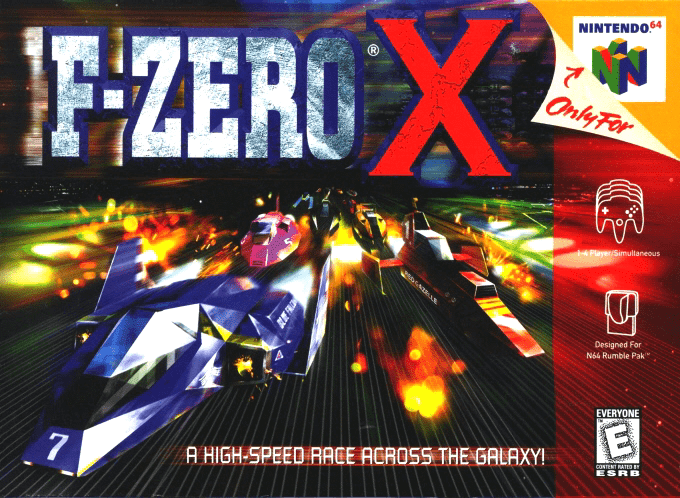
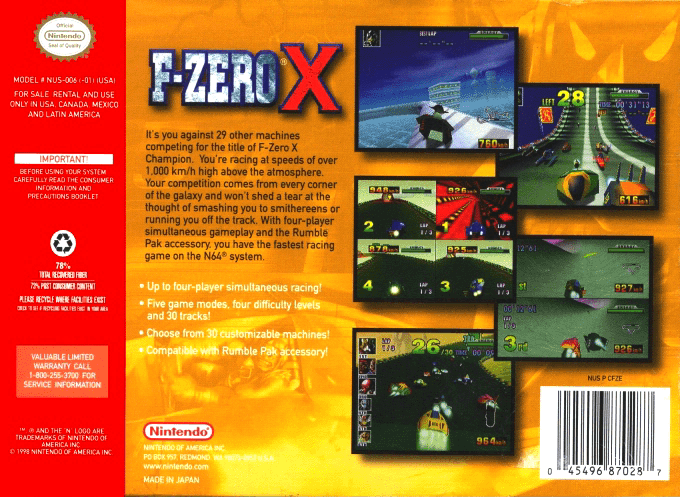
F-Zero X for Nintendo 64 is Nintendo's futuristic racing sequel to the 1990 Super NES original. Developed and published by Nintendo, it arrived in Japan in July 1998, followed by North American and European releases later that year. The series moved from Mode 7-style circuits into fully three-dimensional tracks, but its focus stayed on impossibly fast anti-gravity competition. Thirty pilots line up at once in plasma-powered machines, turning every race into a contest of positioning, nerve, and precise control at extreme speed.
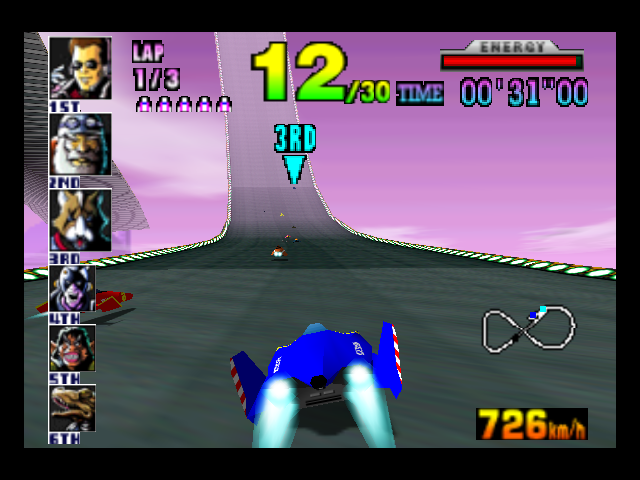
The basic goal is to complete three laps and finish ahead of the field, yet the courses make that far less simple than it sounds. Elevated circuits bend through loops, tunnels, corkscrews, half-pipes, steep inclines, and other suspended obstacles. The Nintendo 64 controller's analogue stick gives the player fine steering control, while drifting techniques help a machine negotiate tight corners without sacrificing too much momentum. Before racing, players can tune a selected machine toward acceleration or top speed, an important choice because the extensive roster has noticeably different handling, weight, durability, grip, and boost characteristics.
Survival is as important as raw pace. Contact with rivals, barriers, and hazards drains a machine's energy, and falling off a course can end a run if no spare machine remains. Recharge zones restore energy, which also becomes the resource used for manual boosts once a race is underway. F-Zero X also makes direct combat part of the race: side attacks and spin attacks can damage competitors, creating opportunities to eliminate them from contention. Dash plates, slippery surfaces, and track traps add further risks and rewards, so the quickest route is not always the safest one.
Grand Prix is the main single-player challenge, asking players to race through cups of six courses against 29 opponents. Difficulty settings alter the pressure of the competition, and additional cups, machines, and courses can be unlocked through progress. Alongside its fixed circuits, the X Cup assembles a new collection of courses each time, giving the game an unpredictable variation on its usual championship format. Practice lets players learn individual circuits, while Time Attack concentrates on three-lap performances and supports ghost data for racing against recorded laps.
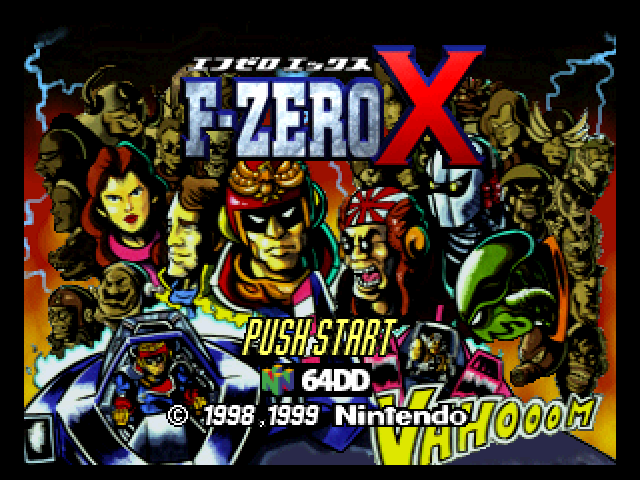
Other modes broaden F-Zero X beyond conventional championship racing. Death Race turns the emphasis toward destroying every other machine on a dedicated course as quickly as possible, with boosting available from the start. VS Battle supports two to four players in split-screen races, with computer-controlled machines able to fill unused slots. Familiar F-Zero figures and vehicles return, including Captain Falcon in the Blue Falcon, while the expanded lineup introduces many more pilots to the 26th-century Grand Prix. Each selection is more than cosmetic, since its specifications shape how it responds to the track.
F-Zero X is notable as the first three-dimensional F-Zero and for prioritizing exceptionally fluid, high-speed action while rendering all 30 competitors together. Nintendo later released the F-Zero X Expansion Kit for the Japan-only 64DD in 2000; that separate add-on supplied extra cups plus machine and course creation tools, and it requires the original game. The Nintendo 64 cartridge has also returned through later Nintendo digital services, but its core identity remains the same: a demanding sci-fi racer built around speed, dangerous track design, and close-quarters competition.
Gallery
Details
- Developer
- Nintendo
- Publisher
- Nintendo
- Genre
- Racing & Driving
- Players
- 1-4
- Release Date
- October 26, 1998
- System
- N64