About
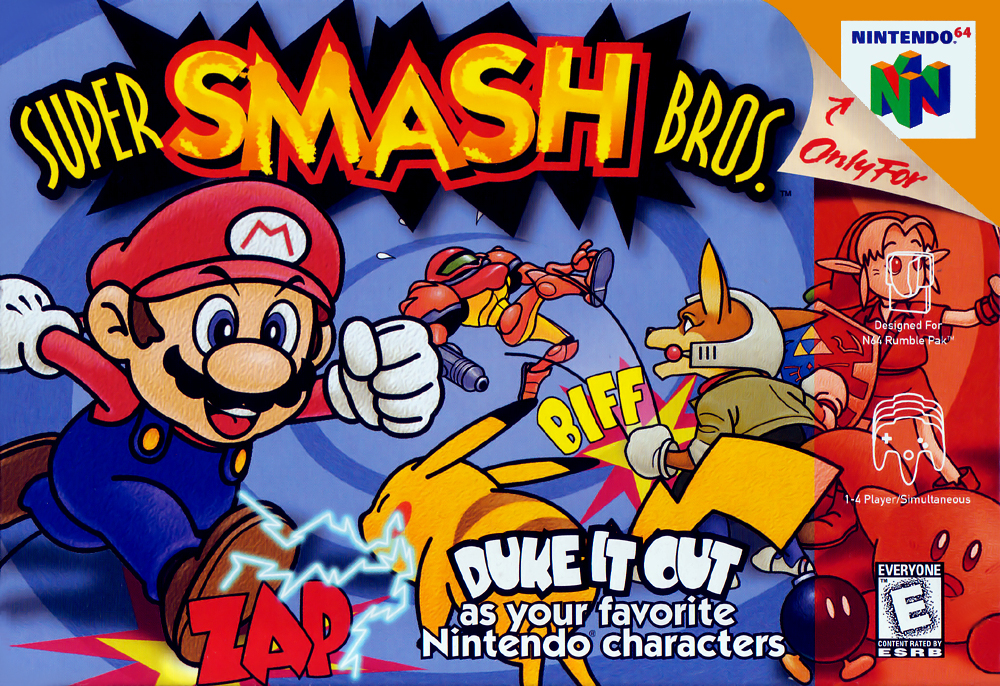
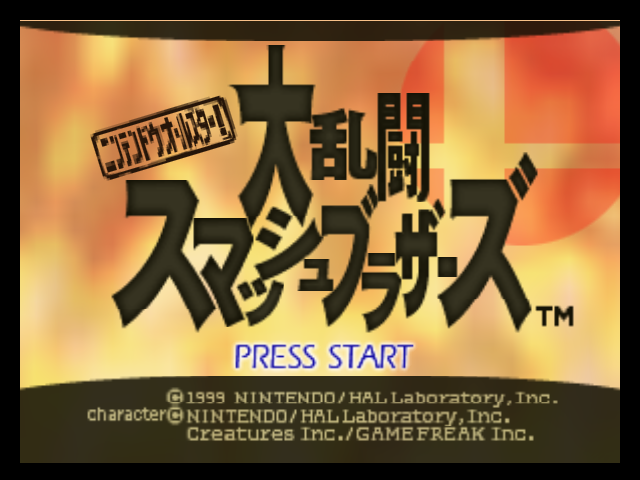
Super Smash Bros. is the Nintendo 64 original that turned an all-star Nintendo crossover into a wildly different kind of fighting game. Developed by HAL Laboratory and published by Nintendo, this 1999 release brings Mario, Link, Pikachu and other familiar faces together for brisk, platform-filled battles where the goal is not to empty a health bar, but to launch rivals out of the arena. It is the first Super Smash Bros., with the compact, toy-box spirit and local competition that defined the series before later entries expanded its scale.
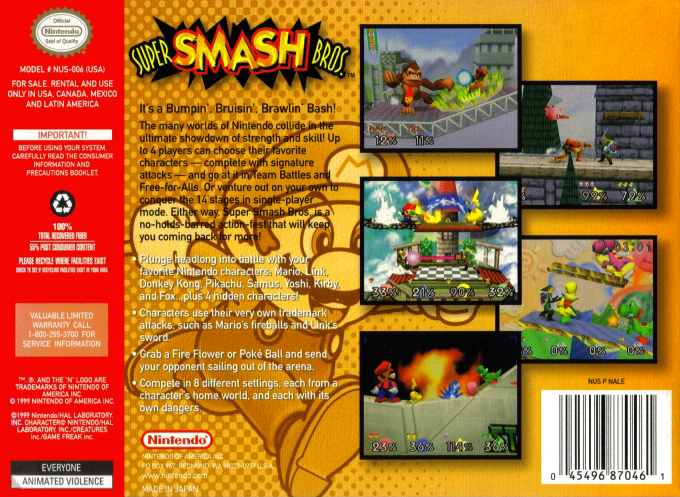
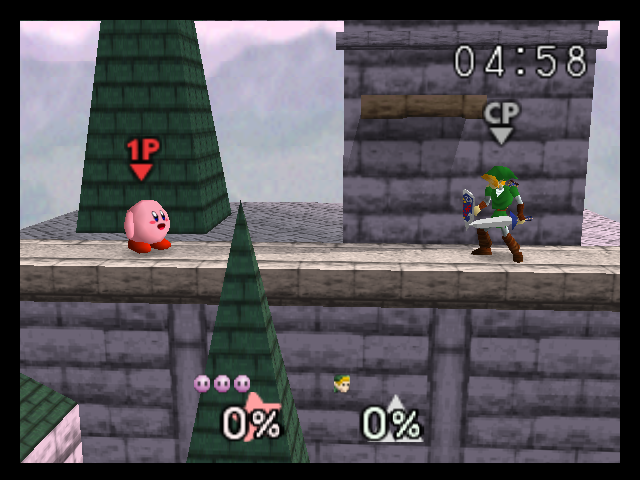
Every hit raises a fighter’s Damage Meter, displayed as a percentage. Higher damage makes a character easier to send flying, so a round is a lively contest of building pressure, finding an opening and landing the blow that carries an opponent beyond the stage boundary. Recovery matters just as much: fighters can jump, move in the air and fight their way back from danger, while the platforms, edges and hazards of each arena keep every exchange in motion. The result is an N64 fighter that rewards timing, positioning and improvisation as much as direct attacks.
The original roster totals twelve Nintendo stars: Mario, Luigi, Donkey Kong, Link, Samus, Yoshi, Kirby, Fox, Pikachu, Jigglypuff, Ness and Captain Falcon. Eight are available at the outset, with four more earned through the game’s challenges. Each combatant has an individual feel and signature abilities drawn from their home series, from Link’s weapons and Samus’s charged arm cannon to Yoshi’s egg-making bite, Fox’s Blaster and Pikachu’s electric attacks. Choosing a favorite is only the beginning; learning how their speed, jumps, recovery and special moves fit a particular matchup gives the game its lasting replay value.
The Nintendo 64 controller keeps the action approachable while leaving room for technique. A held Control Stick direction produces a tilt, while a quick tap creates a dash or more forceful smash input. The A Button handles weak, strong and smash attacks depending on the stick movement, and B plus a direction activates each fighter’s special moves. Players can jump with the C Buttons, shield with Z, grab with R or Z plus A, and roll by tapping left or right while shielding. Those simple building blocks make it easy to start a match, but combining them with aerial attacks, edge recoveries and defensive reactions gives Super Smash Bros. real depth.
VS Mode is the heart of the experience, supporting two to four players on one screen. Set up a free-for-all or form teams, then choose Stock matches with limited lives or timed matches scored by knockouts. A tied timed match can lead to Sudden Death, putting the remaining fighters at 300% damage for a decisive final scramble. Random items add another layer of chaos and opportunity: weapons and power-ups can swing the momentum, whether someone reaches a powerful tool first or turns an opponent’s dropped item against them.
The arenas are as important as the fighters. Stages inspired by Nintendo worlds are rendered in 3D but keep combat on a side-on plane, making platforms, ledges and stage-specific dangers part of the strategy. A safe-looking position can become a trap when the stage shifts, a platform moves or a Pokémon appearance disrupts Saffron City. That mix of recognizable settings and unpredictable match conditions gives the original Super Smash Bros. a distinct personality: it feels like a shared Nintendo playroom where every familiar element can become part of the fight.
Solo players can enter 1P Game, choosing difficulty, stock lives and time settings before battling through opponents, bonus stages and the final boss. The single-player menu also includes Training Mode, plus practice modes for the two bonus challenges: Break the Targets and Board the Platforms. Completing the main game under particular conditions can trigger Challenge Matches against mystery opponents, providing the route to unlock more fighters. High scores are tracked for the overall game and individual characters, inviting repeat attempts with new mains and tougher settings.
Super Smash Bros. on Nintendo 64 remains a focused snapshot of the series at its beginning: twelve Nintendo characters, immediate four-player rivalry, inventive stages and a damage-based knockout system that still feels fresh. It should not be confused with the larger GameCube, Wii, 3DS, Wii U or Switch follow-ups; this is the lean 1999 original built around the N64 controller and a living-room full of competitors. Whether revisiting its first roster or discovering the source of a long-running Nintendo tradition, it delivers fast matches, memorable finishers and a clear invitation to settle the question of who wins when Nintendo heroes finally meet.
Gallery
Details
- Developer
- HAL Laboratory
- Publisher
- Nintendo
- Genre
- Fighting
- Players
- 1-4
- Release Date
- April 26, 1999
- System
- N64