About
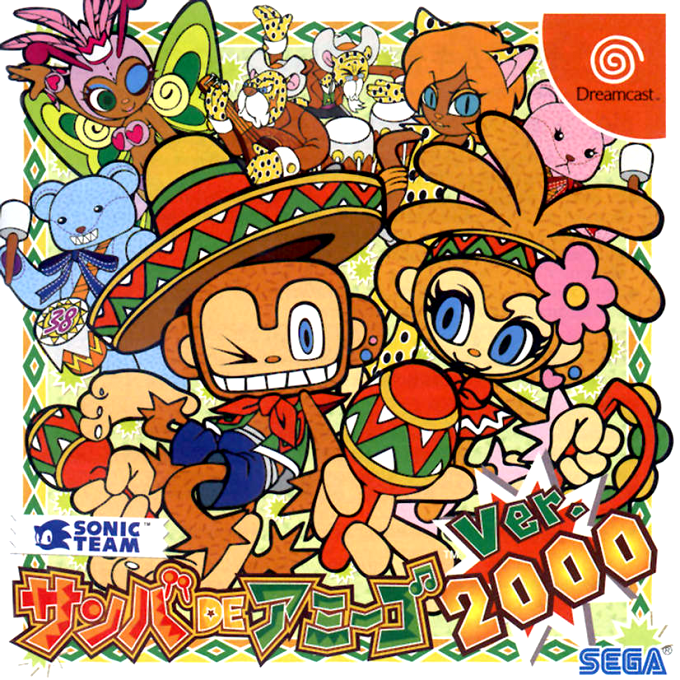
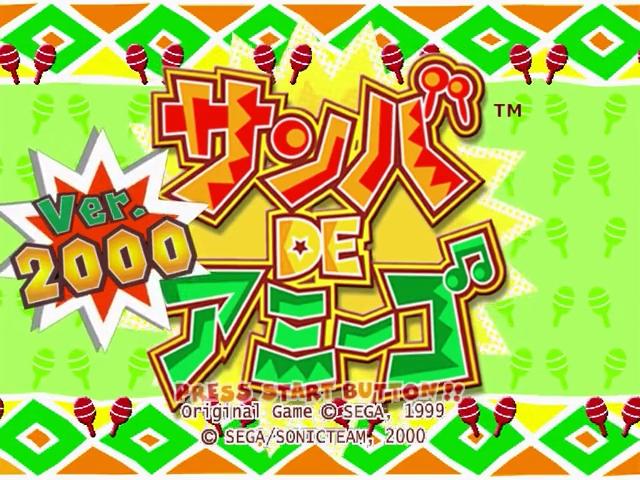
Samba de Amigo Ver.2000 is a rhythm game for the Sega Dreamcast, developed by Sonic Team and published by Sega in Japan on December 14, 2000. It is an expanded follow-up to the original Samba de Amigo rather than a separate sequel, building on the arcade-style music game with more material and new ways to perform. The Dreamcast release arrived during Sega's final console era and was issued only in Japan, making the Ver.2000 name an important distinction from the earlier Dreamcast game and later entries in the series.
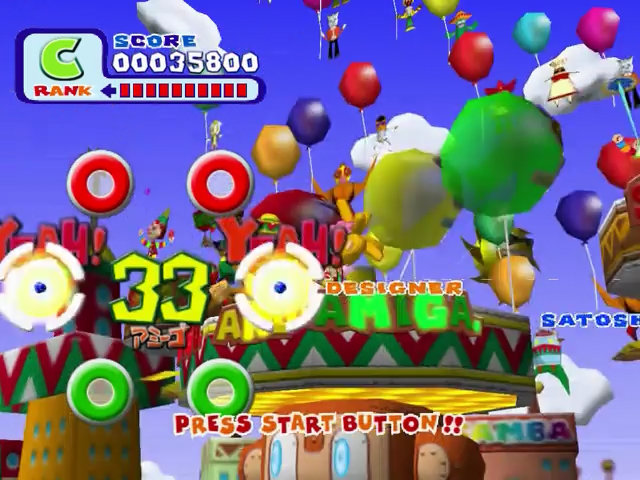
The basic idea is delightfully direct: stand before the Dreamcast's sensor bar with a maraca in each hand and match the incoming cues in time with the music. Six coloured target positions represent high, middle, and low placements to the left and right. As markers reach a target, players shake the appropriate maraca at the required height; successful timing builds a score and keeps the performance moving. The screen centers on Amigo, the cheerful monkey performer, while the animation and surrounding crowd respond to how confidently the routine is being played.
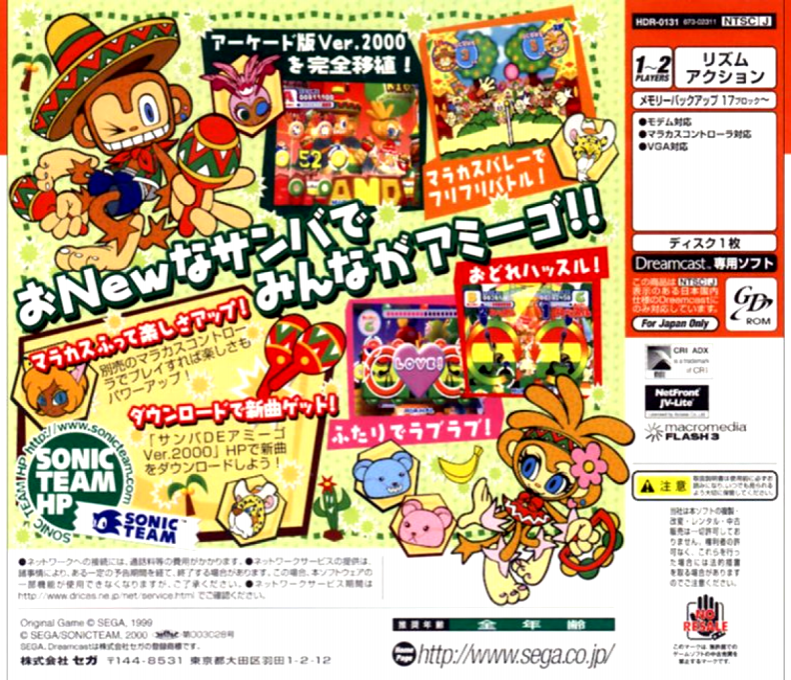
Ver.2000 preserves the familiar Original style while introducing Hustle Mode, the edition's defining addition. Hustle asks for more than isolated shakes: pose prompts and motion patterns call for players to copy the on-screen performer, including sweeping or circular movements between positions. Every song can be approached with either the established note patterns or its Hustle arrangement, so the new mode changes how existing music is read as well as adding another layer to the challenge. The expanded music selection mixes returning songs with additions, giving repeat players more routines to learn.
Its Dreamcast package also offers several routes beyond a single arcade set. Arcade play organizes a performance around selectable songs and difficulty, while an unlock-driven original mode makes cleared music available for repeat sessions. Challenge mode sets specific goals and opens further content as players progress. Survival mode turns accuracy into an endurance test across consecutive songs, and Love Love lets two people perform together and measures how closely their inputs match. A volleyball-themed minigame provides a brief change of pace from the main rhythm action, while training options let players practice the distinctive movement-based formats.
The game continues the colourful, Latin American-inspired presentation of Samba de Amigo without reducing its music to one style: its soundtrack includes a mixture of Latin-flavoured selections, pop material, and Sega-created tracks. Ver.2000 also adds Amiga, Amigo's sister, who performs with a tambourine. These details reinforce the theatrical character of the series, where scoring is tied to the idea of putting on an animated stage show rather than simply reading a note chart. The dedicated Dreamcast maracas and floor sensor bar are central to that design, translating each performance into physical gestures.
Samba de Amigo Ver.2000 is therefore best understood as Sonic Team's substantial revision of a distinctive Dreamcast rhythm-game concept. In addition to the Japanese Dreamcast release, the version appeared in arcades in 2000. Sega announced a North American Dreamcast edition as Samba de Amigo Ver.2001, but it was cancelled as the company ended support for the hardware, leaving Ver.2000 as the Japan-exclusive release. Its Hustle mechanics, expanded content, and character additions later informed the series' subsequent revival on Wii, while this original hardware version remains closely associated with the maraca-controller experience.
Gallery
Details
- Developer
- Sonic Team
- Publisher
- SEGA
- Genre
- Rhythm Game
- Players
- 1-2
- Release Date
- December 14, 2000
- System
- Dreamcast