About
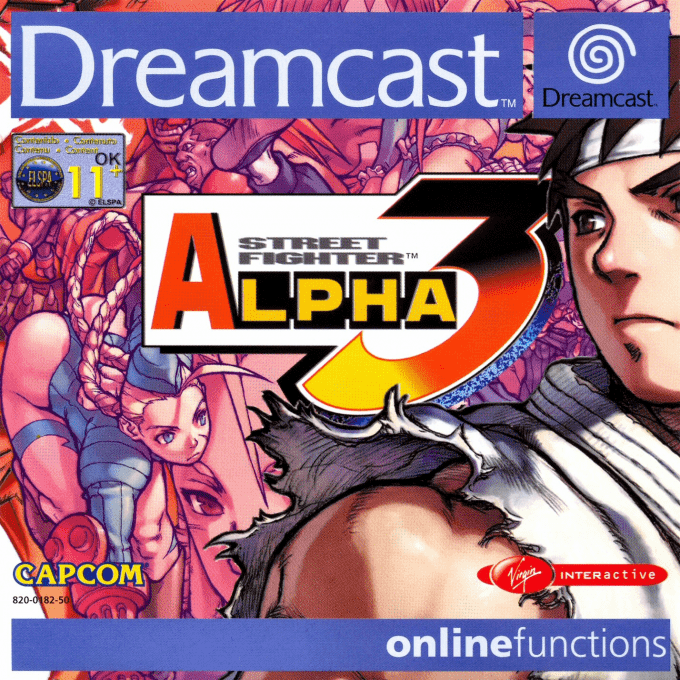
Street Fighter Alpha 3 for Dreamcast brings Capcom's 2D one-on-one fighter to Sega's console in 2000. Developed by Capcom and published by Virgin Interactive for this release, it is the final entry in the Street Fighter Alpha series, known as Street Fighter Zero 3 in Japan and several other regions. The Dreamcast game builds on the 1998 arcade original while carrying over the expanded home-console material, giving players a large selection of familiar Street Fighter combatants in fast, round-based matches.
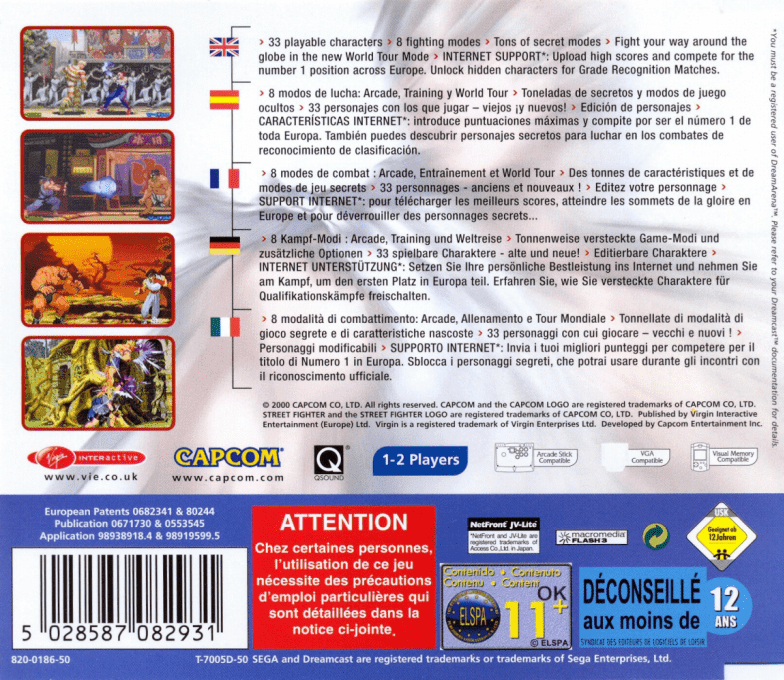
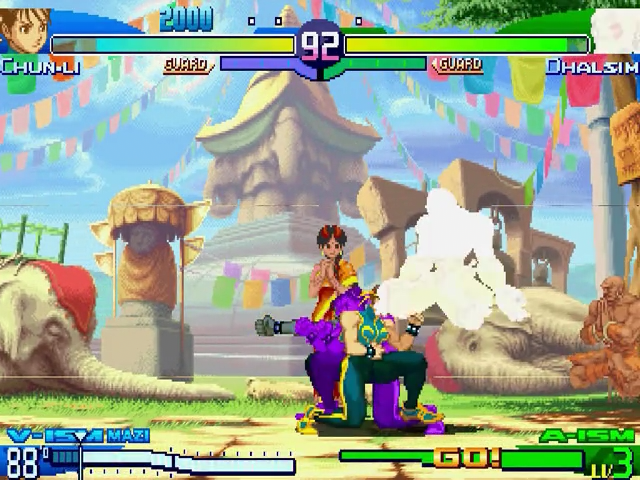
A match is built around movement, jumping, blocking, throws, normal attacks, special moves, and Super Combos. Each fighter has a distinctive set of techniques activated with the Dreamcast controller's punches and kicks plus directional inputs, so a charge character, grappler, projectile user, and close-range rushdown fighter demand different approaches. The central choice is an "ism" selected before play. A-ism uses a three-level Super Combo gauge in the tradition of the earlier Alpha games, X-ism favors a single powerful Super Combo and higher damage, and V-ism trades Super Combos for the ability to activate custom combo sequences.
The three systems also change defensive options and individual move access, making the selection more than a cosmetic preference. Blocking attacks drains the Guard Power Gauge; when it is exhausted, the defender is left open after a guard break. Alpha Counters offer a way to strike back from a block in eligible styles, while air blocking, Super Combo choices, and guard strength vary by ism. This structure gives the same fighter different tactical possibilities and lets players pursue straightforward heavy hits, flexible supers, or longer improvised strings.
Street Fighter Alpha 3's cast draws from the Alpha games while reuniting faces from Street Fighter II and Final Fight. Ryu, Ken, Chun-Li, Zangief, and M. Bison are joined by characters including Cammy, E. Honda, Blanka, Vega, Balrog, and Cody, alongside Alpha-era additions such as wrestler R. Mika and Sakura's rival Karin Kanzuki. The Dreamcast roster includes the characters introduced for the PlayStation version and makes Guile, Evil Ryu, and Shin Akuma available from the outset, with Shin Akuma accessed through his shared character slot. Arcade, Versus, Training, Survival, and Dramatic Battle options provide different ways to use that roster; Dramatic Battle pits a two-character team against a computer-controlled opponent.
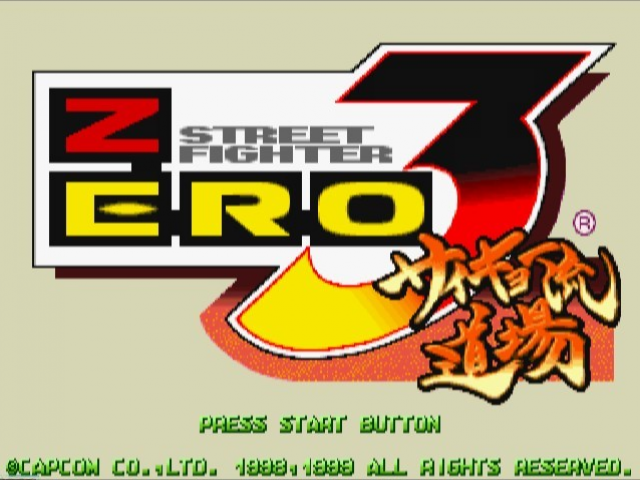
The Dreamcast edition is also identified by its revised World Tour and Saikyo Dojo modes. In World Tour, a chosen fighter travels through a series of battles and earns opportunities to shape a customized fighting style. That progression supports the Dreamcast-exclusive I-ism for the mode, allowing the developed character to use a tailored combination of abilities rather than one standard combat system. Saikyo Dojo was designed around the console's online connection: it challenged a developed character against a powerful opponent supplied through the service and changed on a weekly basis. The game also included an online high-score feature, reflecting the Dreamcast's network-focused period.
As a home version of Street Fighter Alpha 3, this release preserves the series' pre-3D sprite-based presentation and its emphasis on precision timing, matchup knowledge, and selectable systems. Its additions distinguish it from the original arcade release without confusing it with the later Japanese arcade revision Street Fighter Zero 3 Upper or the portable Street Fighter Alpha 3 MAX. For Dreamcast players, Street Fighter Alpha 3 combines the core arcade fighter with a broader roster, individual character development in World Tour, and console-specific challenge features.
Gallery
Details
- Developer
- Capcom
- Publisher
- Virgin Interactive
- Genre
- Fighting
- Players
- 1-2
- Release Date
- August 4, 2000
- System
- Dreamcast